Genk (The Brussels Morning Newspaper) October 21, 2026 – Public safety agencies in Belgium have witnessed the live operational demonstration of the newly launched DJI Dock 4 during the tenth anniversary of the nation’s UAS State Operator training programme at the PLOT campus in Genk. The autonomous drone docking platform, unveiled globally by DJI Enterprise on October 14, features automated 25-second battery swapping and integration with the Matrice 5TD aircraft. However, US emergency response teams remain unable to purchase or deploy the system due to the absence of Federal Communications Commission (FCC) authorization.
- Belgian Emergency Personnel View Live Autonomous Flight Demonstrations at PLOT Training Campus in Genk
- Technical Specifications and Operational Capabilities of the DJI Dock 4 Platform and Matrice 5TD Aircraft
- Regulatory Compliance Gaps and Acquisition Limitations Facing United States First Responders
- Integration of Uncrewed Aerial Systems Across Belgian Local and Federal Public Safety Operations
Belgian Emergency Personnel View Live Autonomous Flight Demonstrations at PLOT Training Campus in Genk
Emergency services personnel from across Belgium gathered at the PLOT (Provinciaal Luchtvaart Opleidingscentrum / Provincial Aviation Training Centre) facility in Genk on October 16, 2026, to celebrate the tenth anniversary of the UAS State Operator course. The specialized state drone pilot training programme provides instruction for Belgium’s three main public safety branches: the federal and local police services, fire departments, and civil protection units.
During the anniversary exhibition, hardware manufacturers, software vendors, and system integrators displayed specialized technology alongside live field trials. Among the hardware exhibits by manufacturers including DJI, Autel, and DroneVolt, public safety officials participated in a live demonstration of the DJI Dock 4. Bart Ramaekers, representative for the UAS State Operator training initiative, confirmed that the live demonstration of the Dock 4 represented a public safety first for European emergency services, occurring just two days after the hardware’s official global product reveal on October 14.
The demonstration showcased the platform’s capacity to perform automated remote take-offs, pre-programmed flight operations, precise landing procedures, and automated battery management without requiring a local remote controller or manual pilot handling on-site. Attendees filmed the live flights and automated operational cycles alongside additional public safety technologies displayed on the exhibition floor, such as specialized software interfaces and humanoid robotics platforms.
Technical Specifications and Operational Capabilities of the DJI Dock 4 Platform and Matrice 5TD Aircraft
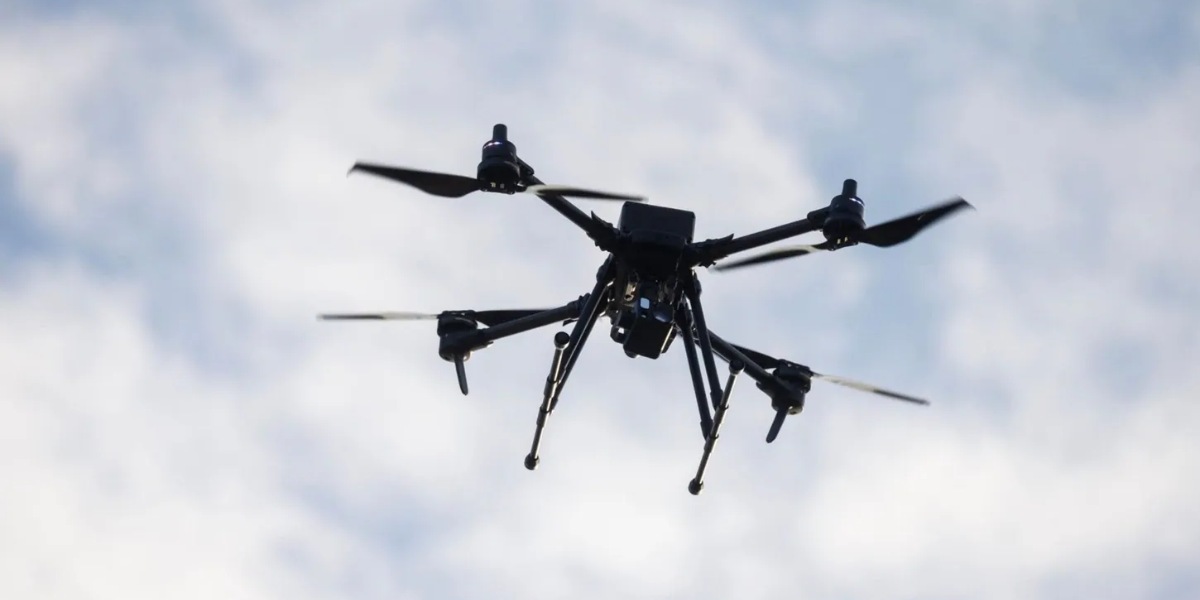
The DJI Dock 4 platform introduces a fully automated battery swapping mechanism designed to maintain persistent aerial coverage for public safety and enterprise applications. Unlike previous dock iterations that required prolonged stationary charging cycles between operational deployments, the Dock 4 replaces depleted batteries automatically within 25 seconds. This automated process reduces flight turnaround intervals from standard 30-minute recharge cycles down to less than half a minute, enabling near-continuous aerial coverage during ongoing public safety emergencies.
The docking station is paired with the specialized Matrice 5TD aircraft, which is built with integrated thermal imaging, visual sensors, and safety hardware:
-
Automated Battery Management: The physical dock executes mechanical battery swaps in 25 seconds, automatically pre-heating batteries in sub-zero environments and utilizing internal climate control mechanisms to cool components in high heat.
-
Flight Performance: The Matrice 5TD features a maximum single-flight autonomy of up to 59 minutes and can achieve operational flight speeds up to 21 metres per second.
-
Environmental Limits: The system operates in environmental temperatures ranging between -40°C and 50°C, with takeoff, landing, and sustained flight capability in sustained winds up to 12 metres per second.
-
Sensor Suite: The Matrice 5TD incorporates a 1280×1024 high-resolution infrared thermal camera, an RYYB telephoto lens capable of detecting structural elements from distances up to 400 metres, 4K full-colour night vision, and a 3-kilometre laser rangefinder.
-
Obstacle Avoidance and Safety: Flight safety is managed by an integrated sensor array combining three-directional millimetre-wave (mmWave) radar, a rotating LiDAR sensor, and six-directional vision positioning. The system includes a standard Flight Termination System (FTS) for regulatory airspace compliance and automated return-to-home procedures during extreme weather.
-
Cloud Transmission and AI: Data transmission between the aircraft and cloud management platforms achieves drone-to-cloud latencies as low as 160 milliseconds. Onboard artificial intelligence algorithms perform real-time identification and tracking across 17 distinct object classifications, including vehicles, maritime vessels, and personnel.
-
Payload Support: The aircraft supports auxiliary equipment attachments up to 450 grams, including tactical spotlights, loudspeakers, emergency parachutes, and customizable warning lights.
Regulatory Compliance Gaps and Acquisition Limitations Facing United States First Responders
Despite the live presentation and active evaluation of the DJI Dock 4 by Belgian public safety agencies, emergency response teams and municipal law enforcement departments in the United States are unable to purchase or deploy the new hardware.
The primary barrier stems from regulatory authorization status. The DJI Dock 4 platform lacks Federal Communications Commission (FCC) authorization, preventing commercial distribution, government procurement, and legal radio frequency operation within US jurisdiction. Consequently, American first responder delegations visiting European demonstrations or evaluating automated dock systems cannot procure the technology for domestic operations.
This regulatory separation highlights diverging procurement environments for uncrewed aerial systems (UAS) between the European Union and the United States:
| Region | Regulatory Status | Public Safety Procurement & Operational Status |
| European Union / Belgium | Compliant with Regulation (EU) 2018/1139 and C6 airspace standard guidelines. | Public safety agencies actively evaluate, purchase, and deploy commercial DJI hardware and dock infrastructure for police, fire, and civil protection missions. |
| United States | Absence of FCC equipment authorization for Dock 4 radio transmission components. | Federal, state, and local emergency response teams are legally prohibited from purchasing or deploying the Dock 4 platform. |
The restriction occurs amid broader regulatory and legislative measures in the United States targeting foreign-manufactured uncrewed aircraft systems and associated communications equipment. While American public safety budgets face higher capital expenditures to acquire domestically produced alternative platforms—often priced significantly higher than comparable commercial models—European municipal bodies continue to purchase standard commercial off-the-shelf equipment for public safety operations.
Integration of Uncrewed Aerial Systems Across Belgian Local and Federal Public Safety Operations
The demonstration of the Dock 4 in Genk builds upon an established framework of drone integration across Belgian emergency services. Over the past decade, the UAS State Operator course at PLOT has systematically trained officers and rescue personnel to operate aerial platforms for critical incidents, search and rescue missions, and public order monitoring.
Belgian law enforcement agencies have progressively expanded their operational drone fleets to support municipal policing. For instance, the Vilvoorde-Machelen local police zone acquired an enterprise aerial fleet consisting of DJI Matrice 30T, Matrice 4T, and Air 3S units for a total procurement expenditure of €22,000. These airframes are routinely deployed across police operations to locate missing persons, conduct forensic scene mapping, and manage crowd safety during large-scale public events and outdoor festivals.
Belgian police and fire services also utilize specialized equipment packages, such as the Matrice 4TD police response kit equipped with uncooled vanadium oxide thermal sensors, 112x hybrid zoom optical assemblies, high-power floodlights, and tactical loudspeakers capable of broadcasting voice communications up to 300 metres. These units transmit high-definition video feeds directly to tactical command centers and portable ground stations, providing real-time situational awareness during active operations.
The introduction of fully autonomous dock platforms like the Dock 4 represents an operational evolution for European public safety services. By shifting from manual, pilot-operated deployments to cloud-controlled autonomous docking stations managed via platforms such as FlightHub 2 or localized POICloud systems, public safety departments can establish 24/7 automated aerial response capabilities. When integrated into municipal emergency dispatch networks, autonomous docks can automatically launch an airframe upon receiving an emergency alert, arriving at an incident scene ahead of ground vehicles to stream live thermal and visual data directly to incoming first responders.