Brussels, 16 October, (Brussels Morning Newspaper) – European Union leaders have delivered a strong message of solidarity with Ukrainian President Volodymyr Zelenskyy during a high-level summit in Brussels, as disagreements with US President Donald Trump intensify over Russia sanctions and Ukraine’s military operations. The renewed EU support for Zelenskyy comes as Kyiv seeks additional military assistance, financial commitments and protection for its energy infrastructure ahead of winter.
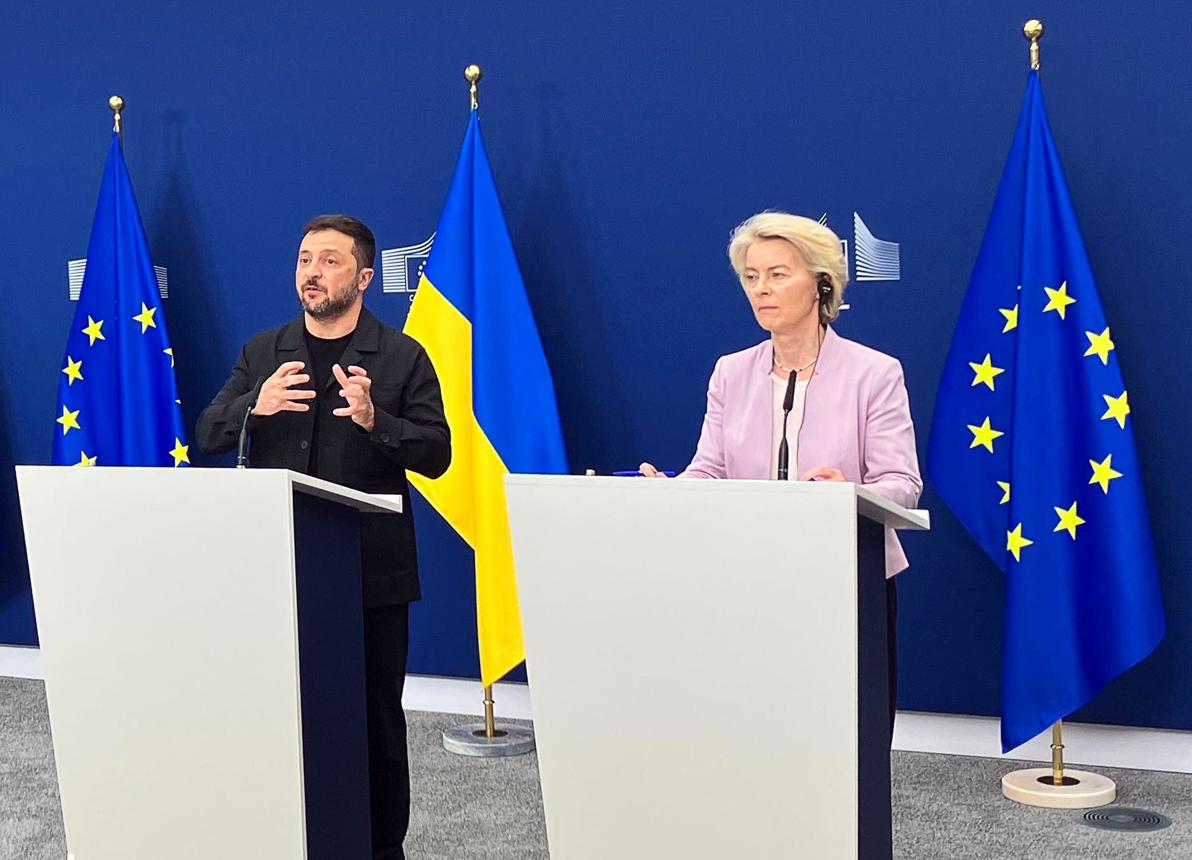
European Council President António Costa and European Commission President Ursula von der Leyen joined Zelenskyy on Friday, reaffirming Europe’s commitment to Ukraine despite growing uncertainty over Washington’s policies towards Moscow.
EU Leaders Defend Ukraine Amid Growing Trump Dispute
The Brussels summit followed a deterioration in relations between Kyiv and Washington after Trump eased restrictions affecting Russian diesel supplies.
The American president has also criticised Ukrainian strikes against Russian oil refineries, arguing that attacks on energy facilities contribute to rising global fuel prices.
Ukraine maintains that its military operations are necessary while Russian forces continue attacking Ukrainian cities and critical infrastructure.
European leaders have taken a different approach, emphasising that economic pressure on Moscow should remain in place until meaningful progress towards ending the conflict is achieved.
The disagreement highlights increasingly difficult diplomatic relations between Ukraine and the United States, with European governments seeking to preserve Western cooperation.
António Costa Issues Powerful Statement on Ukraine
Speaking alongside Zelenskyy and von der Leyen on 16 October, European Council President António Costa reaffirmed the bloc’s position.
“The support of the European Union to Ukraine remains as strong as ever,” Costa declared.
He also stressed that reducing sanctions against Moscow would be inappropriate while Russian military operations continue.
Costa urged European governments to increase assistance and maintain pressure on Russia to secure a ceasefire and meaningful peace negotiations.
His remarks reinforced the European Council’s commitment to Ukraine’s sovereignty and its longer-term ambitions for European Union membership.
Russian Attacks Raise Concerns Over Ukraine’s Energy Security
Ukraine continues to face extensive Russian missile and drone attacks targeting electricity networks and other essential infrastructure.
Recent bombardments have damaged energy facilities, disrupted electricity supplies and increased concerns about the country’s ability to maintain essential services during winter.
Zelenskyy has repeatedly emphasised the importance of additional air-defence systems and ammunition to protect civilian populations and strategic facilities.
European governments are consequently examining how existing assistance programmes can address Ukraine’s immediate military and infrastructure requirements.
The discussions also reflect concerns about Ukraine’s dependence on American military technology and communications systems.
European Union Reinforces Long-Term Financial Assistance
The latest EU support for Zelenskyy builds on earlier European commitments to provide substantial financial, humanitarian and military assistance.
European institutions have established financial arrangements intended to help Ukraine maintain public services, strengthen national defence and support economic stability.
However, disagreements remain among member states over the scale and financing of future assistance.
These discussions are particularly significant as Ukraine continues to face substantial defence expenditure and reconstruction requirements.
European officials have also reaffirmed that Ukraine’s accession negotiations remain part of the bloc’s long-term political agenda.
What Happens Next After the Brussels Summit?
European leaders will continue discussions on military deliveries, financial assistance and sanctions against Russia.
Ukraine is expected to maintain its requests for additional air-defence equipment and support for damaged energy infrastructure.
Meanwhile, the diplomatic dispute involving Trump and Zelenskyy remains unresolved, creating uncertainty over future cooperation between Washington and Kyiv.
The renewed EU support for Zelenskyy demonstrates Europe’s intention to maintain its commitments, although further decisions will determine how political assurances translate into practical assistance.
For Brussels, the central challenge remains sustaining European unity while addressing Ukraine’s immediate security needs and preserving the possibility of a negotiated end to the war.