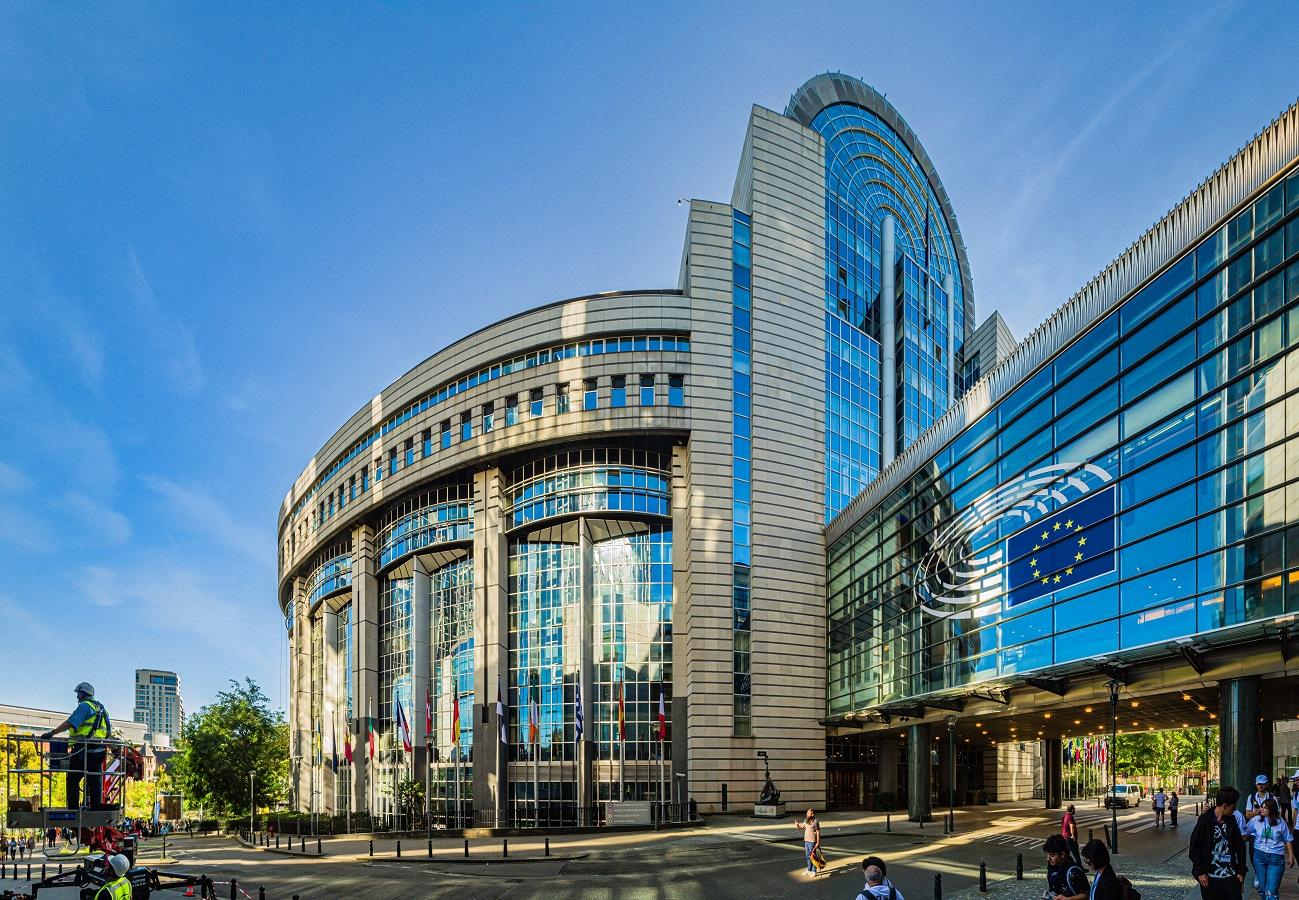
Brussels, 14 October, (Brussels Morning Newspaper) – Around 10 Greenpeace activists were detained for questioning outside the European Parliament in Brussels on Wednesday morning during a Greenpeace protest against rising energy prices and Europe’s dependence on fossil fuels. The demonstration, organised alongside Extinction Rebellion Belgium, involved campaigners climbing the Parliament building and displaying large banners demanding urgent changes to European energy policy.
Belgian media reported that police intervened at approximately 7 am near Place du Luxembourg in Ixelles. Although the activists were taken for questioning, they were not formally arrested. The police intervention remained peaceful, with no clashes reported.
Greenpeace Climbers Unveil Giant Banner at EU Parliament
The demonstration attracted attention when Greenpeace climbers scaled part of the European Parliament complex near the Solidarność esplanade.
At least four activists were positioned approximately 10 metres above ground level, while campaigners displayed an 80-metre-wide banner carrying the message “Burning gas ruins Europe”.
Organisers also used artificial smoke to draw attention to the environmental consequences of fossil fuel consumption.
According to Greenpeace Belgium, dozens of activists representing 17 countries participated in the wider action.
Extinction Rebellion supporters gathered outside Parliament, while other campaigners displayed a banner inside the building.
Police Detain Activists During Brussels Demonstration
Belgian broadcaster BRUZZ, citing Belga, reported that approximately 10 campaigners were detained for questioning during the early-morning intervention.
However, the available reporting distinguishes these detentions from formal arrests.
The demonstration took place ahead of discussions among European leaders concerning energy affordability, economic competitiveness and Europe’s long-term dependence on fossil fuels.
Greenpeace Calls for Urgent European Energy Reforms
Greenpeace said the demonstration was intended to increase pressure on European governments to accelerate investment in renewable energy and protect households from rising bills.
Greenpeace EU climate and energy campaigner Thomas Gelin said:
“EU politicians must get Europe off dirty and expensive fossil fuels, and onto renewable energy that can cut pollution while bringing down prices for ordinary people.”
The organisation estimates that rising energy prices cost European households an additional €61.5 billion between March and August 2026 compared with the corresponding period in 2021.
According to Greenpeace, this represents approximately €50 in additional monthly costs per household on average.
These figures are estimates published by the environmental organisation.
Europe’s Fossil Fuel Dependence Remains a Major Concern
The Greenpeace protest highlights continuing disagreements over the European Union’s energy transition.
Since Russia’s full-scale invasion of Ukraine in February 2022, European governments have attempted to reduce dependence on Russian energy supplies.
However, increased imports from alternative suppliers have raised questions about the long-term affordability and sustainability of fossil gas.
Greenpeace and its partners in the People vs Gas coalition are demanding a European roadmap to phase out fossil gas by 2035.
They also want emergency measures to protect consumers from rising energy costs.
What Happens Next for European Energy Policy?
European leaders are expected to discuss measures addressing high energy prices and reducing dependence on fossil fuels at their forthcoming summit in Brussels.
The discussions could influence future energy security measures, renewable energy investment and policies affecting households and businesses.
Campaigners are seeking commitments from EU governments, although no new legislation or binding agreement has been announced as a direct result of Wednesday’s demonstration.
The protest places renewed attention on the relationship between energy affordability, climate policy and Europe’s future energy security.