Charleroi (The Brussels Morning Newspaper) October 13, 2026 – Shanghai has been named one of the first three winners of the World Intellectual Property Organization’s (WIPO) City of Innovation award, alongside Liverpool in the United Kingdom and Charleroi in Belgium. Announced in Geneva on October 12, the inaugural award recognises city governments’ commitments to advancing innovation, creativity and intellectual property development. Shanghai’s pledges include expanding intellectual property education and services, improving access to innovation infrastructure and data, supporting cultural and creative industries, and strengthening links between researchers, businesses, entrepreneurs and investors. An independent international jury selected the three winners from 15 finalist cities representing 11 countries.
- How Did Shanghai Win the First WIPO City of Innovation Award?
- What Innovation Commitments Has Shanghai Made?
- Why Did the International Jury Recognise Shanghai’s Research Base?
- Which Other Cities Won the Inaugural WIPO Award?
- How Were the Fifteen Finalist Cities Selected?
- What Is WIPO’s Role in Intellectual Property and Innovation?
- What Happens After the First City of Innovation Awards?
- Background: How the WIPO City of Innovation Award Began
- Prediction: What Will Shanghai’s Award Mean for Its Innovation Programme?
How Did Shanghai Win the First WIPO City of Innovation Award?
Shanghai was selected for the inaugural award after presenting plans to strengthen its position as an international centre for science, technology and intellectual property. The award, introduced in 2026 by the World Intellectual Property Organization, recognises cities that commit to developing environments in which innovation and creativity can grow.
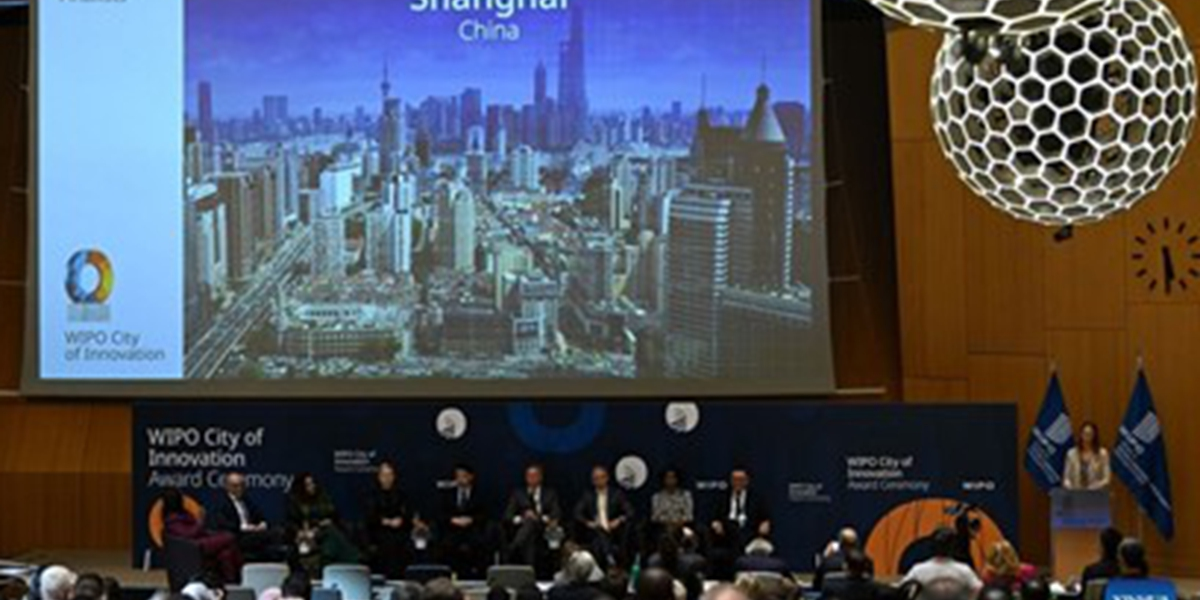
The winners were announced on October 12 at WIPO headquarters in Geneva, Switzerland, during a ceremony held alongside the Sixth United Nations Forum of Mayors. The programme attracted applications from cities across WIPO’s 194 member states, with 15 cities progressing to the final stage of the selection process.
Shanghai, Liverpool and Charleroi were selected by an independent international jury. Their proposals covered different approaches to urban innovation, including technology start-ups, skills development, intellectual property protection, creative industries and stronger cooperation between public institutions, businesses and communities.
According to Xinhua, Andrea Dempster Chung, a member of the international jury and co-founder and executive director of Kingston Creative, said Shanghai’s application stood out because of its established research and development base, the scale of its ambitions and the strength of its pledges.
Chung said these commitments could play a significant role in shaping the city’s future. Her comments highlighted the jury’s consideration of both Shanghai’s existing research capacity and its proposed measures to develop innovation further.
The award is designed to recognise commitments for the year ahead rather than simply rank cities according to their existing achievements. Its purpose is to encourage local authorities to establish policies, services and partnerships that help residents, researchers, entrepreneurs and creative professionals develop ideas and bring them into practical use.
What Innovation Commitments Has Shanghai Made?
Shanghai’s application sets out a vision of strengthening the city’s international role in science, technology and intellectual property while encouraging innovation and creativity across a wider range of activities.
WIPO identified four central elements of the city’s pledges: expanding intellectual property education and services, opening access to innovation infrastructure and data, supporting cultural and creative businesses, and improving connections between research, industry, entrepreneurs and investors.
These commitments address different stages of the innovation process. Education and intellectual property services can help innovators understand how to protect their work, while access to facilities and data can support research and development. Links between researchers, companies and investors can also help connect new ideas with organisations capable of developing them.
The inclusion of cultural and creative industries broadens the programme beyond technology and scientific research. WIPO’s award recognises creativity alongside invention, reflecting the role of intellectual property in protecting a range of outputs, including creative works and commercial innovations.
Shanghai’s stated ambition is therefore not limited to maintaining its position as a centre for scientific research. Its proposal also addresses the institutional and commercial conditions that allow innovation to develop, receive protection and reach wider markets.
The commitments are part of a city-level approach in which public authorities, research organisations, businesses and creators are expected to contribute to the development of a functioning innovation ecosystem.
WIPO has not described the award as a guarantee that every proposed measure will achieve its intended outcome. Instead, the organisation has said it will work with winning cities to document their initiatives and track the implementation of their pledges.
This process is intended to make the cities’ experiences available to other municipalities and encourage the exchange of approaches to innovation and intellectual property development.
Why Did the International Jury Recognise Shanghai’s Research Base?
The jury’s assessment of Shanghai combined its existing research and development capabilities with the proposed scale of its future commitments.
Chung’s comments, reported by Xinhua on October 13, specifically referred to the city’s strong research and development base and the ambition reflected in its application. She identified these factors as important reasons for its selection.
Her remarks indicate that the award was not based solely on a description of Shanghai’s current scientific and technological capacity. The commitments submitted by the city were also central to the decision.
WIPO’s selection process was designed to consider three broad criteria: the alignment of a city’s vision with its local circumstances, the ambition of its pledges and their credibility. These criteria were established when the award programme was launched in March 2026.
The approach allows cities with different sizes, economic structures and development priorities to compete on the basis of their proposals rather than a single uniform measure of innovation.
For Shanghai, the connection between an established research base and plans to strengthen intellectual property services formed an important part of its stated vision.
Research institutions and technology companies may generate inventions, but intellectual property systems provide mechanisms for establishing ownership and protecting qualifying innovations. Connections with businesses and investors can help organisations explore how those innovations might be developed commercially.
Shanghai’s application addresses these areas through commitments covering education, services, infrastructure, data and cooperation. The award recognises the proposal and its stated objectives; the implementation and results of the measures remain matters for subsequent monitoring.
Which Other Cities Won the Inaugural WIPO Award?
The inaugural programme recognised three cities: Shanghai in China, Liverpool in the United Kingdom and Charleroi in Belgium.
Although the winners share a commitment to innovation and creativity, their proposals reflect different local circumstances and priorities. WIPO’s announcement set out individual plans for each city, covering technology, skills, intellectual property, commercial development and community participation.
How Does Liverpool Plan to Expand Innovation?
Liverpool has pledged to develop a new innovation strategy and strengthen support for businesses seeking to protect their ideas and convert them into commercial opportunities.
Its proposal also focuses on cooperation between universities, businesses, local government and residents. Science, technology and arts activities are intended to involve communities and young people, bringing innovation-related initiatives into wider public participation.
The commitments connect commercial development with education and community involvement. Rather than concentrating exclusively on research facilities or business support, Liverpool’s proposal also identifies opportunities to involve residents in innovation activities.
WIPO’s announcement described the city’s approach as part of its commitment to developing an innovation environment that supports both businesses and the wider community.
What Are Charleroi’s Priorities for Technology and Skills?
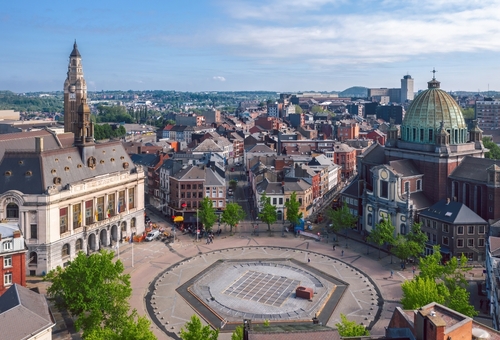
Charleroi’s proposal centres on building upon the A6K-E6K innovation and training hub to attract technology start-ups and equip people with digital and creative skills.
The city has also pledged to help innovators protect their ideas and bring them to market. Its programme includes support for technologies that contribute to a greener economy.
These commitments combine entrepreneurship, workforce development and intellectual property support. They also identify environmental technology as an area in which innovation can contribute to economic activity.
WIPO’s selection of Charleroi alongside Shanghai and Liverpool reflects the award’s intention to recognise different approaches to innovation rather than impose a single development model on every city.
The three winners will form the first group in a network intended to expand through future award cycles. WIPO has said that their experiences will be documented to help other municipalities learn from their initiatives and commitments.
How Were the Fifteen Finalist Cities Selected?
The first award cycle attracted proposals from cities with different development priorities. WIPO announced 15 finalists in September 2026, before the final selection was made by an independent international jury.
The finalist cities represented 11 countries and included Shanghai, Liverpool and Charleroi, as well as Jaipur and Thiruvananthapuram in India; Amman and Irbid’s associated municipal entry in Jordan; Astana in Kazakhstan; Rabat and Tetouan in Morocco; Echague in the Philippines; Caldas da Rainha in Portugal; Moscow in Russia; and Mueang Lamphun and Roi Et in Thailand.
Their proposals covered a broad range of subjects, from emerging technologies and entrepreneurship to public services, cultural heritage, sustainability and community participation.
WIPO said applicants were invited to set out a vision for their local innovation and creative ecosystems, supported by concrete pledges for a 12-month period. The international jury then considered how well each proposal matched the city’s circumstances, how ambitious its commitments were and whether those commitments were credible.
The jury brought together expertise in cultural and creative industries, urban planning, community development and innovation-led growth. Its membership included professionals and representatives with experience across different countries and sectors.
The process was designed to accommodate cities pursuing different routes towards innovation. A city might prioritise technology businesses, while another could focus on creative industries, public participation or the development of digital skills.
The inclusion of these different approaches reflects WIPO’s emphasis on creating conditions in which local ideas and capabilities can be developed. The award also seeks to encourage municipal leaders to establish practical measures rather than rely exclusively on broad statements of ambition.
What Is WIPO’s Role in Intellectual Property and Innovation?
The World Intellectual Property Organization is a United Nations specialised agency responsible for promoting intellectual property systems and supporting innovators and creators in protecting and advancing their work across borders.
Its activities include providing services that enable businesses, creators and entrepreneurs to protect and promote intellectual property internationally. The organisation also acts as a forum for discussion of intellectual property issues and provides data, information and technical assistance.
The City of Innovation award extends this work into the urban development sphere. It recognises that local authorities can help create conditions in which intellectual property, research, entrepreneurship and creative activity support one another.
WIPO launched the programme in March 2026, describing it as a means of recognising city leaders who commit to advancing innovation and creativity. The first cycle was open to cities across all 194 member states, with applications accepted from April 1 to June 30.
The organisation said the programme would give winning cities international visibility and an opportunity to present their initiatives to the global intellectual property community. It also committed to documenting progress and sharing relevant experiences with other municipalities.
The award’s focus on pledges distinguishes it from a conventional ranking that measures only past performance. It places attention on the measures cities intend to pursue during the coming year and on their capacity to make those commitments credible.
For Shanghai, the recognition centres on plans to connect scientific research, intellectual property services, creative industries and commercial activity. For Liverpool and Charleroi, the announced commitments focus on their respective approaches to business development, skills, community engagement and technology.
What Happens After the First City of Innovation Awards?
The next stage of the programme will involve documenting the winning cities’ initiatives and tracking progress towards their pledges.
WIPO has said it will work with the three winners to record their activities and monitor the realisation of their commitments. The resulting material is intended to showcase the cities’ experiences and provide information that other local authorities can use when developing their own innovation policies.
The organisation has also described the three winners as the first cohort of an international network that will grow with future award cycles.
For Shanghai, this means that the award announcement is the beginning of a period in which its stated commitments can be followed through implementation. Its proposals include expanding intellectual property education and services, widening access to innovation infrastructure and data, supporting cultural and creative businesses, and strengthening cooperation among researchers, companies, entrepreneurs and investors.
WIPO’s published announcement does not establish that all these measures have already been completed. The award recognises the city’s commitments, and the organisation’s proposed monitoring process is intended to document progress.
The same distinction applies to Liverpool and Charleroi, whose awards recognise their proposed strategies and commitments rather than confirm the completed delivery of every initiative.
The programme’s future cycles will provide further opportunities for cities to present their plans. WIPO has stated that it intends to use the award to encourage municipalities to develop innovation ecosystems that respond to local needs and make intellectual property and creativity part of their development efforts.
Background: How the WIPO City of Innovation Award Began
WIPO introduced the City of Innovation award in March 2026, amid growing attention to the role of cities in economic activity, research and cultural development.
The organisation cited the importance of urban areas as centres of economic growth and noted that cities bring together people, institutions, businesses and communities with different skills and experiences.
Its programme was established to recognise municipal commitments to creating environments in which innovation and creativity can flourish. It also aims to encourage the use of intellectual property to protect ideas and help promising solutions develop beyond their initial stages.
Applications were invited from cities across WIPO’s membership, with an independent jury evaluating submissions against the alignment of each vision with its city, the ambition of the pledges and their credibility.
The first finalists were announced in September, and the three winners were revealed at the Geneva ceremony on October 12, 2026. Shanghai, Liverpool and Charleroi became the first cities to receive the distinction.
The programme’s stated purpose is to support the exchange of experience between cities and encourage more municipalities to develop concrete approaches to innovation, intellectual property and creativity.
Prediction: What Will Shanghai’s Award Mean for Its Innovation Programme?
The immediate confirmed outcome is Shanghai’s inclusion in the first group of WIPO City of Innovation award winners, giving its plans international visibility through the organisation’s programme.
The practical significance of the recognition will depend on how the city implements its pledges over the coming year. WIPO has committed to documenting initiatives and tracking progress, providing a framework for recording what the winning cities do after receiving the award.
For Shanghai, the principal areas to monitor are the expansion of intellectual property education and services, access to innovation facilities and data, support for cultural and creative businesses, and cooperation between research organisations, industry, entrepreneurs and investors.
For Liverpool and Charleroi, the corresponding areas include their planned innovation strategies, business support, digital and creative skills, and community participation.
WIPO has presented the award as a means of encouraging cities to share practical experiences and inspiring other municipalities to pursue their own commitments. The programme’s progress will therefore be assessed through the initiatives documented during implementation and the extent to which the winning cities advance the pledges that formed the basis of their selection.