Brussels (Brussels Morning Newspaper) October 12, 2026 – The European Union has formally established a new support and training mission to assist the Lebanese Armed Forces and internal security agencies. Approved by EU foreign ministers in Brussels, the initiative is designed to strengthen state territorial control, border management, and internal stability as the United Nations Interim Force in Lebanon (UNIFIL) prepares for its mandate expiration and withdrawal. While European officials emphasized that the civilian and military advisory deployment is not a direct replacement for UN peacekeeping operations, the move represents a significant update to security cooperation between the European Union and Lebanon.
European Union Adopts Three-Year Mandate for Lebanese Security Support
The Council of the European Union announced that the newly minted mission has been granted an initial operating mandate of three years. According to structural outlines provided by bloc authorities, the initiative aims to deploy up to 150 personnel comprising both civilian and military experts. These specialists will be tasked with providing strategic advice, mentorship, and training capacity to both the Lebanese Armed Forces (LAF) and the Internal Security Forces (ISF).
EU foreign policy chief Kaja Kallas formally announced the decision following the ministerial meeting, highlighting Europe’s ongoing commitment to the region’s institutional stability.
“It will advise and assist the Lebanese Armed Forces and Internal Security Forces to strengthen territorial control, border security, and internal security,”
Kallas stated.
“With this new mission—a major update of our security ties—we continue to support the country’s institutions in restoring full sovereignty and building lasting stability for the Lebanese people.”
Kallas previously underscored the necessity of preventing any institutional vacuum on the ground, noting that active measures must be taken as international peacekeeping configurations evolve. The European Union has stressed that all actions taken under the new framework will operate in strict accordance with relevant international frameworks, including UN Security Council Resolution 1701.
Transition Dynamics and UNIFIL Withdrawal Context
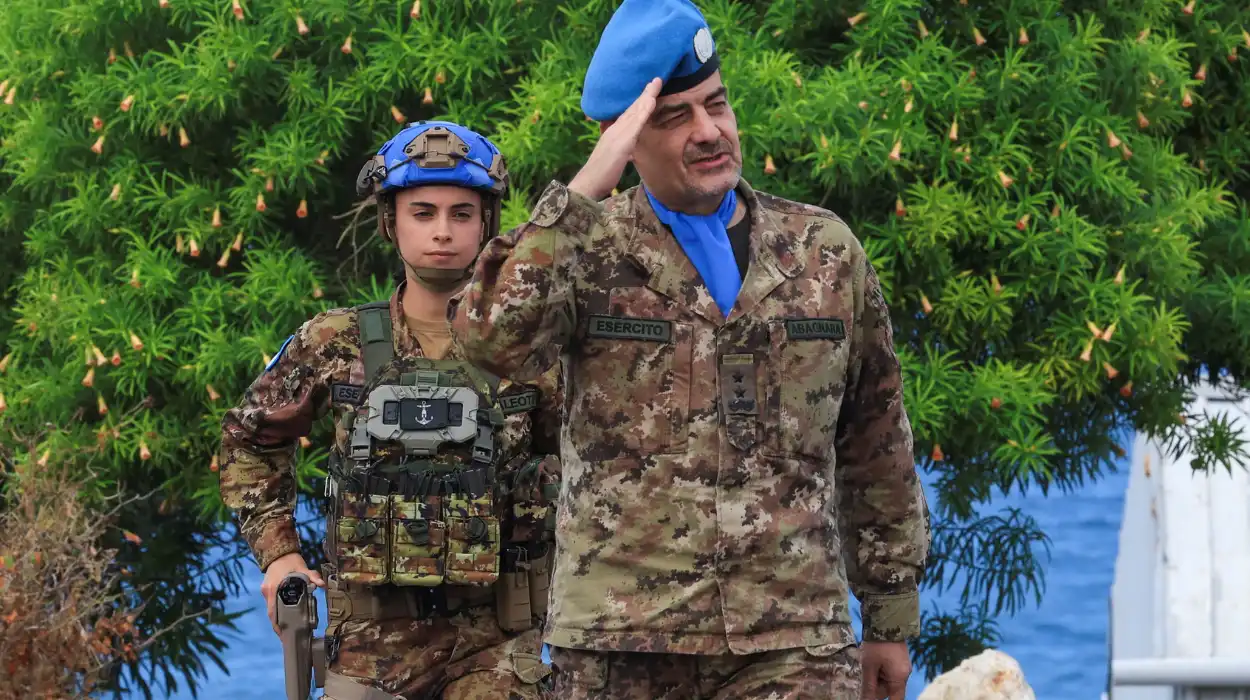
The establishment of the European support mission coincides with a critical juncture for international military deployments in Lebanon. The United Nations Interim Force in Lebanon, which has maintained a long-standing presence in the country’s southern regions under authorizations originally designed for up to 15,000 personnel, faces operational wind-downs as its mandate concludes. At its operational peaks, UNIFIL deployed more than 10,000 peacekeepers. Leading contributors to the UN mission have historically included Indonesia, Italy, France, Spain, and India.
Discussions surrounding the broader security architecture of southern Lebanon have involved various diplomatic maneuvers among European capitals. Reports indicated that France expressed interest in commanding potential transitional security elements, while Italy also advanced candidate proposals, alongside considerations for annual leadership rotations. However, EU representatives have repeatedly clarified that the newly established European advisory mission is distinct from UNIFIL’s former enforcement and buffer mandate. Rather than executing direct peacekeeping patrols or acting as an interposition force, the EU deployment focuses squarely on institutional capacity-building and professional development within native Lebanese security structures.
Operational Challenges Facing Lebanese Armed Forces
Lebanon’s military apparatus continues to operate under severe financial and logistical constraints, complicating its capacity to independently project full authority across the nation’s borders. Under-resourced and cash-strapped, the Lebanese Armed Forces face immense operational hurdles, particularly regarding the complete deployment and enforcement of state security infrastructure in southern Lebanon.
These deployments form a critical component of regional stability frameworks following agreements brokered earlier in the year. A US-sponsored framework agreement reached between Israel and Lebanon in June, preceded by regional understandings, led to notable reductions in active hostilities. Despite the ensuing decrease in large-scale violence, the Lebanese military has struggled to efficiently consolidate territorial command without sustained external technical assistance.
The European Union mission is specifically tailored to address these structural deficits by enhancing the operational readiness of local troops and security personnel. By focusing on specialized training, logistical counseling, and administrative reform, the initiative seeks to empower domestic authorities to independently manage national borders and internal security zones.
Official Responses and Domestic Reception in Beirut
The government of Lebanon officially welcomed the European Union’s decision to deploy the advisory and training mission. Lebanese officials framed the development as a constructive step toward bolstering legitimate state institutions and extending official authority throughout all national territories.
In statements released following the EU announcement, Lebanese leadership linked the initiative directly to official state policies aimed at restricting weaponry strictly to legitimate military and security forces. Beirut affirmed its commitment to offering full cooperation to ensure the mission achieves its stated objectives.
Lebanese authorities expressed appreciation to the European Union and its member states for spearheading the assistance program, describing the European backing as an essential additional pillar in the ongoing path toward long-term security stabilization and the reinforcement of sovereign state functions.
Deployment timelines outlined by European officials suggest that specialized civilian and military personnel could begin arriving on the ground to initiate operations by late 2026 or early 2027, subject to the finalization of remaining operational arrangements and status-of-mission agreements.