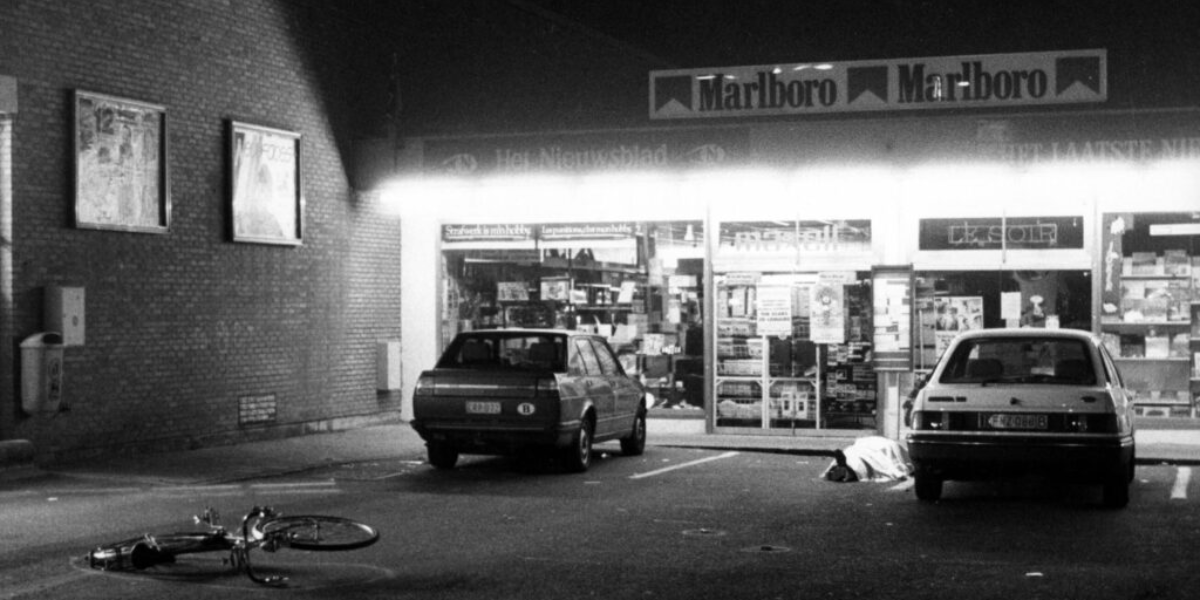
Belgium (The Brussels Morning Newspaper) – October 09, 2026 – Fire brigade divers have recovered bags containing car parts from the Dender River in Geraardsbergen, Belgium, during an exercise that coincided with efforts to locate a Volkswagen Golf GTI potentially connected to the Brabant Killers. The discovery follows an earlier recovery of dozens of vehicle components from the same stretch of river. Police seized the newly recovered bags, but no confirmed link between the parts and the gang’s crimes has been established.
- What Did Divers Recover from the Dender River?
- Why Are the Recovered Volkswagen Golf GTI Parts Important?
- What Had Magnet Fishers Discovered Earlier?
- Who Was Present During the Search in Geraardsbergen?
- Could the Car Parts Help Explain the 1985 Aalst Attack?
- What Is the Current Status of the Brabant Killers Investigation?
- What Happens to the Recovered Bags and Vehicle Components?
- ground: How Did the Brabant Killers Become Belgium’s Most Notorious Unsolved Case?
- Prediction: What Could the River Discovery Mean for the Investigation?
The discovery has renewed attention on one of Belgium’s most notorious unsolved criminal investigations. The Brabant Killers, also known as the Bende van Nijvel, were responsible for a series of violent robberies and killings during the 1980s, leaving 28 people dead. Their identities and motives remain unknown, and no one has been convicted of belonging to the group.
What Did Divers Recover from the Dender River?
Fire brigade divers from the Geraardsbergen area entered the Dender River at Schendelbeke, a district of the Flemish town, on Thursday, 8 October 2026. The exercise provided an opportunity for a search focused on locating components believed to belong to a Volkswagen Golf GTI that investigators and people following the case have associated with the Brabant Killers.
According to Belgian newspaper Het Laatste Nieuws, the operation recovered an additional collection of vehicle parts, including two bags filled with components. The police attended the site and took the bags into custody. Divers also located a car door during the search.
The operation took place near the youth hostel ’t Schipken in Schendelbeke. David Van de Steen, a survivor of the 1985 attack on a Delhaize supermarket in Aalst, was present alongside former police officers Eddy Nevens and André Van der Elst.
The recovery is significant because magnet fishers had already located numerous Volkswagen Golf GTI components at the same location earlier in the summer. Those earlier discoveries prompted renewed interest in the possibility that a vehicle associated with the 1985 Aalst attack might have been abandoned in the river.
However, the newly recovered material has not been conclusively identified as belonging to a getaway vehicle used by the gang. The available reporting does not establish whether the components will undergo further forensic examination.
Why Are the Recovered Volkswagen Golf GTI Parts Important?
The Volkswagen Golf GTI is central to the latest developments because vehicles of that model were used as getaway cars by the Brabant Killers. The specific car potentially associated with the Aalst attack has never been officially recovered.
Earlier magnet-fishing efforts in the Dender River reportedly brought dozens of small, cut-up components to the surface. These included a boot lid with a damaged area described in reporting as a diagonally cut or hollowed opening.
Van de Steen told Belga News Agency on Friday that the recovered components appeared to come from a Golf GTI manufactured between 1984 and 1990. He said the vehicle seemed to have been dismantled completely, with its parts cut into smaller pieces.
He also remarked on the apparent effort involved in dismantling the vehicle, suggesting that whoever did so may have wanted to prevent it from being found. His comments reflected his assessment of the physical condition of the recovered material, rather than a confirmed finding by investigators.
The distinction matters because the identification of a vehicle model does not, by itself, demonstrate that a car was involved in a particular crime. Investigators would need evidence establishing the vehicle’s identity and history before any connection to the Brabant Killers could be confirmed.
The recovered components therefore represent a potential investigative lead, not proof that the gang’s getaway car has been found.
What Had Magnet Fishers Discovered Earlier?
The latest operation followed an earlier search in the same section of the Dender River, where magnet fishers recovered dozens of Volkswagen Golf GTI components approximately two months before the October exercise.
According to Het Laatste Nieuws, the earlier finds included a boot lid and numerous parts that had been cut into small pieces. Van de Steen said a serial number indicated that the components were associated with a GTI model.
The discovery attracted attention because stories had circulated since the 1990s that a vehicle used by the Brabant Killers might have been dumped in the Dender. The Golf GTI associated with the 1985 attack in Aalst, however, has never been officially located.
The earlier search also reportedly resulted in the recovery of a firearm that was still loaded. Van de Steen said the weapon was subsequently taken by unidentified people. The available reports do not establish that the firearm was connected to the Brabant Killers, nor do they establish its relationship to the recovered vehicle parts.
The reporting also suggested that river works may have disturbed the riverbed, potentially bringing previously submerged objects closer to the surface. This remains an explanation reported in connection with the discoveries, rather than a confirmed account of how every item reached the surface.
The subsequent diving exercise created another opportunity to recover material from the river. The discovery of the two bags and the car door has extended the series of finds, but the origin and significance of the components remain unresolved.
Who Was Present During the Search in Geraardsbergen?
The operation brought together people with direct connections to the 1985 attack in Aalst and the emergency response that followed it.
Van de Steen survived the attack but lost his parents and sister. His presence during the search reflected his continuing interest in establishing what happened during the crimes and identifying evidence that might clarify unanswered questions.
Former police officer Eddy Nevens was also present. According to Het Laatste Nieuws, Nevens was the officer who fired at the gang’s getaway vehicle during the escape from the Aalst attack.
André Van der Elst, another former police officer, was there as well. He helped save Van de Steen on the evening of the attack and was present during the river search.
The participation of these individuals connected the recovery effort with the events that continue to shape the case decades later. Nevertheless, their presence does not establish the provenance of the objects found in the river or demonstrate that the search has uncovered evidence directly connected to the perpetrators.
The police seizure of the bags means the recovered material was taken into official custody. The available reports do not provide a final forensic assessment, an identification of the vehicle from which the components originated or confirmation that investigators have established a link to a specific robbery.
Could the Car Parts Help Explain the 1985 Aalst Attack?
The possible identification of the getaway vehicle matters because the circumstances surrounding the Aalst attack remain among the most persistent unanswered questions in the investigation.
On 9 November 1985, the Brabant Killers attacked a Delhaize supermarket in Aalst. The incident was part of the gang’s wider series of violent crimes in Belgium between 1982 and 1985. The attacks involved armed robberies and killings, and the group disappeared without its members being brought to justice.
According to the reporting surrounding the latest search, accounts of the Aalst incident include the claim that a police officer shot one of the attackers as the group fled. A theory has subsequently circulated that the individual, often referred to as the gang’s “Killer”, may have died from his injuries and been abandoned or buried by his accomplices along the escape route.
That account remains an unconfirmed theory. The recovered car parts have not established whether the suspected individual was injured, whether the vehicle carried biological evidence or whether the vehicle in the Dender was used during the attack.
Van de Steen has said that identifying the actual getaway car could help clarify the case. If a vehicle were conclusively linked to the attack, forensic examination could potentially provide information about its occupants and movements. However, whether the recovered parts can yield such evidence is not yet known.
The available reporting does not confirm that blood, DNA or other forensic traces have been found on the components recovered during either search. It also does not establish whether the police have decided to conduct further laboratory testing.
For now, the main development is the recovery of additional material from a location that had already produced parts believed to belong to a Volkswagen Golf GTI.
What Is the Current Status of the Brabant Killers Investigation?
The Brabant Killers case has remained unresolved despite decades of investigative work. According to Belga News Agency, the gang’s crimes between 1982 and 1985 claimed 28 lives, with more than 40 people injured.
The group’s membership, motives and precise organisational structure have never been definitively established. No individual has been convicted of belonging to the gang.
In June 2024, Belgium’s federal prosecutor’s office announced that the investigation was being closed after more than 40 years. The authorities said that the available options for further active investigative measures had been exhausted.
The investigation had included the reassessment of earlier tips, extensive DNA work using techniques that were unavailable during the original inquiries, and the exhumation of approximately 40 bodies. Those efforts did not produce a resolution.
The closure did not mean that the crimes could no longer be investigated under any circumstances. Belga reported that Belgian law provides no statute of limitations for these crimes, allowing the case to be reopened if new facts emerge.
In April 2025, Belga reported that the Court of Appeal in Hainaut had ordered further investigative work into a potential lead involving brothers Thierry and Xavier Sliman, both of whom had died several years earlier. The decision followed requests from parties representing victims and their relatives.
The court also ordered an investigation into information supplied by two boys from Opwijk who had recorded the registration numbers of two vehicles used in the Aalst attack on the morning of 9 November 1985. Their account had not been investigated at the time in the manner later requested by the parties.
These developments show that, although the authorities announced the closure of the broader investigation in 2024, further investigative measures have subsequently been ordered in response to specific leads.
The discovery in the Dender River is a separate development. The available reporting does not state that the recovered parts have been formally incorporated into a reopened investigation or that prosecutors have announced a new investigative procedure based on them.
What Happens to the Recovered Bags and Vehicle Components?
The police took possession of the two bags containing vehicle parts after the divers recovered them. Their next steps, including any technical examination or comparison with evidence from the original crimes, have not been confirmed in the available reporting.
Establishing a link between the parts and a specific vehicle would require more than identifying them as components of a Golf GTI. Investigators would need to establish their origin and determine whether they correspond to a vehicle known to have been used in the attacks.
If the material can be identified more precisely, it may be possible to assess whether it has relevance to the historical investigation. However, the current evidence does not establish that the recovered parts came from the missing getaway car.
The same caution applies to the earlier discoveries. The presence of a boot lid, cut-up vehicle components and a car door in the river does not establish when the objects were deposited there, who dismantled the vehicle or why it was placed in the water.
The Brussels Times reported on 9 October that it was not yet clear whether the recovered parts would undergo further examination. No confirmed forensic findings or official identification of the vehicle had been reported at that point.
ground: How Did the Brabant Killers Become Belgium’s Most Notorious Unsolved Case?
The Brabant Killers carried out a series of violent robberies in Belgium during the early and mid-1980s, with supermarkets among the locations targeted. The crimes were marked by deadly attacks and repeated incidents across the country.
The group became known by several names, including Bende van Nijvel in Dutch and Tueurs du Brabant in French. Despite an extensive investigation, authorities never established the identities of all those responsible or secured a conviction for membership of the gang.
The 1985 attack on the Delhaize supermarket in Aalst became one of the defining incidents associated with the case. The loss of life and the failure to identify the perpetrators left victims’ relatives and survivors seeking answers for decades.
In 2024, prosecutors announced that the investigation would be closed because no further active investigative measures could be identified. The decision did not prevent further action if new information became available, and a court ordered additional work on specific leads in 2025.
The latest recovery from the Dender River adds another development to that long history. Yet the relationship between the car parts and the gang remains unproven, and the discovery has not established the identity of any suspect.
Prediction: What Could the River Discovery Mean for the Investigation?
The immediate significance of the discovery will depend on whether the recovered components can be identified and whether any examination establishes a connection to a vehicle used in the Brabant Killers’ crimes.
If the parts can be linked to a specific car, that finding could provide investigators with information to assess against existing evidence and witness accounts. If the connection cannot be established, the discovery may remain unrelated to the historical attacks.
As of the reporting published on 9 October 2026, police had seized the bags, but no confirmed connection to the Brabant Killers had been announced. Further examination had not been confirmed publicly.