The war in Ukraine has “shattered the illusion that Europe can take its security for granted.”
That was one of the conclusions when the European Conservatives and Reformists (ECR) Group in the European Parliament concluded its “Study Days” in Prague.
The event brought together MEPs from across Europe for four days of discussions on Europe’s security, competitiveness and economic future.
The Study Days took place from Tuesday to Friday and returned to Prague for the first time in 17 years.
Opening the event, ECR Group Co-Chair Nicola Procaccini stressed the need for a Europe that can address today’s challenges without losing sight of its Member States and citizens.“Prague has a special meaning for our political family. It is a city marked by the courage of those who stood up for freedom, and it is also where the principles that shaped the ECR Group were set down. Returning here after 17 years is a reminder of where we came from and what we still stand for,” Procaccini said.
“Europe’s future will depend on whether it can remain secure, competitive and confident in its own strengths. We need to rebuild our industrial base, reduce unnecessary burdens and ensure that Europe has the capacity to defend its interests in a much more demanding world,” he added.
Patryk Jaki, ECR Group Co-Chair, underlined the importance of reducing unnecessary regulation and giving national economies more room to grow.
“The Prague Declaration gave our political family a clear direction from the beginning: a Europe of free nations, individual responsibility and economic freedom. Those ideas have not become less relevant with time. They have become more necessary,” Jaki said.
“Europe cannot regulate its way back to growth. If we want investment, innovation and good jobs to stay in Europe, we have to lower costs, remove unnecessary rules and give businesses the freedom to compete,” he added.
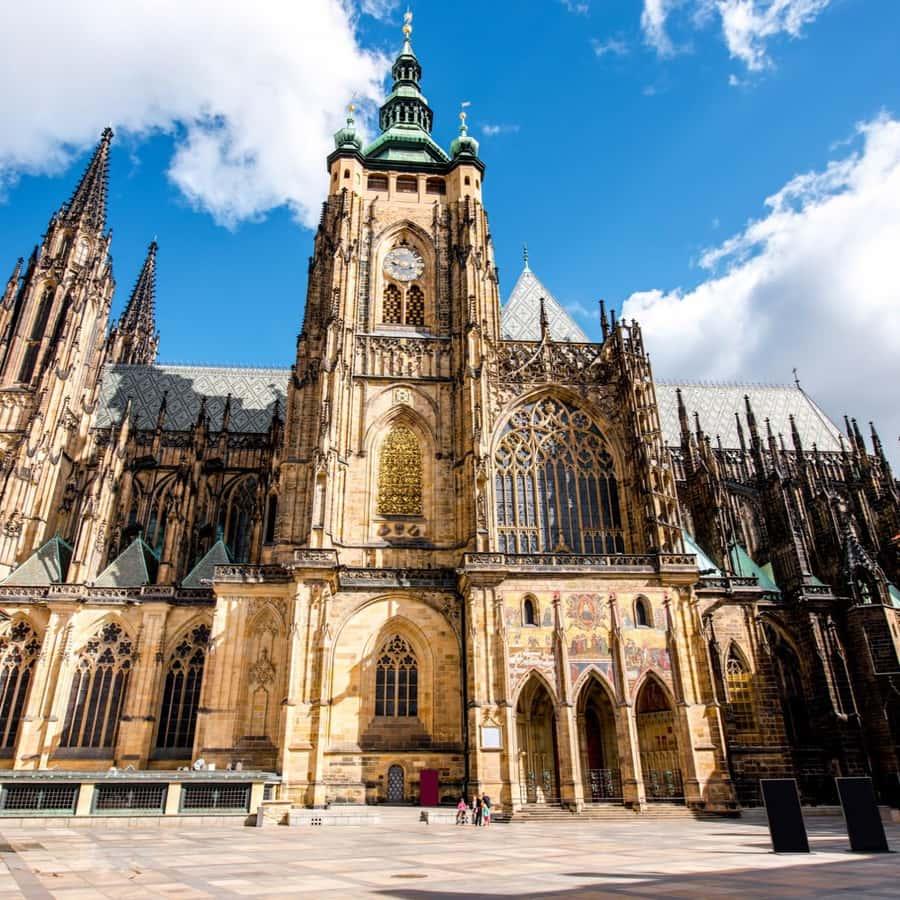
The security discussions were led by Czech MEP Alexandr Vondra, who also oversaw the programme dedicated to Prague’s history and cultural heritage. The programme took ECR MEPs from a discussion on Prague as a cultural crossroads to Prague Castle and St Vitus Cathedral, followed by guided tours of the city led by Czech cultural experts. Against the backdrop of Europe’s history and heritage, Vondra stressed that Europe can no longer take its security for granted.
“The war in Ukraine has shattered the illusion that Europe can take its security for granted. We need to rebuild our defence capabilities now – not after the next crisis,” he said.
Czech MEP Veronika Vrecionová was in charge of the sessions focusing on trade, public spending and agriculture. She highlighted the need to make European policy work for the people and businesses that drive the economy.
“Europe needs to spend smarter, trade better and stop making life harder for the people and businesses that keep our economy running. Competitiveness cannot be achieved through ever more regulation and higher costs,” Vrecionová said.
The programme also took MEPs outside Prague, with a visit to Břehyně and Lobeč. In Lobeč, Vrecionová led a discussion on plant protection products and climate change, followed by a tour of the local brewery.
Czech MEP Ondřej Krutílek took ECR MEPs to the automotive testing polygon near Mladá Boleslav, where they discussed the future of Europe’s car industry and what it needs to remain competitive.
“Competitiveness is not an abstract concept – it is about real factories, real jobs and real technologies. Europe should set the right conditions for its industry instead of putting unnecessary obstacles in its way,” Krutílek said.
A key moment of the event was the Prague Declaration Dinner, with former Czech Prime Minister and former ODS leader Mirek Topolánek, who played an important role in the political context in which the ECR Group was established.
ECR representatives thanked him for his contribution to the European conservative movement and for joining the Group in Prague. In his speech, Topolánek stressed that freedom remains a fundamental European value and should be at the heart of European integration.
“Freedom is, after all, the main European value. It is what European integration is supposed to serve. Yet freedom is becoming a victim of unification.”
He also warned: “The EU is threatened by a crisis of content and values. The problem isn’t that integration is too shallow, the EU too ununified, or decision-making mechanisms too ineffective. Something essential is fading – freedom.”
The return of the Study Days to Prague after 17 years also reflected the city’s longstanding connection to the European conservative movement, with the Prague Declaration adopted in 2009 becoming one of the key political documents associated with the founding of the ECR Group.