Brussels, 5 October, (Brussels Morning Newspaper) – The EU cost-of-living crisis is moving to the centre of the European Parliament’s agenda as MEPs prepare for a plenary debate on household affordability amid renewed inflation and sharply rising energy costs across the euro area.
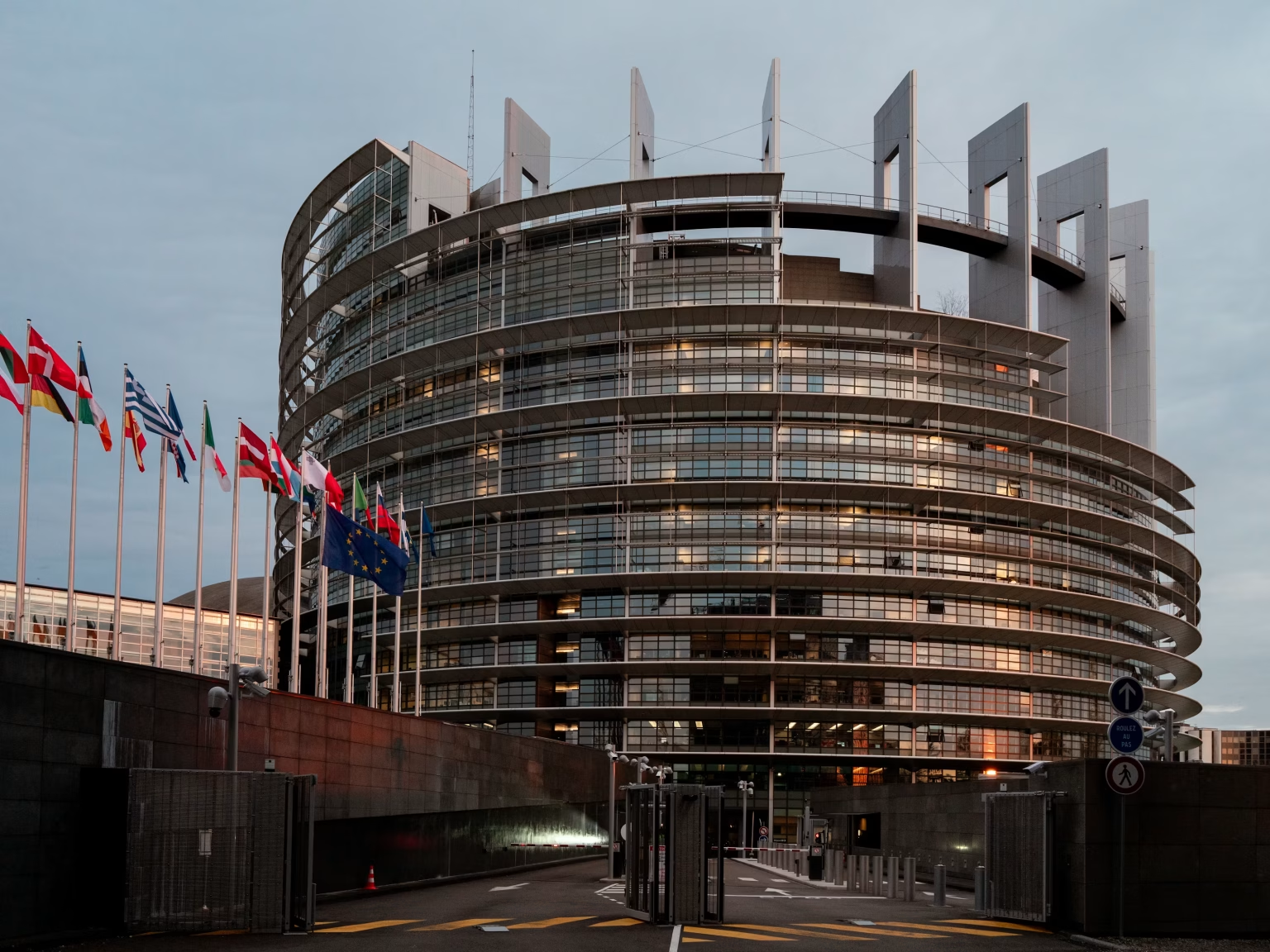
The European Parliament has scheduled a debate titled “Empowering Europeans to address the cost-of-living crisis” for 7 October during its Strasbourg plenary session. The procedure is formally classified under social inclusion, poverty, minimum income and price stability and is awaiting plenary debate or a vote.
The debate comes as new official data point to renewed pressure on household budgets. Eurostat’s flash estimate showed euro-area annual inflation climbing to 3.8% in September, from 3.2% in August.
Energy prices intensify household pressures
Energy is currently the strongest source of inflationary pressure. Eurostat estimated annual energy inflation at 18.8% in September, accelerating from 14.3% in August.
Services inflation was estimated at 3.2%, while food, alcohol and tobacco prices increased by 1.4%. Non-energy industrial goods recorded estimated annual inflation of 1.1%.
The figures provide an important economic backdrop to the parliamentary debate because higher energy prices can affect households directly through electricity, heating and fuel costs while also increasing expenses for businesses.
Confirmed August figures already showed annual inflation of 3.2% across both the euro area and the wider European Union. A year earlier, euro-area inflation stood at 2.0%.
Parliament prepares major affordability debate
The parliamentary procedure, 2026/2906(RSP), is a resolution on a topical subject and remains officially at the “awaiting plenary debate/vote” stage.
The debate is significant because affordability is increasingly intersecting with several major EU policy areas, including energy security, housing, competitiveness and social protection.
Renew Europe representatives highlighted the issue during the European Parliament’s pre-session briefing, identifying the cost of living as one of their priorities for the coming plenary session. The group has advocated measures covering energy independence, affordable housing and European economic competitiveness.
Political groups differ over solutions
Although MEPs broadly recognise the pressure facing households, political groups differ over how European institutions should respond.
During the Parliament’s pre-session briefing, liberal representatives called for a coordinated European response focused partly on energy independence and affordable housing. Other political representatives challenged EU taxation and energy policies, arguing that some existing measures contribute to higher costs.
Those divisions mean the EU cost-of-living crisis debate is likely to extend beyond immediate financial relief and into wider arguments about taxation, energy policy, competitiveness and the appropriate role of EU institutions.
Why affordability matters across Europe
Inflation does not affect every EU country equally. Eurostat’s confirmed August figures showed annual rates ranging from 0.3% in Sweden to 6.3% in Romania. Lithuania recorded 5.6%, while Cyprus stood at 5.2%. Inflation increased in 20 Member States compared with July.
That uneven picture complicates attempts to develop common European responses. Housing, taxation, welfare and many energy policies remain substantially influenced by national governments, while EU decisions can shape competition, energy markets, investment and social funding.
For households, meanwhile, lower inflation does not necessarily mean prices return to previous levels. It means prices are increasing more slowly. The renewed acceleration in September therefore adds to concerns about purchasing power.
What happens next?
MEPs are scheduled to debate empowering Europeans to address the EU cost-of-living crisis on 7 October in Strasbourg. Parliament’s Legislative Observatory currently lists the procedure as awaiting plenary debate or vote.
The discussion will provide a clearer indication of which affordability measures can command political support and where divisions remain between parliamentary groups.
The next major inflation checkpoint will follow on 16 October, when Eurostat is scheduled to publish its complete September inflation data, providing country-level figures and a fuller assessment of price pressures across the European Union.