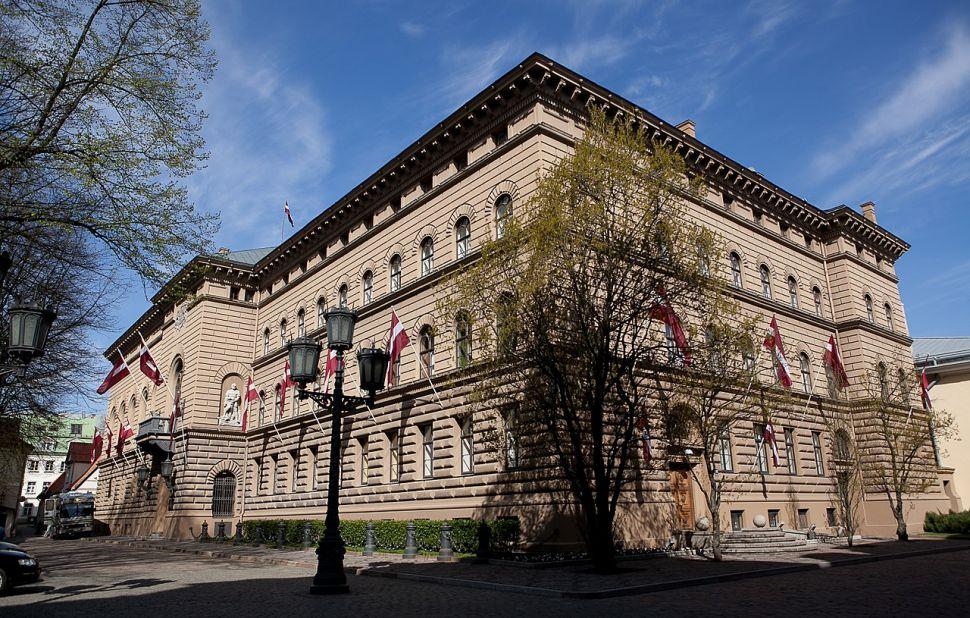
Riga, Latvia, 4 October, (Brussels Morning Newspaper) – Latvia election results have delivered a major victory for Prime Minister Andris Kulbergs and the centrist United List alliance, strengthening pro-European forces as the Baltic country confronts security concerns linked to Russia and the war in Ukraine. The result places Kulbergs in a strong position to lead the next government, although coalition negotiations are still required because his alliance did not secure an outright parliamentary majority.
United List takes commanding lead in Latvia
Official results published by Latvia’s Central Election Commission showed United List securing roughly 35% of valid votes, making it the largest political force in the new Saeima.
The performance represents an important mandate for Kulbergs, but Latvia’s proportional parliamentary system means winning the largest share of votes does not automatically produce a majority government.
United List must therefore negotiate with other parties to reach the 51 seats required to control the 100-seat parliament.
The outcome will be closely followed in Brussels because Latvia is a member of both the European Union and NATO and occupies a strategically important position on the alliance’s eastern flank.
Powerful result reinforces Latvia’s Western direction
Kulbergs campaigned on maintaining Latvia’s support for Ukraine while strengthening national defence and improving the country’s ability to respond to security threats.
Russia’s invasion of Ukraine has transformed defence policy across the Baltic region. Latvia shares a direct border with Russia, making developments involving Moscow particularly significant for its government and voters.
Reuters reported that Kulbergs supports maintaining Latvian defence expenditure at 5% of gross domestic product, reflecting the government’s emphasis on military preparedness.
The election campaign also focused on domestic concerns, including living costs, public expenditure and the country’s economic outlook.
What has the Latvian government said?
Kulbergs has consistently presented security and Latvia’s Western alliances as central priorities, arguing that economic dependence on Russia can create vulnerabilities for the country.
His political position puts continued cooperation with European and NATO partners at the centre of Latvia’s security strategy.
The Latvia election results therefore matter beyond domestic politics. A government led by United List would be expected to maintain Riga’s established support for Ukraine and close cooperation with European and transatlantic allies.
Russia and Ukraine remain central political issues
Latvia has undergone significant political and security changes since Russia launched its full-scale invasion of Ukraine in February 2022.
Alongside Estonia and Lithuania, Latvia has been among the European countries pressing for stronger defence capabilities and continued Western support for Kyiv.
Political debate inside Latvia has nevertheless remained complex. The country has a sizeable Russian-speaking population, while questions involving language, national identity and relations with Moscow continue to influence domestic politics.
Those divisions formed part of the wider backdrop to the parliamentary election alongside economic and public-service concerns.
Why Latvia’s election matters to Brussels
For the European Union, political continuity in Riga is particularly relevant to discussions surrounding Ukraine, sanctions against Russia and Europe’s defence strategy.
Latvia’s geographical position also makes the country an important part of NATO’s deterrence posture in northeastern Europe.
A government retaining Latvia’s established European and Atlantic orientation would provide Brussels with continuity as EU governments consider how to finance defence and maintain long-term assistance for Ukraine.
What happens next in Latvia?
Despite its strong performance, United List cannot govern alone.
Kulbergs must now negotiate with potential coalition partners capable of providing a parliamentary majority. Latvia’s president has the constitutional role of inviting a candidate to form a government, which must then secure the confidence of the Saeima.
The election has therefore established the balance of political power but has not completed the government-formation process.
For Brussels, the next critical development will be the composition of that coalition and the programme it agrees on defence, Ukraine, the economy and Latvia’s role within the European Union.