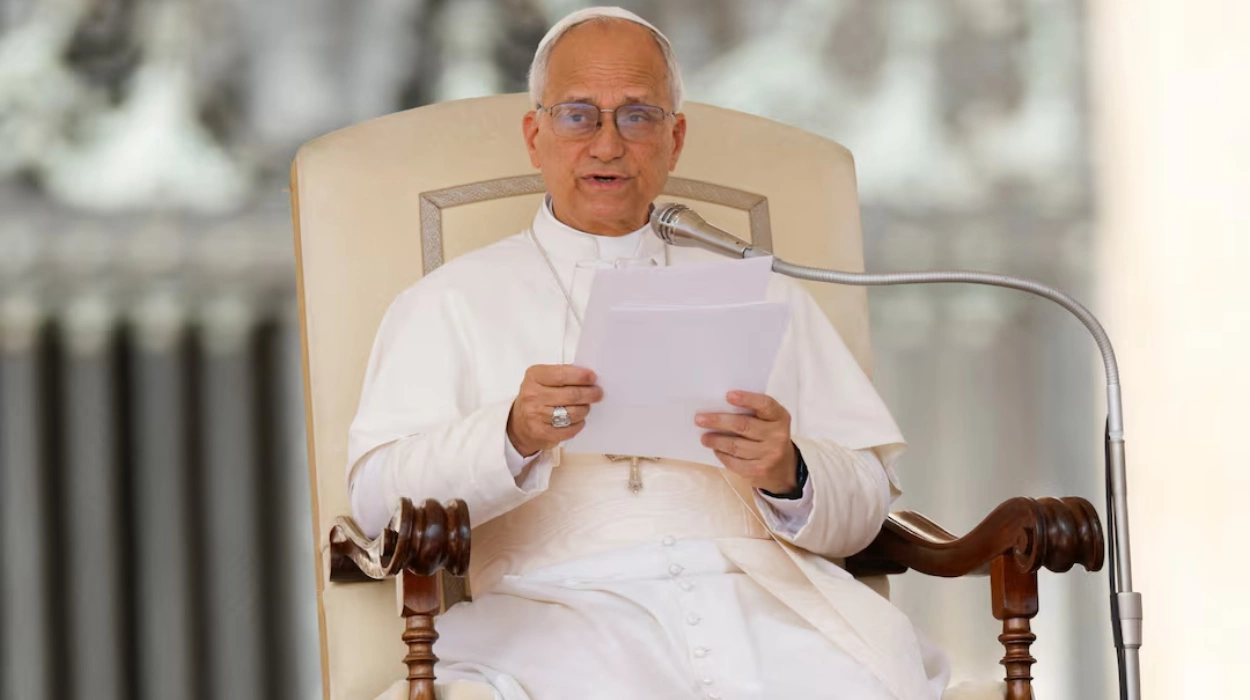
Metz (Brussels Morning Newspaper) September 28, 2026 — Pope Leo XIV issued a stern warning regarding the deterioration of international diplomacy, stating that relations between individuals and states are growing increasingly uncivilised. Speaking in the northeastern French city of Metz near the German border, the head of the Catholic Church delivered his address on the final day of a four-day official visit to France, an event marked by high-level engagements alongside French President Emmanuel Macron and other dignitaries.
Addressing an audience that included political leaders and European representatives, the pontiff observed that the fundamental value of keeping one’s word has been discarded in contemporary geopolitical exchanges. Instead of honouring commitments, he noted, figures across the global stage frequently boast of falsehoods and deceit. Without naming specific world leaders, the Pope emphasised that this erosion of trust threatens the foundational structures of global stability and peaceful coexistence among nations.
The Role of Europe in Breaking the Cycle of Deception
Emphasising the strategic and moral position of the continent, Pope Leo asserted that Europe possesses a unique capacity to counter these negative trends. He argued that the continent can help dismantle the prevailing cycle of dishonesty through the respect for others that it has systematically learned to cultivate and preserve over centuries of complex history.
The choice of Metz as the venue for this address carried considerable historical resonance. Located near the German border, the city changed hands between France and Germany through multiple historical conflicts. Furthermore, Metz is closely associated with Robert Schuman, widely regarded as one of the founding fathers of the European Union, whose tomb is situated just outside the city limits. By invoking this legacy, the pontiff framed European integration and unity as vital counterweights to major global powers and mounting international tensions.
Context of the Papal Visit to France
This journey marked the first official papal visit to France in nearly two decades, drawing significant attention from international observers and media organisations. Throughout the four-day tour, the pontiff’s schedule focused heavily on themes of peace, historical identity, and the moral responsibilities of modern states.
The Pope’s remarks in Metz also touched upon Europe’s Christian roots and the historical significance of welcoming migrants and refugees fleeing persecution and conflict. Highlighting the arrival of those seeking safety, he reiterated previous appeals for integration, human dignity, and solidarity. In his final remarks directed toward European youth, the pontiff encouraged younger generations to actively promote peace, reject a mentality of violence and oppression, and approach the future with confidence rather than fear.