Rovaniemi (Brussels Morning Newspaper) September 14, 2026 – European leaders gathered in Rovaniemi, Finland, on Monday to initiate high-level talks aimed at reshaping the European Union’s strategic policy in the Arctic. The talks are focused on rising geopolitical competition, expanding Russian military presence, and new maritime shipping lanes opened by climate change. The consultations will directly inform a revised EU Arctic strategy to be unveiled by the European Commission in the coming weeks.
High-Level European Arctic Summit Opens in Finland
European heads of state, top diplomats, and European Union officials assembled in northern Finland on Monday to begin discussions on re-evaluating the bloc’s approach to the Arctic. The meeting, officially titled the European Arctic Summit, takes place in the municipality of Rovaniemi against the backdrop of accelerating climate change, shifting trade dynamics, and heightened geopolitical tensions across the High North.
The two-day summit, hosted by Finnish Prime Minister Petteri Orpo, brings together key European figures, including German Chancellor Friedrich Merz, Danish Prime Minister Mette Frederiksen, Polish Prime Minister Donald Tusk, Estonian Prime Minister Kristen Michal, and Latvian Prime Minister Andris Kulbergs. Also attending the discussions are Lithuanian President Gitanas Nausėda, Romanian President Nicușor Dan, European Council President António Costa, and EU High Representative for Foreign Affairs and Security Policy Kaja Kallas.
According to European officials, the core objective of the gathering is to strengthen the European Union’s common strategic framework to better address security, commercial, and environmental realities in the northernmost polar region.
Tuomas Tikkanen, senior adviser on European affairs to Finnish Prime Minister Petteri Orpo, outlined the motivation behind the talks.
“The idea is essentially to strengthen the EU’s common strategic approach to the Arctic in this situation, where the geopolitical and economic significance of the region is growing considerably,”
Tikkanen stated.
Shifting Climate and Geopolitical Dynamics Drive Policy Overhaul
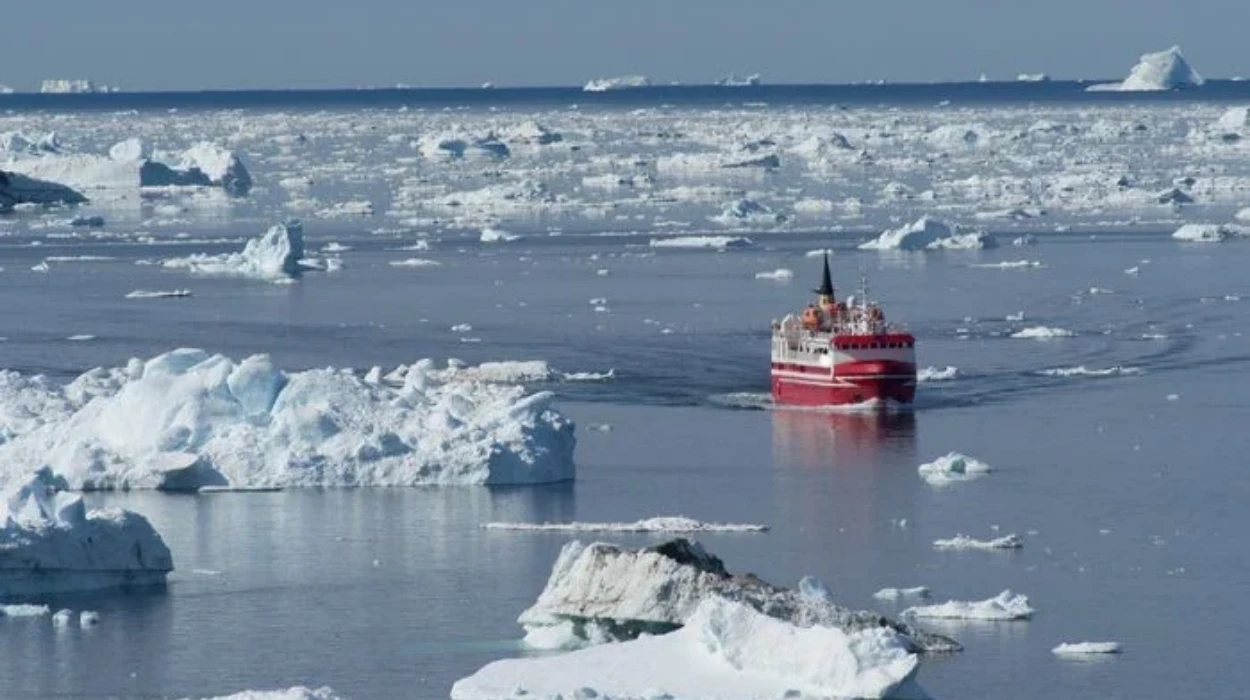
The summit in Rovaniemi comes at a time when rapid environmental changes are significantly altering the geography of the High North. Rising global temperatures have led to the steady thinning and retreat of polar sea ice, rendering once-impassable icefields navigable for longer windows each year.
This environmental thaw is exposing vast untapped deposits of critical mineral resources, hydrocarbons, and rare earth elements, provoking intensified global interest. Simultaneously, the emergence of navigable waters—such as the Northeast Passage along the Siberian coast and potential Northwest Passages—promises to shorten maritime transit times between Europe and East Asia.
Speaking to journalists as the sessions began, Finnish Prime Minister Petteri Orpo emphasized that the region has evolved into an indispensable component of Europe’s overall security environment.
“We have natural resources. We have new sea routes because of climate change. But also we have threats. That’s why we need concrete actions,”
Orpo said, urging participants to establish a “clear picture” and “common understanding” across member states. “There is so much we can do together”.
Regional observers and think tanks, including the Centres for European Policy Network, highlighted that global instability in other major maritime transit points—such as the Strait of Hormuz—has amplified the strategic weight of the Arctic’s Northeast Passage for international trade flows.
Escalating Military Buildup and Regional Tensions
Security issues have climbed to the top of the European Arctic agenda following a sustained buildup of military infrastructure by the Russian Federation along its northern coastline and military outposts. Russian efforts to modernize Arctic airbases, deploy radar arrays, and station naval assets have raised security concerns among European governments and neighboring Nordic states.
Tensions in the Arctic region were further heightened earlier this month when Norwegian authorities seized a Russian-flagged vessel in the remote archipelago of Svalbard. The vessel was detained at the request of Ukraine, drawing explicit condemnation from Russian President Vladimir Putin and generating friction across northern maritime zones.
In addition to Russian military activities, European policymakers are closely tracking China’s expanding economic footprint in the region. Declaring itself a “near-Arctic state,” Beijing has continued to invest heavily in shipping projects, energy exploration, and resource extraction initiatives across the polar north, seeking to establish a “Polar Silk Road” integrated into its wider global commerce networks.
European leaders are also mindful of ongoing geopolitical developments involving Greenland, an autonomous territory within the Realm of Denmark. United States President Donald Trump has repeatedly reiterated proposals that the icy, mineral-rich island should become part of the United States—a proposition firmly rejected by both Greenlandic and Danish authorities.
Integration of Specialized Icebreaker Capabilities
A central proposal championed by host country Finland during the summit involves integrating specialized European icebreaking fleets into the broader framework of the European Union’s upcoming Arctic strategy.
Finland possesses a highly specialized maritime engineering sector that designs and manufactures heavy icebreaking vessels. Finnish maritime firms have designed approximately 80 per cent of the world’s icebreakers and constructed about 60 per cent of vessels currently in global service. Finnish shipbuilders are also assisting in building the new Arctic Security Cutter class vessels for the United States Coast Guard.
Helsinki maintains that robust European icebreaker fleets are necessary to guarantee operational independence, ensure search-and-rescue capacity, protect maritime navigation, and maintain high-north surface access independently of non-EU powers. Finnish government officials argue that a comprehensive EU policy must contain concrete investments in specialized polar fleet infrastructure to remain operationally viable.
The emphasis on indigenous industrial capacity follows historical shifts in polar manufacturing. In late September 2022, the Finnish Ministry of Foreign Affairs blocked an export licence for an icebreaker intended for the Russian mining enterprise Norilsk Nickel, signaling a firm decoupling of European icebreaker engineering from Russian commercial contracts.
Financial Commitments and Upcoming European Union Strategy
The consultations in Rovaniemi serve as a preparatory step for an updated European Union Arctic policy document. The European Commission plans to draft and formally present the new strategy in the coming weeks, incorporating input gathered from member state leaders during Monday’s summit.
European diplomacy officials, including High Representative Kaja Kallas, have previously advocated for a shift toward integrating defense, hard power, and resource allocation into the EU’s polar framework. Analysts note that the forthcoming strategy will mark the first time security and territorial stability take center stage in the European Union’s official Arctic policy.
The policy discussions follow recent financial actions undertaken by European leadership. Earlier this month, European Commission President Ursula von der Leyen announced a €200 million investment package during an official visit to Greenland. The €200 million capital allocation, spread over two years, is designated to build local infrastructure, expand critical raw material extraction capacities, strengthen internet connectivity, fund hydropower projects, and support local education and fisheries.
The Greenland investment package is structured to secure stronger long-term cooperation between the EU and regional governments, guaranteeing European access to critical minerals required for the green and digital transitions while discouraging external control of Arctic resources.
As consultations conclude in Rovaniemi, European officials expect the forthcoming strategy to outline concrete military, commercial, and environmental steps to safeguard the European Union’s strategic interests across the High North.