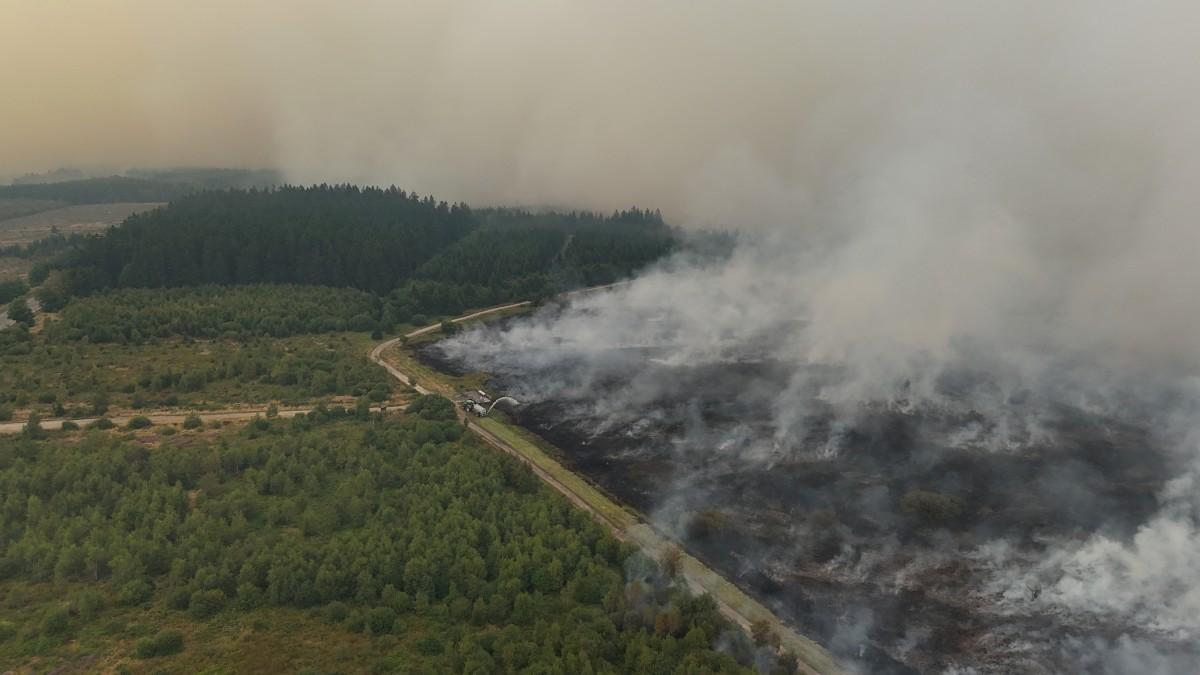
High Fens, Belgium, 19 August (Brussles Morning Newspaper) Seven helicopters and two Swedish firefighting planes have been brought into the battle against the High Fens wildfire, creating a complex operation in the skies above Belgium’s largest nature reserve as crews work to bring the devastating blaze under control.
The aircraft are supporting firefighters and other emergency teams on the ground, particularly in parts of the reserve where difficult terrain makes direct access slow or impossible.
European assistance was requested after the fire broke out on Friday, 14 August. By Saturday, reports citing local authorities said about 1,600 hectares had already burned, surpassing the scale of the major 2011 High Fens fire.
Seven helicopters work alongside Swedish firefighting planes
Putting nine aircraft into the same operation requires close coordination.
Helicopters can work comparatively close to the fire, making targeted water drops on hotspots and areas that ground crews struggle to reach. Fixed-wing firefighting aircraft operate differently, approaching at greater speed and requiring clearly managed flight paths for their water drops.
That means aircraft cannot simply fly towards whichever flames appear most threatening.
The aerial response must be organised around priorities identified by commanders and firefighters on the ground, while pilots maintain safe distances from other aircraft. Smoke, wind and changing fire behaviour can further complicate the operation.
The two Swedish aircraft are part of the international support available through Europe’s civil protection arrangements. Sweden has deployed Air Tractor firefighting aircraft during other major European wildfires this summer, including operations in France.
European support strengthens Belgium’s response
Belgium sought international assistance as the scale of the fire became clear.
Initial European support included aircraft from Sweden, the Czech Republic and the Netherlands, according to reports on the deployment. Firefighters have also been supported by military personnel and other teams working across the affected area.
The European Civil Protection Mechanism allows a country facing an emergency that stretches its own resources to request assistance from participating states.
For Belgium, the additional aircraft provide valuable capacity while domestic helicopters and emergency crews remain committed to the High Fens wildfire.
High Fens has faced serious fires before
The reserve has a history of difficult wildfire incidents.
A major fire in 2011 burned almost 1,400 hectares, while another emergency struck the High Fens in 2023. During the 2023 incident, firefighters worked with Civil Protection, Federal Police helicopters, local police and the Department of Nature and Forests. German and Belgian emergency teams also cooperated during the response.
The latest blaze has again demonstrated why aerial support matters in this landscape.
The High Fens contains heathland, wetlands and peat-rich areas. Fire in peat can be especially troublesome because heat can remain below the surface after flames above ground appear to have been extinguished.
Why the fire matters beyond the immediate emergency
The priority is protecting people and stopping the fire from spreading, but the environmental consequences could continue long after the aircraft leave.
The High Fens is a protected landscape containing sensitive habitats. Scientists have warned that the latest fire has damaged peatland and other habitats that have been the focus of years of ecological restoration.
Once the emergency phase ends, attention will turn to assessing the extent of the damage and determining what restoration work is possible.
What happens next?
Aerial resources will remain useful for as long as active fire fronts and inaccessible hotspots require water drops, with deployments dependent on weather, visibility and operational priorities.
Ground teams will continue to play the decisive role in securing burned areas and checking for remaining heat.
After the flames are extinguished, authorities and environmental specialists face another challenge: establishing how much of the reserve has been damaged and how its peatlands, wildlife habitats and vegetation can recover.