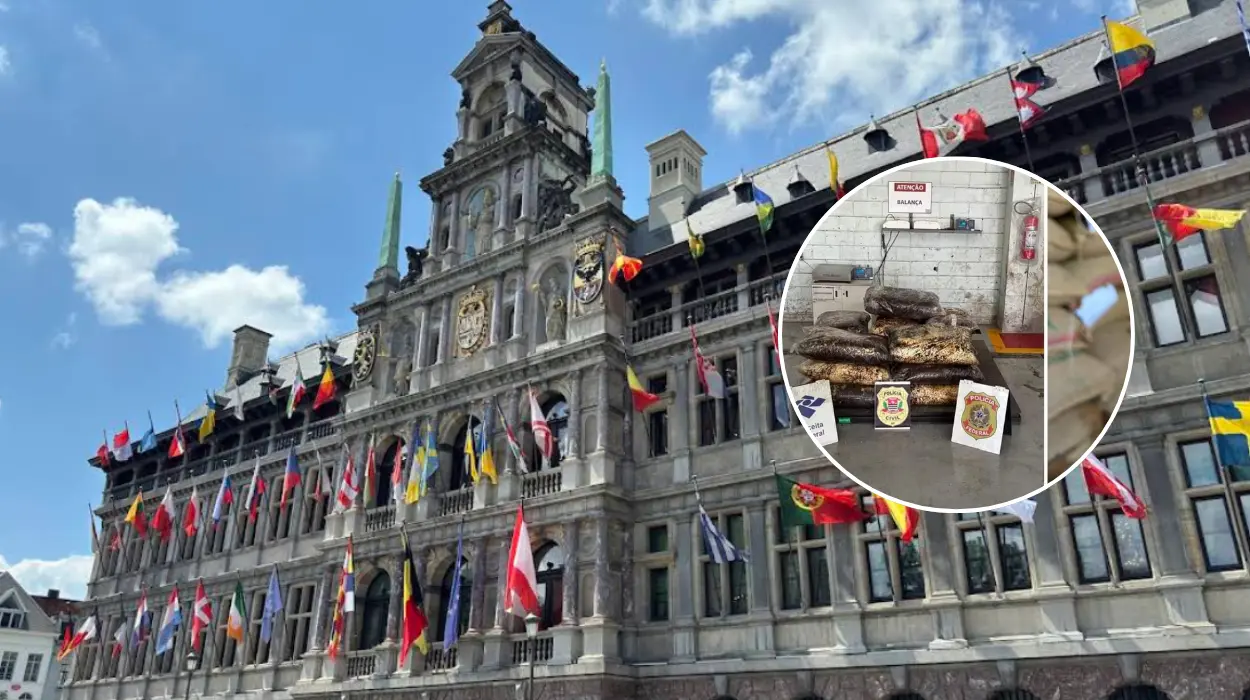
Antwerp (Brussels Morning Newspaper) – As reported by Brazilian authorities, a total of 702 kilograms of cocaine packed in coffee beans was intercepted at Santos, Brazil’s biggest port, and stopped from being delivered to Europe via Antwerp. This interception took place on Tuesday, August 18, when an inspection of a ship was carried out at the Port of Santos, Brazil. During the inspection, a drug detection dog found out the presence of drugs, which led to the opening of the ship and checking of its coffee cargo.
How was the cocaine discovered?
The cocaine was stashed in an apparently legitimate coffee consignment. Reports quoting Brazil’s Federal Police and Federal Revenue Service indicate that packages holding the narcotic were found within sacks of coffee beans. The stated destination of the container was Turkey. Yet the consignment was supposed to transit through the Belgian port of Antwerp, which has often been cited as one of the major ports of entry for Latin American cocaine deliveries into Europe.
As Brazilian media outlet G1 indicates, the cocaine was stuffed in a coffee consignment loaded in the port of Santos and destined for Turkey but set for transshipment in Belgium. It is not clear from the information at hand whether the Brazilian coffee exporter, the shipping firm or the Turkish recipient knew that cocaine was hidden in their consignment. Authorities have not made public the name of the firms involved, the number of the container, the shipping line or a suspect’s identity.
Was Antwerp the final destination?
No. The seizure was made in Brazil, and not in Belgium, and all the information available on the incident shows Turkey as the destination country of the shipment. The city of Antwerp, however, was stated to be a transshipment point in the report. This is significant since cocaine shipments that come into the country via Antwerp can then be transferred to other European countries. The fact that the drugs were destined for Antwerp does not necessarily mean that they would go to the Belgian domestic market.
What is Antwerp’s cocaine record?
The Port of Antwerp continues to serve as one of the key ports for the delivery of cocaine in Europe. Customs seizures in Belgium increased from 44 tonnes of cocaine in 2024 to 55 tonnes of cocaine in 2025. Nevertheless, in the first six months of 2026, cocaine seizures significantly decreased. Between January and June, Belgian customs intercepted 5.4 tonnes of cocaine compared to 16.7 tonnes during the same period in 2025. Moreover, the number of interceptions also decreased from 82 to 28.
Nonetheless, authorities claimed that such changes could not serve as evidence of the reduction in trafficking of the drug. Criminal groups could change their strategy by dividing the cargoes into smaller lots, employing other ports, and applying other ways to conceal the cargo in order to lessen the effect of individual seizures. As reporting based on the information provided by Belgian customs shows, the average amount of cocaine intercepted in the Port of Antwerp in the first six months of 2026 was 193kg.
A European Union drugs-monitoring report recorded 442.9 tonnes of cocaine seized in Antwerp in 572 seizures in the period covered by its port analysis, placing the Belgian port among the most heavily affected European maritime gateways.
Which similar cases occurred before?
The use of coffee and other commercial goods in cocaine trafficking has produced several major seizures along the Brazil–Europe route.
The seizure of 500kg of cocaine at a Nespresso factory in Romont took place in March 2022 where cocaine was being smuggled from Brazil to Antwerp via coffee containers. The incident would later become the focus of an investigation by Swiss officials who found out cocaine among coffee shipments sent to their country. In 2019, Belgium officials seized around 2.7 tonnes of cocaine concealed in a shipment of tropical woods from Costa Rica at Antwerp. This incident gave way to the massive ‘Costa case’, one of the biggest organised crime prosecution cases in Belgium.
The investigation led to several convictions and asset forfeitures. There have also been large seizures of cocaine concealed in shipments of paper and industrial materials in Brazilian ports. One instance occurred in February 2026, when officials seized 461kg of cocaine concealed in a shipment of paper at Santos. The shipment was reported to travel through Antwerp prior to reaching the UK.