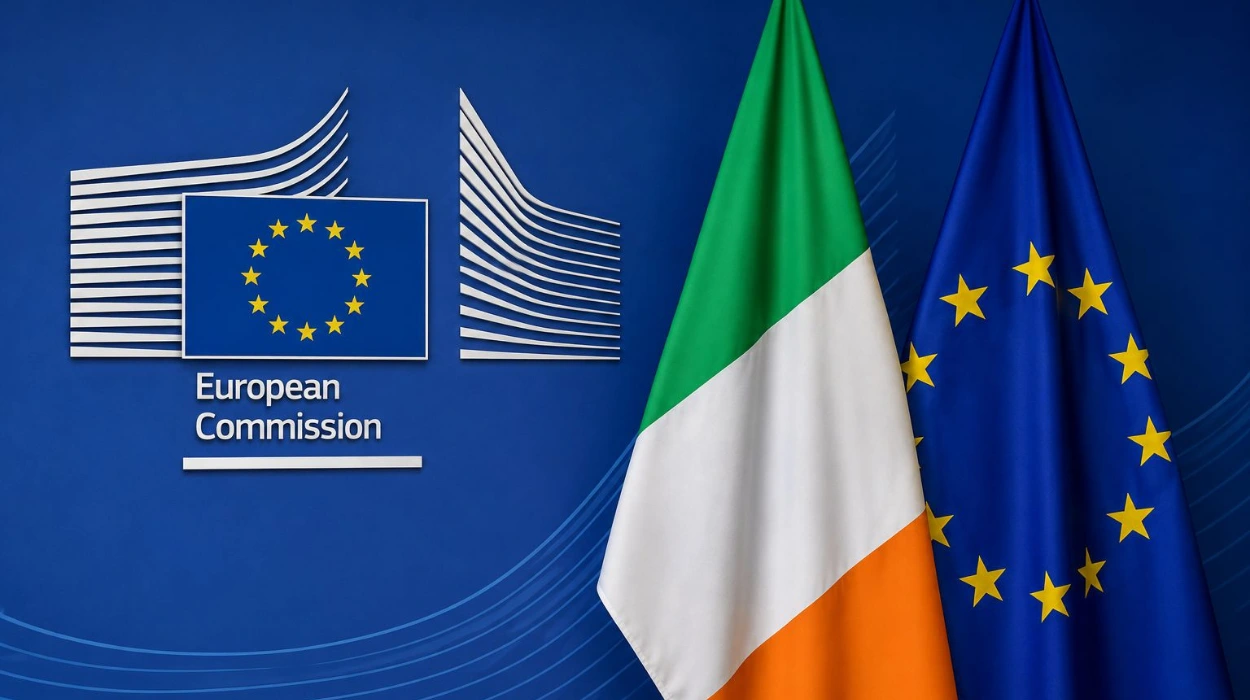
A group of 60 leading academics have called for Ireland to sit out of talks on tax and digital files due to “conflicts of interest”, as Ireland settles into the six-month rotating Presidency of the EU Council, which began at the start of July.
The academics argued in an open letter published on July 8 that Ireland cannot be trusted to oversee negotiations on legislative files about these subjects, due to the country’s low corporation tax rate and concentration of tech companies domiciled in Ireland.
“Ireland’s reliance upon giant non-EU firms creates insurmountable conflicts of interest, as evidenced by the country’s track record in the area of data regulation and taxation,”
said the letter.
Unsurprisingly, Ireland has rejected the academics’ call, with Irish Prime Minister Micheál Martin stressing that
“Every member state has a significant number of technology companies … Ireland will be an honest broker in dealing with all of these issues.”
But the academics have touched on a widespread concern throughout the EU that the Irish Government’s close relationship with Big Tech could influence its priorities during the six months it holds the Presidency.
As President of the EU Council, Ireland’s remit is to set the EU agenda and guide progress on shared priorities. Ireland’s most important file is to secure the EU’s long-term budget known as the Multiannual Financial Framework (MFF), which, as currently drafted by the European Commission, includes a spending package worth a record €2 trillion. Notably, the proposed MFF includes a highly controversial proposal to introduce novel tax streams (known as ‘Own Resources’) to pay for this increased expenditure. This includes a proposed tax on all companies in Europe generating more than €100 million in revenue, amongst other highly contested proposals.
The ability to help pick and choose winners and losers underscores the conflict of interest intrinsic to the EU Presidency.
Indeed, Dublin has not done much to dispel the notion that it is unwilling to tax the industries it is close to. In a joint press conference on July 28 with German Chancellor Friedrich Merz discussing the Irish Presidency’s priorities, Irish Prime Minister Micheál Martin rejected a proposed EU-wide digital levy to provide a revenue source for the budget – which would disproportionately impact Big Tech companies based in Ireland – calling it “challenging” and that the EU should “tread carefully”.
But the pressure on Ireland is not just limited to the negotiation of Own Resources.
There is strong sentiment throughout the EU that the size of the proposed MFF is too large, period, and that Ireland ought to control its growth.
Merz rejected the European Commission’s €2 trillion budget proposal outright, describing it as unsustainable and calling for cuts of “several hundred billion euros”. Austria’s Europe Minister said the EU
“must move away from the Brussels reflex of simply trying to solve every problem with more money”,
while Sweden’s Foreign Minister said there is “simply not any room” to increase the country’s EU budget contributions. Meanwhile, the Netherlands’ Finance Minister criticised the MFF for having
“the wrong focus”,
while the Finnish European Affairs Minister emphasised that the MFF needs to support priorities such as competitiveness.
There is thus significant pressure on Ireland to push for a streamlined and competitive budget which focuses on core EU priorities without punishing industries which make for convenient political targets, as argued by Polish economist Marek Tatała:
“Before creating new own resources, member states should ask whether Europe could instead have a better, smaller and more focused budget. If new own resources are considered, the Irish Presidency and member states should assess them impartially, especially their impact on competitiveness. They should avoid measures that drain already strained national budgets, or which pick winning and losing industries based on political or economic expediency.”
Finding solutions to the competitiveness problem is a concept that all EU member states can get behind. If the Irish Presidency focuses its efforts on prioritising that, rather than innovating new tax streams which cause individual member states and industries to lose out, then perhaps it will be able to fulfil its goal of agreeing a new Multiannual Financial Framework by the end of the year.