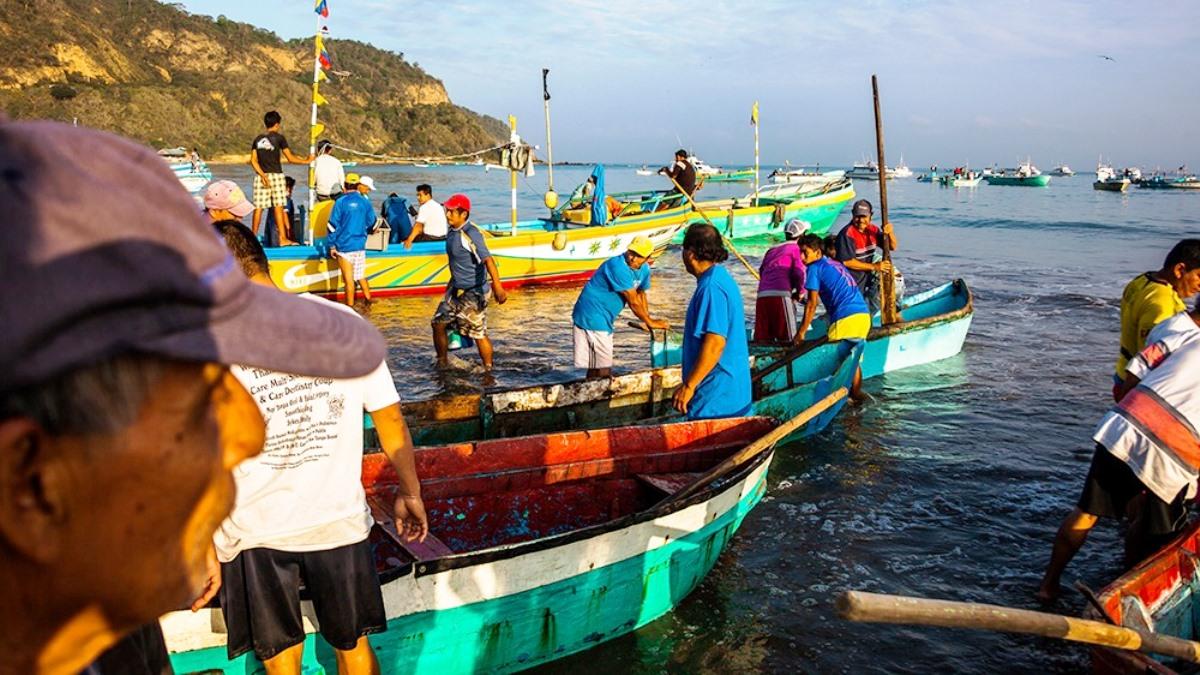
Jaramijó and San Mateo, Ecuador, 15 August (Brussles Morning Newspaper) Ecuador fishermen along the Pacific coast are being squeezed between criminal gangs demanding money or help moving cocaine and a US campaign targeting suspected drug-trafficking boats at sea, according to interviews with fishermen, police and security specialists.
Cartels tighten their grip on coastal fishing towns
The pressure is particularly acute in Manabí province, where fishing is central to the economy of communities including Jaramijó and San Mateo.
Los Choneros and Los Lobos, two of Ecuador’s most powerful criminal organisations, have expanded their presence along the coast and forcibly recruited fishermen for smuggling, Ecuadorian anti-narcotics officials, provincial police and residents told Reuters.
Fishermen who refuse to cooperate can face another demand: pay to continue working.
Police and local residents said payments can reach $1,200 for a fishing trip — several times what fishermen said they typically earn in a month. Those willing to transport cocaine can receive as much as $40,000 for a single journey.
Ecuador’s national police acknowledged the coercion, saying some fishermen are forced into criminal activity and consequently face both prosecution and possible retaliation from the gangs.
Police estimate that around 300 people from Jaramijó have been imprisoned in the United States and El Salvador on drug-trafficking charges during the past five years.
Fishing crews also fear attacks at sea
The threat does not end once boats leave shore.
The US military has destroyed 67 vessels and killed more than 220 people since September 2025 as part of Operation Southern Spear, which Washington says targets suspected drug traffickers at sea.
Questions have emerged over two attacks involving fishing boats from Manabí that the US government has not publicly claimed responsibility for.
On 17 March, the Negra Francisca Duarte II was hit after its crew heard a drone overhead. Survivors said the vessel caught fire and crew members escaped into smaller boats before encountering armed, English-speaking men.
One survivor, Leonel Pilay, told Reuters the crew was not carrying drugs. He said Ecuador’s coast guard had searched the vessel hours before the attack and found nothing.
Nine days later, fishermen aboard the Don Maca reported a similar drone attack. At least eight fishermen from another vessel, the Fiorella, have also been missing since January.
US command declines to discuss disputed strikes
Three security specialists interviewed by Reuters said the United States was almost certainly responsible for the two disputed attacks, citing the location, the existing US operation and the military capabilities involved. The US government has not publicly accepted responsibility for those particular incidents.
The US Department of Defense referred questions to US Southern Command, which declined to discuss the strikes because of what it described as operational security and force-protection considerations.
President Daniel Noboa did not respond to Reuters’ request for comment, while Ecuador’s military said information concerning drug-enforcement operations was classified.
Anti-drug campaign brings heavy pressure to Manabí
Washington and Quito argue that maritime interdictions are essential to disrupting cocaine trafficking. The US Coast Guard said its parallel campaign had seized 91,000kg of cocaine and led to 160 arrests through April.
Yet specialists interviewed by Reuters questioned whether attacks on smaller boats can significantly disrupt the wider trade. Michelle Maffei, an organised-crime expert at the University of Guayaquil, said most cocaine shipments still move through large commercial ports.
For Ecuador fishermen, however, the immediate consequences are already visible. Some are changing routes, working at night or reducing the number of trips they make because of the competing dangers.
Maria Mero, whose fisherman husband was aboard the missing Fiorella, described the fear plainly: “The fishermen don’t even want to go out now.”
Scrutiny of maritime operations continues
The United States, Ecuador and El Salvador have expanded intelligence-sharing, surveillance and coordinated maritime operations in the eastern Pacific, a major route for northbound cocaine shipments.
With fishermen reporting coercion on land and disputed attacks remaining unresolved at sea, questions over how anti-narcotics operations protect legitimate fishing crews are likely to remain under scrutiny as the regional campaign continues.