
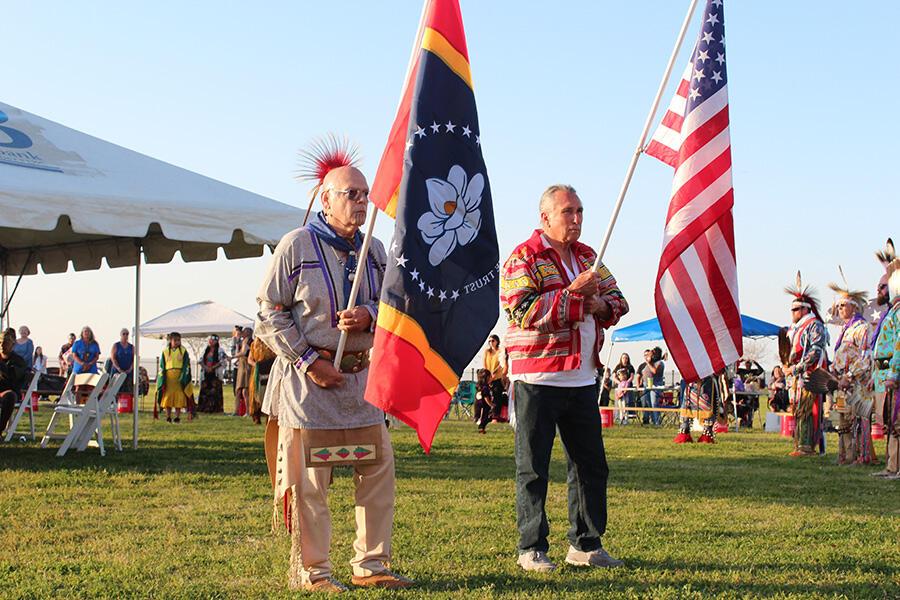
Historic Implementation of the Treaty of Fort Pitt: A Sovereign Milestone in Indigenous Treaty Relations with the United States of America
Indigenous news does not come much bigger than this. On September 17, 1778, the Delaware Nation and the United States of America entered into and ratified the Treaty of Fort Pitt, one of the earliest foundational treaty instruments establishing formal relations between Indigenous governance structures and the emerging United States. The Treaty is recorded in the Congressional treaty archives and preserved under National Archives Identification Number 176316991.
This announcement marks a historic and defining moment in the continuing evolution of Indigenous diplomacy and treaty recognition in North America. Through the provisional implementation of the Treaty of Fort Pitt, the Sand Hill Band of Raritan Lenape and Cherokee Indians declares a renewed assertion of treaty-based relations, reaffirming what it recognizes as the enduring legal and diplomatic framework established between Indigenous Nations and the United States of America.
Under the leadership of Chief Dr. Ronald Yonaguska Holloway, this initiative reflects decades of dedication, scholarship, diplomatic engagement, and institutional development aimed at preserving treaty continuity and advancing nation-to-nation relations grounded in historical agreements with the United States.
The Sand Hill Band of Raritan Lenape and Cherokee Indians is a documented and historically recognized body politic associated with the Delaware Nation, identifying itself as part of the continuing Indigenous governance presence within Lenapehoking since time immemorial. Its continuity is supported through historical, anthropological, and community-based records acknowledging its sustained presence and participation within its traditional territory.
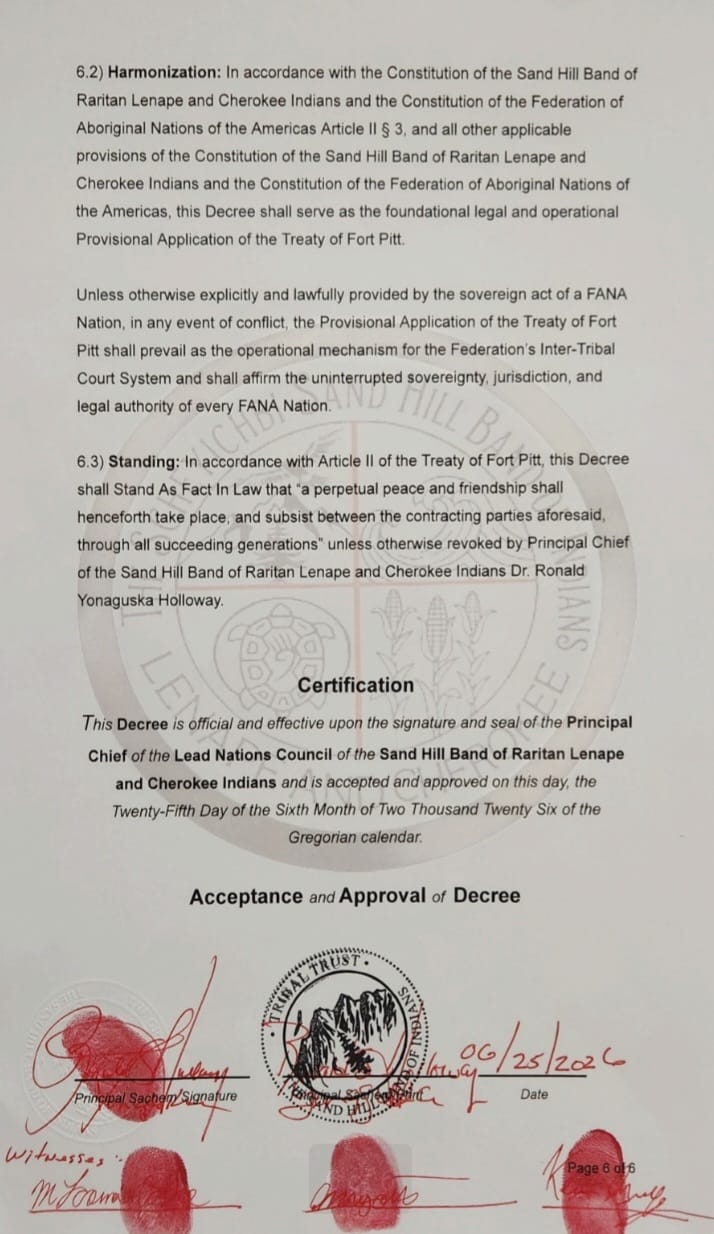
Article IV of the Treaty of Fort Pitt is understood by the issuing body as affirming reciprocal legal and judicial relations between the Delaware Nation, its allied nations, and the United States of America. Article VI is further interpreted as establishing the framework for confederative and cooperative relations between the Delaware Nation, allied Indigenous nations, and the United States.
The Sand Hill Band of Raritan Lenape and Cherokee Indians, the Member Nations of the Federation of the Aboriginal Nations of the Americas (FANA), and Treaty Allies operating under FANA assert that they have developed structured governmental, commercial, and judicial frameworks through internationally recognized trust instruments, including private foreign trust structures consistent with Hague Trust principles.
The Delaware Nation, the Sand Hill Band of Raritan Lenape and Cherokee Indians, and the Federation of the Aboriginal Nations of the Americas (FANA) maintain that they continue to engage in peaceful, structured, and ongoing relations with jurisdictions across the United States of America at the state, municipal, and federal levels. These relationships are reflected in historical documentation, archival records including the Library of Congress, and ongoing institutional engagement.
This document constitutes an official and formal Decree announcing the provisional implementation of the Treaty of Fort Pitt between the Sand Hill Band of Raritan Lenape and Cherokee Indians and the Federation of the Aboriginal Nations of the Americas (FANA), including its Member Nations and Treaty Allies. This action is issued as a declaration of renewed treaty recognition, diplomatic continuity, and sovereign assertion grounded in historic agreements with the United States of America.
Statement from H.E. Ambassador Gerren O’Neill
“Today marks a defining and historic moment in the evolution of Indigenous diplomacy and treaty continuity with the United States of America. The provisional implementation of the Treaty of Fort Pitt represents a reaffirmation of one of the earliest diplomatic foundations between Indigenous Nations and the United States itself.
I extend profound respect and recognition to Chief Dr. Ronald Yonaguska Holloway, whose leadership has been central to bringing this historic initiative forward. His decades of dedication, scholarship, and diplomatic effort have strengthened institutional continuity, advanced Indigenous governance frameworks, and reinforced the importance of treaty-based relations with the United States.
This moment is not only a recognition of history—it is an assertion of continuity, responsibility, and enduring commitment to the principles upon which these treaties were founded. Chief Dr. Holloway’s leadership reflects the persistence of that commitment across generations.”
Chief Dr. Holloway’s statement
“On behalf of the Federation of the Aboriginal Nations of the Americas, I recognize this achievement as a historic milestone in Indigenous treaty diplomacy and governance.”