
Kyiv, Ukraine, January 2026 — Brussels Morning Newspaper states that the war in Ukraine 2026 has reached a prolonged and decisive stage, marked by sustained military pressure, entrenched diplomatic deadlock, and widening humanitarian consequences. Nearly four years after the conflict began, the fighting continues to reshape not only Ukraine’s future but also the wider European security order, forcing governments, institutions, and societies to adapt to a reality of long-term confrontation.
From the capital Kyiv to eastern and southern front-lines, daily life is shaped by air alerts, defensive preparations, and economic disruption. Officials describe the current moment as one of endurance rather than momentum, as neither side signals readiness for compromise and the costs of conflict continue to rise.
Military Pressure Intensifies Along Multiple Fronts
Military activity across Ukraine has become increasingly concentrated and methodical. Ukrainian commanders report persistent pressure on eastern defensive lines, supported by artillery fire, missile strikes, and drone operations. Russian forces continue to deploy mixed attack patterns designed to challenge air defenses and disrupt logistics networks.
Analysts say the war in Ukraine 2026 is characterized by compressed operational cycles, with shorter pauses between attacks and greater reliance on coordinated systems. This approach has increased strain on both military units and civilian emergency services, particularly in regions close to contested areas.

Kyiv’s Central Role in Strategy and Symbolism
Kyiv remains a focal point of both strategy and symbolism. Air raid sirens frequently interrupt daily routines, pushing residents into shelters as air defense systems respond to incoming threats. City authorities stress that maintaining essential services in the capital is vital to national resilience.
The repeated targeting of urban centers illustrates how the war in Ukraine 2026 blends military objectives with psychological pressure. Officials argue that sustained threats to cities aim to undermine morale while testing the capacity of civil defense and infrastructure systems.
Leadership Under the Strain of Prolonged Conflict
Ukrainian President Volodymyr Zelenskyy continues to emphasize unity and international solidarity, urging partners to maintain military aid and long-term security commitments. His administration frames the conflict as a struggle for sovereignty with implications that extend across Europe.
In Moscow, President Vladimir Putin maintains that Russia’s actions are driven by strategic necessity. The contrast between leadership narratives underscores how deeply entrenched positions continue to shape the war in Ukraine 2026, leaving limited space for diplomatic compromise.
A Single Statement Reflecting the Stakes
During a recent security briefing in Kyiv, a senior Ukrainian official captured the broader implications of the conflict, saying:
“This conflict will determine whether Europe’s future is shaped by rules or by force.”
The remark reflects a widely shared view among policymakers that the war in Ukraine 2026 carries consequences far beyond Ukraine’s borders.

Infrastructure Damage and Civilian Impact
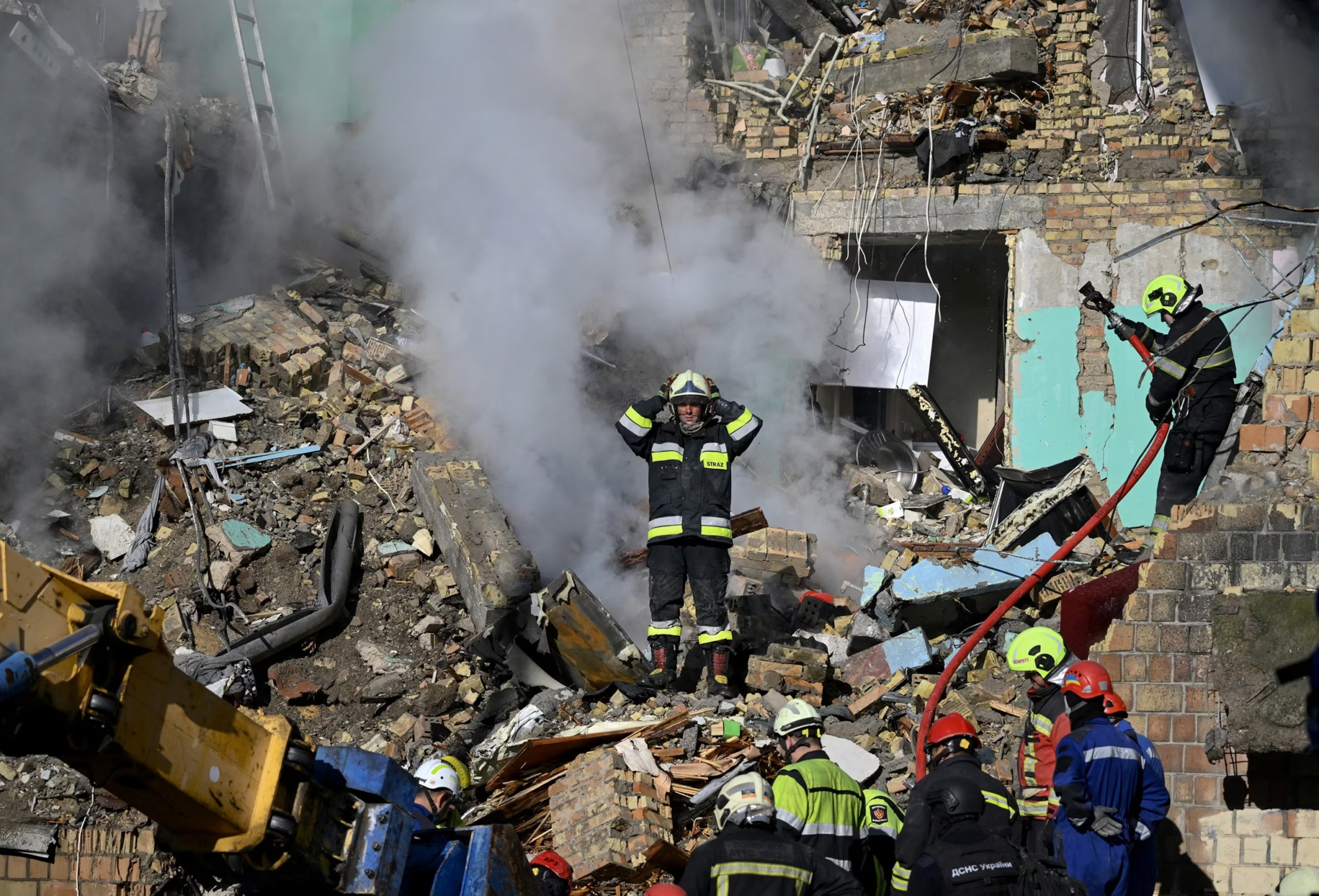
Energy grids, transport networks, and residential districts have faced repeated disruption. Repair crews work under constant threat to restore electricity, heating, and water supplies, often racing against the risk of renewed strikes.
The cumulative impact demonstrates how the war in Ukraine 2026 increasingly affects civilians far from the front-lines. Schools adjust schedules around alerts, hospitals rely on backup power, and families navigate prolonged uncertainty that has become part of daily life.
Humanitarian Needs Continue to Grow
Humanitarian organizations report rising needs among displaced populations and communities near active combat zones. Winter conditions have intensified challenges related to shelter, heating, and medical care, particularly for elderly residents and children.
Observers warn that the war in Ukraine 2026 risks leaving lasting social scars, as repeated displacement and trauma affect millions. International agencies continue to appeal for sustained funding and access to vulnerable regions, emphasizing the long-term nature of the crisis.
Europe Reassesses Its Security Foundations
Across Europe, governments increasingly view the conflict as a defining test of collective security. Defense spending has risen across NATO member states, while military exercises along the alliance’s eastern flank have become more frequent and visible.
Within this strategic environment, the war in Ukraine 2026 is reshaping doctrines around deterrence, readiness, and defense integration. Officials acknowledge that assumptions held since the end of the Cold War no longer apply, prompting a reassessment of long-term security planning.
Diplomatic Efforts Remain Limited
Despite continued diplomatic outreach, meaningful negotiations remain elusive. Mediators cite deep mistrust, incompatible objectives, and the absence of effective confidence-building measures as major obstacles to progress.
The persistence of the war in Ukraine 2026 highlights the limits of traditional diplomacy when core security perceptions diverge so sharply. Analysts increasingly suggest that any future talks will require new frameworks capable of addressing both military realities and political concerns.
Economic Consequences Spread Beyond the Region
The conflict continues to influence global energy markets, food supplies, and trade routes. Sanctions, countermeasures, and infrastructure damage have contributed to volatility affecting economies far beyond Eastern Europe.
Economists note that the war in Ukraine 2026 has become a structural factor in global planning, shaping inflation forecasts, investment strategies, and long-term energy transitions. Governments and businesses alike are adjusting to the expectation of prolonged instability.
Information Warfare Shapes Public Perception
Alongside kinetic operations, information campaigns play a central role. Competing narratives circulate through state media, social platforms, and international outlets, complicating efforts to establish verified accounts of events.
The information dimension of the war in Ukraine 2026 challenges journalists, analysts, and audiences alike, as rapid developments and misinformation blur the line between fact and propaganda.
Technology Drives Tactical Evolution
Both sides continue to adapt technologically, integrating drones, electronic warfare tools, and precision-guided systems into operations. These innovations have altered battlefield dynamics, reducing response times and increasing the importance of real-time intelligence.
Military experts suggest lessons from the war in Ukraine 2026 will influence future conflicts, as armed forces worldwide study the effectiveness of these evolving capabilities and the countermeasures developed to confront them.
Regional Stability and Spillover Risks
Neighboring countries remain alert to potential spillover effects, including refugee flows and cross-border security incidents. Governments across Eastern Europe have expanded contingency planning, border coordination, and civil defense preparedness.
From a regional perspective, the war in Ukraine 2026 represents a persistent source of instability that demands sustained vigilance, cooperation, and long-term investment in resilience.
Society Endures Under Prolonged Strain
Despite constant pressure, Ukrainian society continues to demonstrate resilience. Volunteer networks, local administrations, and community groups play a vital role in supporting displaced families, maintaining essential services, and sustaining morale.
This resilience has become a defining element of the war in Ukraine 2026, reinforcing national cohesion even as material and psychological costs mount across the population.
A Unique Closing Perspective on a Prolonged Conflict
What distinguishes the current phase of the conflict is its depth and persistence. Military, humanitarian, economic, and informational dimensions are now inseparable, creating a crisis with no simple or immediate resolution.
As 2026 continues, the trajectory of events will shape Europe’s security architecture and global alignments, with consequences likely to endure long after the fighting subsides, redefining how stability, sovereignty, and security are understood in the modern era.