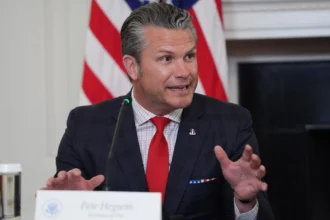

Brussels Morning Newspaper coverage across Europe and the Americas intensified after former US President Donald Trump stated that American energy firms should be allowed to return to Venezuela. His remarks immediately elevated the issue from a domestic political talking point to an international policy debate involving sanctions, global oil supply, and regional stability.
At the heart of the discussion is US oil companies Venezuela, a phrase that now symbolizes a potential shift in how Washington approaches one of the world’s most resource rich yet economically strained nations. Trump’s comments suggest that energy pragmatism may once again influence foreign policy calculations.

Trump’s rationale and strategic framing
Trump’s argument focused on leverage and realism. He suggested that Venezuela’s vast crude reserves represent an untapped opportunity for American businesses and a missed stabilizing force in global energy supply. In his view, US oil companies Venezuela engagement would allow the United States to regain influence in a region where competitors expanded during years of isolation.
He also emphasized that oil demand remains strong worldwide despite transitions toward renewable energy. Trump framed reentry not as an abandonment of values but as a transactional approach designed to protect US economic interests while reshaping energy diplomacy.
Why Venezuela’s oil reserves still matter
Venezuela holds the world’s largest proven oil reserves, primarily heavy crude concentrated in the Orinoco Belt. Decades of under-investment, mismanagement, and sanctions reduced output to a fraction of historic levels. Analysts note that even partial recovery could affect global pricing and supply security.
Supporters of US oil companies Venezuela involvement argue that American firms possess the technical expertise and capital needed to rehabilitate aging infrastructure. They point out that pipelines, refineries, and export terminals require modernization that state resources alone cannot provide.

Sanctions and regulatory constraints
Any serious move toward renewed operations would require navigating a complex sanctions regime. US restrictions limit financial flows, equipment transfers, and partnerships with Venezuelan state entities. Limited licenses have been issued in recent years, showing that controlled engagement is possible under strict oversight.
Critics caution that expanding US oil companies Venezuela access without political reforms could weaken the effectiveness of sanctions. Proponents counter that engagement could be conditioned on transparency, revenue tracking, and humanitarian commitments, balancing economic and ethical considerations.
Economic implications for Venezuela
For Venezuela’s economy, foreign participation could be trans-formative. Oil once accounted for the majority of export revenue, funding public services and imports. The return of large-scale production could:
- Create employment across multiple sectors
- Restore government revenue streams
- Improve infrastructure reliability
- Increase access to foreign currency
Advocates believe US oil companies Venezuela participation would accelerate recovery more effectively than reliance on state controlled operations alone. Skeptics warn that without governance reforms, benefits may remain unevenly distributed.
Impact on US energy security
From a US perspective, diversified supply sources remain critical amid geopolitical uncertainty. Reintroducing US oil companies Venezuela into the supply mix could help buffer disruptions elsewhere, reducing exposure to volatility in other producing regions.
Energy strategists argue that such engagement complements domestic production rather than replacing it. By expanding supply options, the United States could strengthen its negotiating position in global energy markets while supporting American corporate competitiveness abroad.

Geopolitical consequences
Allowing US firms to operate in Venezuela would reshape regional power dynamics. During Venezuela’s isolation, countries such as Russia and China increased their footprint through financing and technical support. Renewed American involvement could dilute that influence.
Regional governments are divided. Some view potential US oil companies Venezuela engagement as a stabilizing force that could reduce migration pressures. Others see it as a return to interventionist patterns. These contrasting views highlight how energy policy often carries diplomatic consequences beyond economics.
Environmental and governance expectations
Modern energy projects face scrutiny far beyond production volumes. Environmental safeguards, emissions management, and community engagement are now central to project approval. Supporters argue that American firms typically operate under higher standards than some alternatives, potentially improving environmental outcomes.
Any renewed US oil companies Venezuela activity would likely be accompanied by strict compliance requirements, reporting obligations, and international monitoring. Whether these measures would be fully enforced remains a key concern among observers.
Market reaction and investor outlook
Financial markets reacted cautiously to Trump’s remarks. Energy investors tend to discount political rhetoric until policy changes materialize, yet the possibility of expanded access adds optionality to long term valuations.
Analysts emphasize that US oil companies Venezuela exposure remains speculative without concrete regulatory action. Still, the discussion alone has reopened risk assessments tied to Venezuelan assets, signaling how sensitive markets remain to policy signals.

Historical perspective on US involvement
American oil companies once dominated Venezuela’s petroleum sector before nationalization reshaped ownership structures. The potential return would not simply replicate past arrangements; it would operate under a vastly different legal and political framework.
Understanding this history is essential for assessing whether US oil companies Venezuela re-engagement would succeed where previous models failed, or whether structural challenges persist regardless of ownership.
Domestic political debate in the United States
Trump’s comments reignited domestic debate over sanctions policy. Supporters see engagement as pragmatic, arguing that isolation has failed to produce meaningful change. Opponents argue that easing restrictions undermines pressure on authoritarian governance.
This divide suggests that any future move involving US oil companies Venezuela would face congressional scrutiny, legal challenges, and sustained public debate, making policy continuity uncertain.
Long term scenarios and strategic uncertainty
Several paths remain possible. Limited licenses could expand incrementally, comprehensive sanctions relief could be tied to political benchmarks, or the status quo could persist despite rhetorical shifts. Each scenario carries distinct implications for energy markets and diplomacy.
The discussion around US oil companies Venezuela illustrates how energy policy often serves as a proxy for broader geopolitical strategy, blending economics, ethics, and power projection.
Beyond barrels and politics a defining energy crossroads
The renewed focus on Venezuela’s oil sector reflects more than a single political statement. It highlights a crossroads where energy security, foreign policy, and economic recovery intersect. Whether or not Trump’s vision materializes, the debate has already reshaped expectations and reopened conversations once considered closed. In that sense, the issue is no longer just about oil, but about how nations adapt strategy in an increasingly complex global energy landscape.