Within hours of Tuesday’s result, European ministers, Iran’s parliament speaker and South Africa’s president had all said something about the Democratic sweep. The governments of the Gulf, whose air defences are now being replenished largely from American stocks, said nothing at all. In Al Jazeera’s roundup of world reactions, not a single Gulf capital appears. Their markets spoke instead: Qatar’s benchmark index rose 2.3 percent on Wednesday morning on hopes of American restraint in Iran. The silence of the governments, it seems, was the more revealing of the two signals.
There is a good reason for it. Over the past year, the Gulf has built its American security on instruments that rest almost entirely on the signature of one man. Qatar’s guarantee is the clearest example. After Israel struck Doha in September 2025, Donald Trump signed an executive order declaring it American policy “to guarantee the security and territorial integrity of the State of Qatar against external attack.” It went further than any earlier American promise to a state that already hosts the largest American air base in the region, but it was never put before the Senate, and it is far less binding than a ratified defence treaty.
Saudi Arabia went a step further two months later. During Crown Prince Mohammed bin Salman’s visit to Washington in November 2025, Trump designated the kingdom a major non-NATO ally and announced a Strategic Defense Agreement covering F-35s, some 300 tanks and wider industrial cooperation. Analysis from the Washington Institute for Near East Policy noted at the time that the Senate would not ratify it, and that it appeared to be an executive agreement, more formal than Qatar’s order but resting on the same foundation.
The weapons have followed the same route. In May, as Iranian missiles and drones struck across the region, the administration invoked an emergency to bypass congressional review of $8.6 billion in sales to Middle Eastern partners, including $4.01 billion of Patriot replenishment for Qatar and a $2.5 billion air-defence command system for Kuwait. In September the State Department approved the sale of 48 F-35s to Saudi Arabia for $24.3 billion, a sale that still requires formal notification and a 30-day congressional review. Senator Jeanne Shaheen, a long-standing critic of Riyadh, had already demanded that the administration explain how the jets would preserve Israel’s military edge.
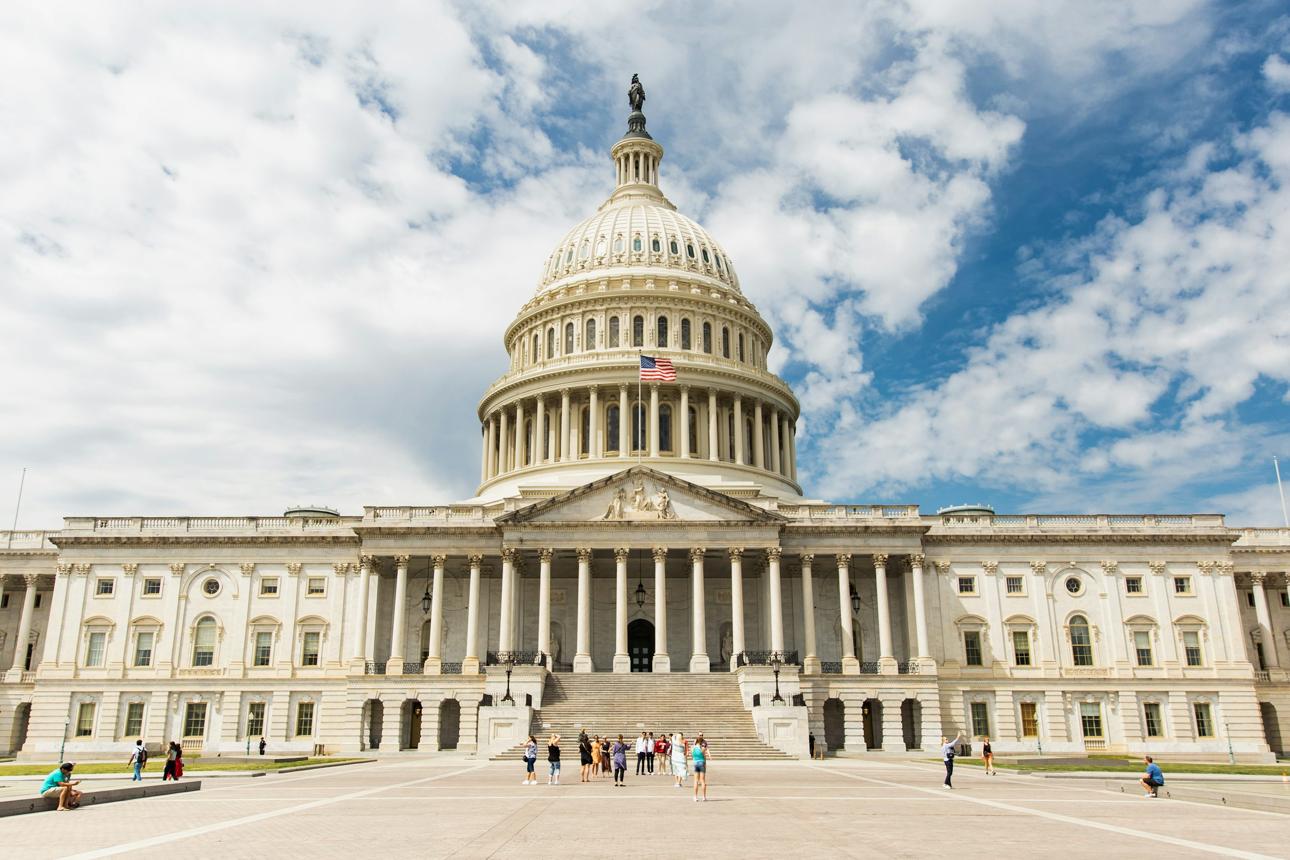
In plain words, nearly every pillar of the Gulf’s American security relationship in 2026 was built in a way that minimised Congress’s role. That made sense while a Republican Congress was content to look the other way. It makes much less sense now.
It would be easy to exaggerate the danger. Congress cannot revoke an executive order, and it cannot cancel an executive agreement. It can pass a joint resolution of disapproval against an arms sale, but Trump will veto it, and overriding him needs two-thirds of both chambers. The Gulf has seen this film before. In 2019, after Trump used an emergency declaration to push through arms sales to Saudi Arabia and its partners, both chambers voted to block them, Trump vetoed the resolutions and the Senate failed to override him. The weapons were delivered.
The real risk lies elsewhere, and it comes in two forms. The first is friction. A Democratic majority controls committee hearings, informal holds on arms notifications and the war supplemental that will decide how quickly American interceptor stocks, and therefore Gulf orders, are rebuilt. Every Gulf sale from January will arrive in a chamber that regards the Iran war as unauthorised and has already watched the administration skip its review once. Delay, not denial, is the more likely weapon, but for states absorbing Iranian fire, delay is costly enough.
The second risk is time. An executive order can be revoked with a signature, and January 2029 is only 26 months away. The midterm result is, for obvious reasons, a preview of a presidential contest that Gulf capitals cannot influence and that may produce an administration with very different views of the Iran war, the F-35 sale and the personal diplomacy that delivered them. A guarantee that one president granted by decree, another can withdraw by decree.
The obvious temptation for Gulf capitals is to hedge, by deepening defence-industrial ties with partners in Asia and Europe and spreading their bets well beyond Washington. Some of that is sensible, and the midterms will, for sure, strengthen the impulse. But no other supplier can replace American interceptors, aircraft and early-warning networks in the middle of a war with Iran.
The wiser course is therefore not to drift away from Washington but to widen the Gulf’s American base. For years Gulf diplomacy in the United States has been an executive-branch affair, conducted through envoys, investment pledges and direct lines to the White House. The new Congress will reward a different approach: regular engagement with committee chairs, transparency about how American weapons are used in the Iran war, and support for converting at least part of the current architecture into something Congress votes on. A defence commitment that has passed through the Senate is harder to win, but it is also the kind a future president finds hardest to undo.
The first sign of whether the Gulf has understood Tuesday’s message will be visible before January 3. If Gulf defence and foreign ministers begin turning up on Capitol Hill, not just at the White House, it will mean they have recognised that the American pen they have relied upon now has a second holder. If they do not, they may discover in 2029 how quickly a guarantee written by decree can be unwritten.