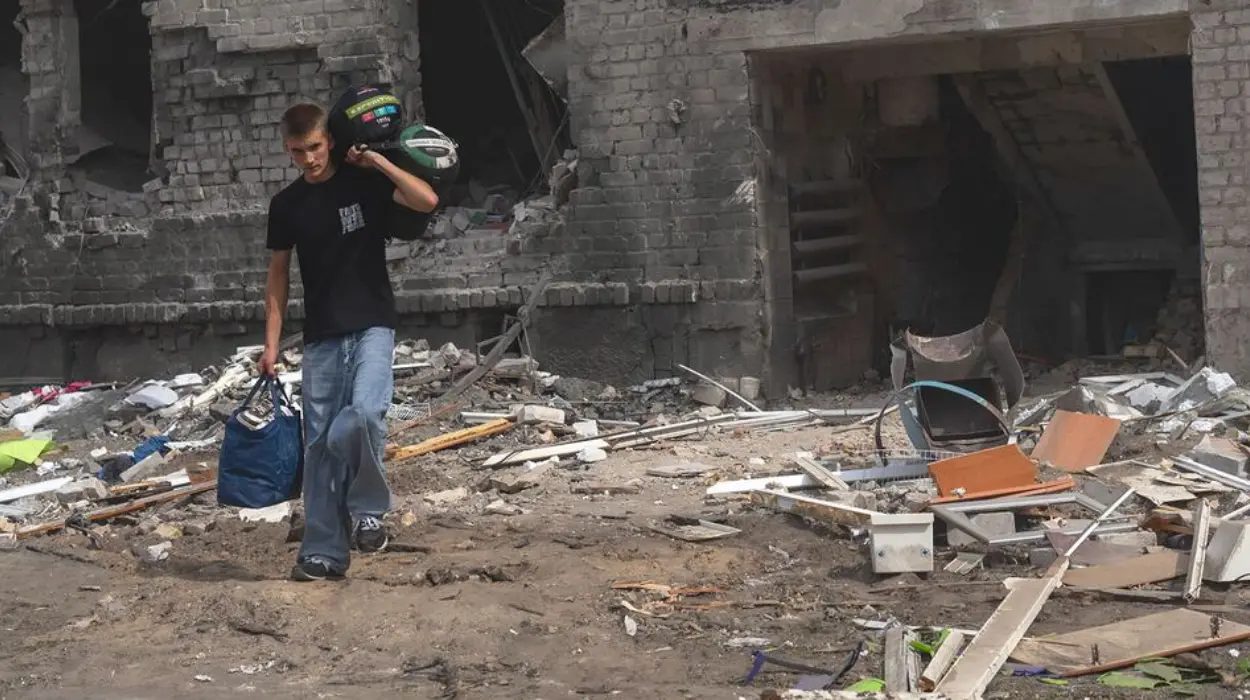
New York (Brussels Morning Newspaper) September 15, 2026 – A comprehensive United Nations survey examining global risk perceptions has revealed that large-scale war has emerged as the most critical threat facing the international community. Drawing on insights from 1,300 leaders across governments, civil society, academia, and the private sector, the 2026 Global Risk Report documents a dramatic shift away from pandemic concerns towards intense fears of geopolitical conflict and institutional collapse. Experts caution that multilateral governance mechanisms remain underfunded and ill-equipped to handle these mounting, interconnected crises.
A major international study published by the United Nations has found that the fear of large-scale warfare has surged to the forefront of global concerns, reflecting a rapid realignment of international anxieties over the past two years. According to the 2026 Global Risk Report, geopolitical turmoil, armed conflict, and the breakdown of the international rule of law have displaced public health and biological threats as the primary dangers occupying the attention of global decision-makers.
The survey gathered expert evaluations from 1,300 representatives across government bodies, international organisations, civil society groups, the private sector, and academic institutions, encompassing every geographic region worldwide. Participants evaluated 28 political, economic, environmental, societal, and technological risks based on four distinct metrics: their overall importance, their immediate likelihood, their degree of interconnection with other threats, and the degree to which global institutions are prepared to address them.
The findings demonstrate an unprecedented rise in the perceived threat of military confrontation. Large-scale war climbed 16 places in the global risk rankings compared to the metrics compiled in 2024, marking the steepest increase recorded for any category in the report. Over a third of respondents—36 per cent—asserted that the consequences of a major conflict could impact a significant proportion of the human population within a single year. Furthermore, 76 per cent of those surveyed stated that they expect these severe impacts to manifest within a seven-year timeframe.
Beyond its rapid ascent in probability and severity, large-scale war stood out as an exceptionally unmanageable hazard. It was the only threat among the 28 evaluated to rank in the top six across all four measured parameters: importance, imminence, interconnectedness, and institutional unpreparedness.
Geopolitical Friction Displaces Earlier Focus on Pandemics and Misinformation
The results highlight a fundamental shift in the primary concerns of the international community since the previous survey cycle. Two years prior, global risk assessments were dominated by environmental deterioration, digital misinformation, and biological threats, largely reflecting the lingering aftermath of the COVID-19 pandemic. The latest data indicates that geopolitical rivalry, militarised conflict, and the erosion of international legal frameworks have supplanted these issues at the top of the global agenda.
Writing in the foreword of the report, United Nations Secretary-General António Guterres emphasised the gravity of the shift, noting that political instability has now occupied the centre of the global risk landscape. Secretary-General Guterres observed that the prospect of expansive war is currently perceived as significantly more critical and immediate than it was two years ago, while simultaneously pointing out that international bodies tasked with maintaining peace are widely seen as losing their operational capacity to intervene effectively.
The elevation of conflict-related fears is reflected universally across international boundaries. Large-scale war and geopolitical tensions now feature among the top 10 threats identified in all seven geographic regions surveyed by the UN. In six of these seven regions, these items ranked within the top five risk categories. By contrast, in the 2024 survey, geopolitical risks achieved a top-five placement in only one region.
Regional breakdowns reveal specific areas of heightened concern surrounding strategic military capabilities. Weapons of mass destruction broke into the top 10 threat rankings in Central and Southern Asia, Sub-Saharan Africa, and Oceania. Meanwhile, concerns regarding biological hazards and global pandemics declined sharply on every continent. Having previously ranked among the most urgent priorities across Sub-Saharan Africa, Latin America, the Caribbean, and Eastern and South-Eastern Asia, pandemic-related dangers fell entirely out of the top 10 in every region worldwide.
Artificial Intelligence and Economic Vulnerabilities Spark Regional Anxiety
While security concerns dominated the global overview, specific regions reported growing apprehensions surrounding economic stability and technological governance. In Eastern and South-Eastern Asia, respondents highlighted heightened anxiety over potential global financial instability, the unintended side-effects of rapid artificial intelligence adoption, and the growing concentration of power within major private technology corporations.
Risks associated with artificial intelligence and related frontier technologies also entered the top 10 danger categories within Europe and North America. The report places particular emphasis on the structural challenges presented by AI, noting that while public concern over concentrated technological power has intensified significantly over the past two years, respondents simultaneously identified the multilateral system as being exceptionally unprepared to manage technological disruption and cybernetic threats.
Despite the surge in security concerns, environmental issues remain a major long-term factor in global stability. Failure to take adequate action on climate change was rated by respondents as the single most important overall risk facing humanity. Climate-related threats, alongside severe shortages of natural resources, maintained high rankings across all seven regions.
However, the authors of the report issued a explicit warning regarding environmental risks that have slipped down the comparative rankings. The authors noted that a lower rank does not indicate that ecological degradation has become inherently less hazardous, but rather that it has become less visible amid immediate geopolitical crises. The report stresses that reduced visibility frequently leads to diminished budgetary allocations and diminished policy attention, exacerbating long-term systemic vulnerabilities.
Interconnected Dangers Amplify Potential for Systemic Crises
The UN report stresses that global threats do not manifest in isolation, but rather feed into one another in complex feedback loops. Factors such as natural resource scarcity, national economic fragmentation, digital misinformation campaigns, and the weakening of international bodies act as force multipliers that elevate geopolitical friction. Increased friction, in turn, significantly raises the mathematical likelihood of open war.
To illustrate this dynamic, the survey mapped 705 distinct interconnections between the 28 tracked risks. Out of all identified relationships, the statistical link connecting high geopolitical tension directly to large-scale warfare was identified as the strongest and most pronounced interaction in the entire dataset.
When evaluating potential solutions and mechanisms for risk mitigation, survey participants identified systemic institutional shortcomings as the primary obstacles to progress. Weak international governance, poor cross-border coordination, a lack of political consensus among major powers, and deteriorating levels of public trust and accountability were cited as the primary impediments preventing effective risk management. Additional factors included poor policy prioritisation, resistance from political and corporate leaders, and critical gaps in scientific and operational data.
Financial constraints were also highlighted as a critical failure point. A vast majority of respondents—86 per cent—stated that existing funding dedicated to proactive risk reduction and prevention is profoundly inadequate. The report singled out natural disaster preparedness and the mitigation of institutional collapse within multilateral bodies as two areas suffering from severe capital shortfalls.
UN Calls for Multilateral Action to Navigate Escalating Global Threats
The United Nations explicitly framed the publication not as an absolute predictive model, but as a systematic snapshot of expert perception intended to guide global policymaking. Despite widespread scepticism regarding current institutional readiness, respondents consistently identified joint governmental cooperation as the most effective instrument for preventing catastrophe, asserting that single nations, private enterprises, or individual institutions cannot manage these compound threats independently.
Concluding his statement, Secretary-General Guterres called upon international leaders to translate the report’s empirical findings into immediate policy adjustments to prevent systemic escalation. He emphasised that the gathered data must inform strategic decision-making, urging Member States to act while international cooperation remains viable to steer global developments away from wide-scale conflict.