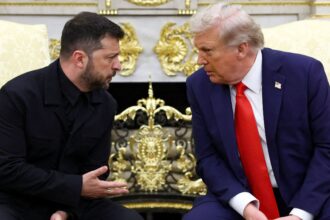

Brussels Morning Newspaper reports that Trump warns Rodriguez in a sharp escalation of rhetoric toward Venezuela’s ruling elite, signaling that Vice President Delcy Rodríguez could face consequences even greater than those long associated with Nicolás Maduro. The warning from former U.S. president Donald Trump has immediately drawn international attention, not only because of Trump’s history of confrontational foreign policy but because it shifts focus beyond Maduro to the senior officials who actively shape and enforce Venezuela’s governance. As Trump warns Rodriguez, analysts see a broader message about accountability and power within the Venezuelan state.
Trump Warns Rodriguez and Reshapes the Narrative
When Trump warns Rodriguez, the message goes beyond political theater. For years, global scrutiny has centered almost exclusively on Maduro as the face of Venezuela’s crisis. Trump’s statement reframes that approach, suggesting that responsibility lies with a broader leadership circle. By emphasizing Rodriguez, Trump highlights the officials who manage economic policy, sanctions resistance, and internal administration, reinforcing the idea that real power is exercised collectively rather than by a single figure.
This shift has implications for how the international community understands Venezuela’s political structure. Trump warns Rodriguez as a signal that future pressure could extend deeper into the governing apparatus.
Who Is Delcy Rodriguez in Venezuela’s Power Structure
Delcy Rodriguez has long been considered one of the most influential figures in Caracas. A trained lawyer with deep ideological roots, she rose through the ranks of the ruling movement through loyalty, discipline, and strategic effectiveness. Her tenure as foreign minister brought her international prominence, where she became known for forcefully defending Venezuela against sanctions and criticism.
As vice president, Rodriguez assumed responsibility for economic coordination and crisis management. In this role, she became central to decision making during periods of extreme instability. The fact that Trump warns Rodriguez underscores how her authority is perceived both inside and outside Venezuela.
Why Trump’s Warning Carries Weight
Trump’s words resonate because of his past actions. During his presidency, U.S. policy toward Venezuela hardened significantly, with expanded sanctions and diplomatic isolation. Trump consistently argued that pressure was necessary to force political change. When Trump warns Rodriguez, it echoes that philosophy, reinforcing the belief that consequences must escalate when leadership remains defiant.
Even outside office, Trump’s statements continue to influence debate in Washington and abroad. His warning functions as a signal of how future U.S. policy could be framed under similar leadership.

Comparing Rodriguez and Maduro
Maduro has long been portrayed as the central figure responsible for Venezuela’s collapse. However, Trump warns Rodriguez suggests that this narrative may be incomplete. By implying that Rodriguez could face a “bigger price,” Trump points to the operational role she plays in governance.
This comparison shifts accountability toward those who implement policy rather than those who merely symbolize it. Analysts note that such framing recognizes the complexity of power in authoritarian systems, where influence is distributed among trusted insiders.
What “Bigger Price” Could Mean
The phrase “bigger price” remains intentionally vague. When Trump warns Rodriguez, it opens the door to multiple interpretations, including stricter individual sanctions, legal action, asset freezes, or expanded diplomatic isolation. Trump has historically favored targeted measures aimed at individuals rather than broad sanctions affecting entire populations.
This approach aligns with evolving international practices that seek to hold decision makers accountable while minimizing humanitarian harm.
International Reaction to Trump Warns Rodriguez
Global reaction has been divided. Supporters of a hardline stance argue that expanding accountability is overdue, while critics warn that such rhetoric risks escalating tensions. European and Latin American governments have urged restraint, emphasizing diplomacy and humanitarian considerations.
Nevertheless, Trump warns Rodriguez has dominated headlines, demonstrating how rhetoric alone can reshape international discourse even without immediate policy changes.
Impact Inside Venezuela
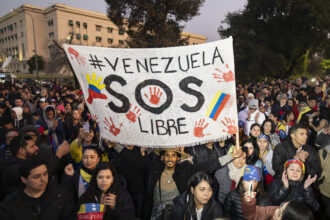
Within Venezuela, Trump’s warning has fueled competing narratives. Government aligned media framed the statement as foreign interference, reinforcing nationalist themes. Opposition voices highlighted it as evidence that international scrutiny is widening beyond Maduro.
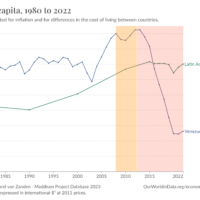
For ordinary citizens, however, daily realities remain unchanged. Inflation, shortages, and migration continue to dominate life. Still, the fact that Trump warns Rodriguez resonates symbolically, reinforcing the idea that senior officials are not beyond accountability.
Media Coverage and Public Messaging
Media coverage of Trump warns Rodriguez has emphasized escalation and confrontation. State media downplayed the warning, while independent outlets treated it as a significant development. International media framed the statement as a shift in U.S. rhetoric, focusing on the implications for sanctions and diplomacy.
This contrast highlights how messaging shapes perception, particularly in highly polarized political environments.
Sanctions and Policy Debate
Sanctions remain central to discussions about Venezuela. When Trump warns Rodriguez, it suggests that pressure could intensify or broaden to include those managing economic and administrative systems. Advocates argue this increases leverage, while critics caution that sanctions alone rarely produce democratic reform.
The debate underscores a persistent policy dilemma: how to balance accountability, effectiveness, and humanitarian impact.
Regional Implications Across Latin America
Venezuela’s crisis has already affected neighboring countries through migration and economic strain. Any escalation implied when Trump warns Rodriguez could worsen regional instability. Governments across Latin America are watching closely, wary of actions that could deepen humanitarian challenges.
Regional leaders continue to call for solutions that prioritize stability and dialogue.
U.S. Domestic Political Context
Trump’s warning also plays into U.S. domestic politics. Tough rhetoric toward foreign leaders has long been part of his political brand. By repeating that Trump warns Rodriguez, supporters see consistency in his approach, while critics view it as provocative.
Regardless, such statements influence public debate and shape expectations about future foreign policy directions.
Diplomacy Versus Escalation
Despite strong language, diplomatic channels remain open. Observers stress that rhetoric should not foreclose negotiation opportunities. Even as Trump warns Rodriguez, international mediation and back channel diplomacy remain essential to preventing further deterioration.
The challenge lies in applying pressure without triggering unintended consequences.
What Comes Next for Venezuela’s Leadership
The long term impact of Trump warns Rodriguez depends on political developments in Washington and Caracas. Rodriguez’s prominent role ensures continued scrutiny. Whether the warning leads to concrete measures or remains symbolic will shape future narratives about accountability.
What is clear is that attention is shifting toward collective responsibility within Venezuela’s leadership.
Broader Lessons on Accountability
Trump’s remarks raise broader questions about how responsibility is assigned in prolonged crises. By focusing beyond a single leader, Trump warns Rodriguez reflects a growing recognition of shared power structures in authoritarian systems.
This perspective may influence future international strategies aimed at addressing governance failures elsewhere.
AWarning That Changes the Conversation
The moment when Trump warns Rodriguez marks a significant shift in how Venezuela’s leadership is discussed internationally. It underscores the idea that power in Caracas is exercised by a small group of influential figures, not solely by the presidency.
Whether the warning results in action or remains rhetorical, it has already reshaped the conversation around accountability. As Venezuela continues to face economic collapse, political isolation, and humanitarian hardship, the focus on Rodriguez highlights a broader understanding that leadership decisions, both public and behind the scenes, carry consequences.