
Tienen (Brussels Morning Newspaper) – A wooden replica of the 16th-century Divine Savior statue in Hakendover, Tienen, was unveiled today, Nov 22, 2025, to protect the original. Artist Bart Luykx crafted it under Church Council guidance; Kinnart highlighted safety and heritage.
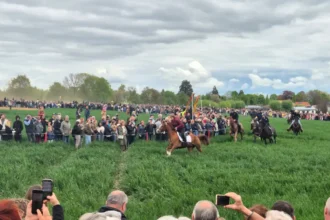
As VRT News reported, a replica of the Divine Savior statue was presented in Hakendover, Tienen, earlier today, Nov 22, 2025. They mentioned that the original 16th-century figure is a central part of the village’s heritage and plays a key role in the Easter Monday Horse Procession. The procession will once again take place on April 6, 2026, in Hakendover.
What will Hakendover’s wooden replica mean for the 16th-century Divine Savior?
The Church Council approved the use of the replica, but the decision has sparked discussion. Some residents worry that the procession may lose part of its traditional character if the original statue stays inside the church.
“You can’t just carry heritage out in rainy weather, because it could get damaged,”
says Martin Kinnart of the Church Council.
“The statue is over 600 years old, so that’s certainly a possibility in this case.”
A wooden version of the Divine Savior statue has been produced to protect the fragile original during future processions. The Church Council did not want an exact copy. Kinnart said the historic statue shows Christ with a Jewish appearance, while the new version has a more European face.
Several methods were reviewed before the final choice was made. A 3D-printed model was rejected because the cost was too high. A mould and plaster replica was also dismissed, as the process could harm the centuries-old statue. Wood was selected because it is light, durable and easier to repair if it is damaged on the route.
“This way we can be sure that people will always continue to admire the original image, because the difference is clearly visible,”
Kinnart said.
The council asked artist Bart Luykx to take on the task. He worked under strict guidelines to respect the heritage object while creating a version suitable for public use. Luykx used detailed measurements and photographs of the original and chose a solid type of wood that can withstand outdoor conditions.
He shaped the statue by hand and checked the balance so it could be carried safely during the procession. Conservators advised him on a protective finish that keeps the wood visible. The council arranged insurance, transport, and trial runs with the procession team.
“I felt it was a tremendous honour to be able to create this sculpture,”
says Luykx.
“It also took some time to think about exactly how I would approach it, because this is such a significant sculpture.”
“The whole village looked forward to the presentation of the statue,”
says the artist.
“But I’m happy with the final result. Although it wasn’t an easy task, especially getting the facial expression just right.”
The Divine Savior statue in Hakendover was created between 1390 and 1410, making it over 6 centuries old. Historian Kris Merckx says the statue’s survival is remarkable. The church where it stands was almost destroyed several times, in the early 16th century and again in 1604. Merckx explains the statue was likely hidden during wars to protect it.
The sculptor of the statue is unknown, but it is considered an early example of late Gothic sculpture. Merckx notes it may not be the most perfectly executed work of the period, but its historical and artistic value is significant.
The Divine Savior became a symbol of ecclesiastical devotion in Hakendover. It is linked to one of the last medieval pilgrimage sites in the region. The Easter Monday procession, where the statue is carried through the village and fields, remains popular today. Residents and visitors continue to take part.