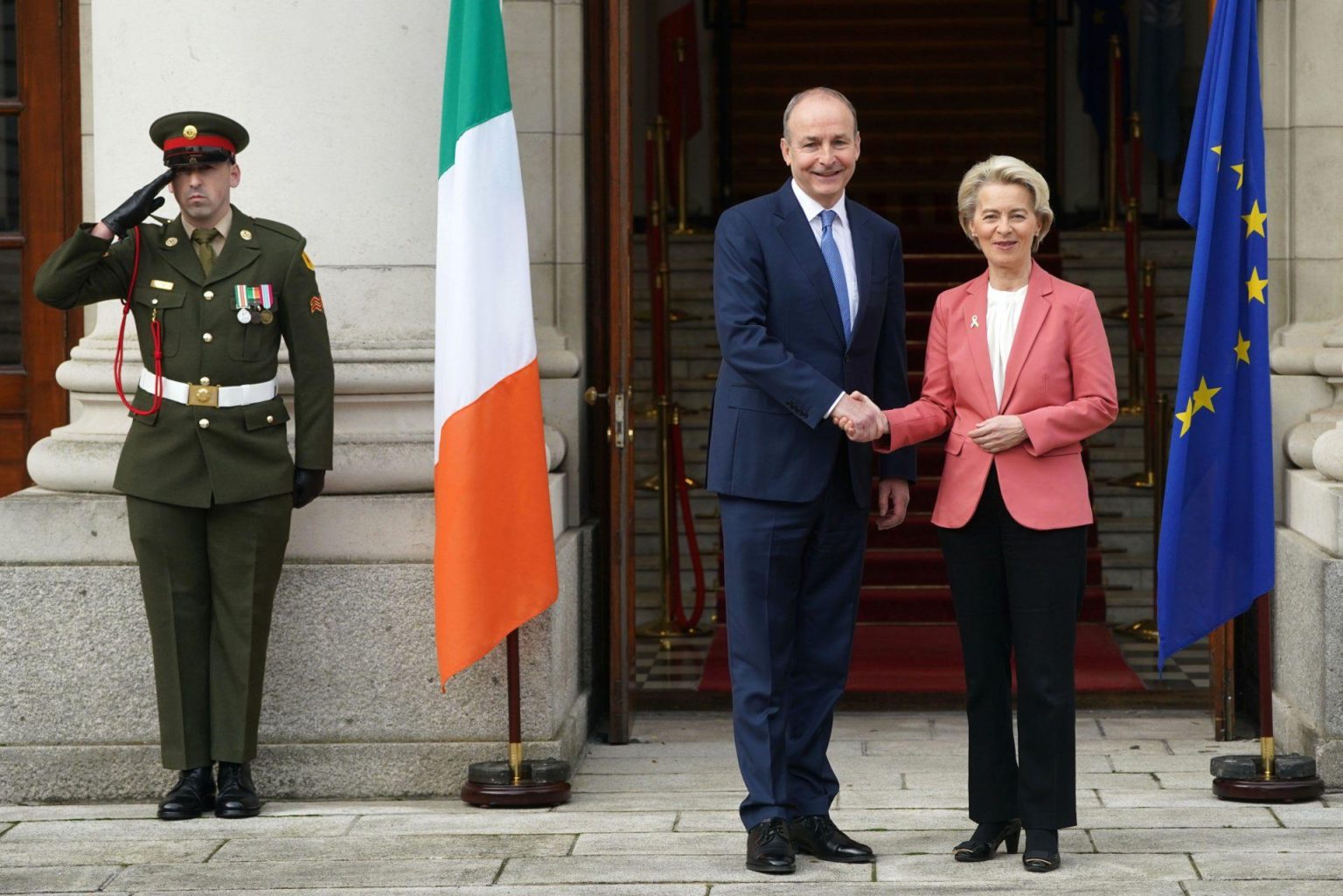
On 1 July, Ireland assumed the Presidency of the Council of the European Union during a particularly challenging period. Russia’s war in Ukraine continues, transatlantic ties have become weaker, and Europe’s economy remains under pressure from sluggish growth, elevated energy prices and persistent internal barriers.
The Irish Presidency has adopted the motto “Strength with unity.” However, unity by itself will not be sufficient. Europe also requires strength that is built on sustainable economic growth.
Ireland has identified three main priorities: competitiveness, values and security. Europe needs progress in all three areas because each supports the others. Without competitiveness, the EU cannot generate the economic growth, financial resources or technological capabilities needed to secure prosperity and strengthen its defence. Without values, Europe risks losing the principles that make it worth protecting. Without security, neither economic prosperity nor liberal democracy can be guaranteed.
The programme reflects the current political direction in Brussels, where the EU is seeking to become safer, more resilient and more economically competitive. The real challenge, however, is turning these ambitions into practical decisions. With limited time available and little expectation of major breakthroughs during the summer, the Irish Presidency should concentrate its political efforts on the issues that matter most.
The programme correctly states that “Europe must act urgently to enhance its competitiveness and productivity.” The emphasis on urgency is important. More than 22 months after the Draghi report and almost 27 months after the Letta report, Europe has spent enough time identifying its challenges. Numerous reports, Council conclusions and Commission strategies have already been produced. While some regulatory reforms have been introduced, they remain too limited compared with the scale of Europe’s competitiveness challenge. The problem is no longer understanding the issues. The priority now is implementation.
Competitiveness underpins higher living standards, but it is also a political issue. Weak economic growth, stagnant wages and poor productivity create opportunities for anti-EU movements to gain support. If the European project becomes associated mainly with regulation, restrictions and inefficient redistribution instead of rising prosperity, critics will find it easier to portray the EU as a burden. A stronger economy is a more effective defence against anti-EU sentiment than attempting to manage public frustration through greater controls on speech, online activity or political debate. The Irish Presidency should encourage Brussels to recognise this reality.
The Presidency’s commitment to strengthening the Single Market is welcome. The Single Market remains one of Europe’s greatest achievements, yet it is still incomplete, particularly in services, capital markets, energy and cross-border commercial activity.
However, simplification alone will not solve the problem. The Irish programme argues that simplification should focus on better regulation rather than deregulation. Better regulation is important, but Europe should also remove rules where the economic costs clearly outweigh the benefits. The concept of “smarter regulation” should not hide a basic truth: many economic challenges are resolved most effectively through open markets, competition and consumer choice.
More importantly, the EU should introduce a regulatory brake. Experience with successive omnibus packages has shown how difficult it becomes to simplify legislation after regulatory burdens have accumulated. Preventing unnecessary complexity is far easier than spending years trying to remove it later. Europe should adopt competitiveness as its default approach.
Every significant new EU proposal should face one straightforward test: does it make Europe more competitive, more innovative and more prosperous? If the answer is no, the proposal should either be revised or abandoned.
Impact assessments should also pay closer attention to unintended consequences. This is important not only for competitiveness but also for security. The Irish programme commits to stronger cooperation against organised crime. Yet excessive excise increases or poorly designed restrictions on legal consumer products can shift demand into the shadow economy, benefiting organised criminal groups. The same principle applies elsewhere. Regulatory burdens on technology firms or climate policies introduced without sufficient regard for economic growth can ultimately weaken the European economy the EU seeks to strengthen.
The next major challenge will be negotiations over the Multiannual Financial Framework for 2028–2034. This will represent a political decision about the future direction of the European Union.
The EU budget should become more European in its focus rather than simply larger in size. Spending should concentrate on genuine European public goods, including the Single Market, security, defence-related infrastructure, cross-border transport and energy networks, innovation, and stronger protection of the EU’s external borders.
Policymakers should also give serious consideration to proposals such as the EPICENTER alternative EU budget, which asks not only how much the EU spends but whether that spending delivers genuine European added value. Europe does not need a budget that simply preserves outdated spending patterns. Nor does it require additional “own resources” that ultimately translate into higher taxes for citizens and businesses. Instead, it needs a budget that strengthens competitiveness and security.
Security represents the third pillar of the Irish Presidency. Its continued support for Ukraine is welcome. From a Polish perspective, this commitment carries particular importance. Ukraine is defending the principle that national borders cannot be changed through force. Sustained support for Ukraine, alongside continued pressure on Russia, remains essential for European security.
Greater cooperation on defence and internal security is equally important, including stronger protection of the EU’s common external borders. A Union that enjoys open internal borders must also be capable of effectively securing its external frontier.
This is closely linked to European values. Those values are not simply symbolic language within EU treaties. They define what distinguishes Europe from the Russian model and the Chinese authoritarian system. The European Union has been built upon freedom, democracy, the rule of law and respect for human rights.
A Europe seeking to compete successfully with authoritarian powers should avoid copying their methods. That principle also applies to growing pressure for increased state control over society, greater regulation of the internet or excessive intervention in everyday life in the name of security.
The Irish Presidency should help move Europe beyond political slogans and towards practical decisions. The EU should become a Union with a fully completed Single Market, a competitive economy capable of delivering sustained growth, and a security framework strong enough to respond to external threats while preserving peace within Europe.
At the end of the year, the Irish Presidency should be judged not by the number of declarations issued or summits held, but by whether it has brought Europe closer to becoming a Union that grows faster, regulates more effectively with fewer unnecessary rules, spends its resources wisely and protects itself more successfully. That is the vision of Europe that supporters of the European project should champion.