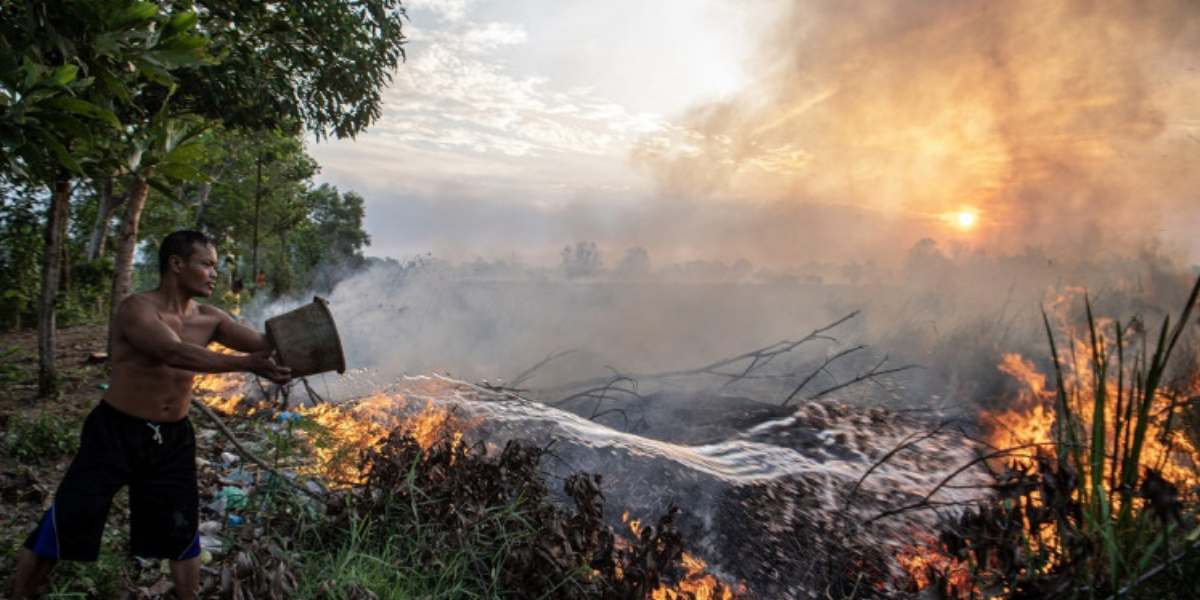
Geel (The Brussels Morning Newspaper) – October 19, 2026 – Severe agricultural wildfires across Sumatra and Kalimantan have pushed air pollution levels in Singapore and Malaysia to hazardous highs, forcing school closures, flight cancellations, and surging hospital admissions. Malaysian Prime Minister Anwar Ibrahim and Singaporean Environment Minister Grace Fu have issued direct demands for immediate fire-suppression action and legal enforcement against offending firms. Indonesian President Prabowo Subianto has committed to technical discussions for accepting international aid, whilst domestic law enforcement agencies have detained 162 individuals linked to illegal land clearing practices.
Escalating Air Pollution Forces Widespread Closures Across Neighbouring Nations
Severe forest and peatland fires in Indonesia have generated dense plumes of smoke that spread across the Malacca Strait, severely degrading air quality throughout Singapore, Peninsular Malaysia, and Sarawak. Air quality monitoring agency IQAir ranked Singapore and the Malaysian capital, Kuala Lumpur, as the two most polluted major urban areas globally as pollution indices exceeded critical thresholds.
The worsening environmental conditions have severely disrupted daily transport and public services. Regional carrier Firefly suspended multiple flight routes between Malaysian airports and Singapore due to severely reduced tarmac visibility. Educational authorities across several Malaysian states ordered school closures to protect children, whilst public healthcare facilities reported sharp increases in patient visits for acute respiratory infections, asthma complications, and eye irritation.
Public sector organizations and civil society leaders across the region have voiced growing frustration over recurring seasonal pollution. Former Malaysian lawmaker and community activist Lee Lam Thye issued an open statement emphasizing that clean air constitutes a fundamental right rather than a privilege, demanding that corporate entities responsible for illegal burning be identified, investigated, and prosecuted under legal frameworks.
Diplomatic Demands and Regulatory Enforcement Initiatives
Malaysian Prime Minister Anwar Ibrahim confirmed direct communication with Indonesian President Prabowo Subianto regarding the crisis. Following high-level discussions, Prime Minister Anwar stated that President Prabowo agreed to implement necessary measures to tackle the underlying causes of the transboundary haze, stressing that verbal commitments must be accompanied by immediate and verifiable operational intervention on the ground.
Singaporean Minister for Sustainability and the Environment Grace Fu confirmed that formal offers of operational support—including physical firefighting personnel and cloud-seeding aviation assets—were extended directly to Indonesian Minister Jumhur Hidayat. Indonesian Foreign Ministry spokesperson Arrmanatha Nasir indicated that President Prabowo granted approval to consider international assistance, with technical parameters currently under evaluation by the National Disaster Mitigation Agency (BNPB).
Simultaneously, Singaporean authorities have reactivated legal mechanisms under the Transboundary Haze Pollution Act. The statutory framework empowers regulatory agencies to hold domestic and foreign commercial entities civilly and criminally liable if their land-use practices contribute to measurable air pollution within Singapore. Singaporean enforcement officials expanded investigations targeting agricultural and forestry firms operating in Kalimantan and Sumatra that are suspected of employing illegal slash-and-burn methods.
Indonesian Domestic Response and On-the-Ground Challenges
Indonesian law enforcement authorities reported that 162 individuals have been arrested in connection with illegal land clearing and deliberate fire setting across affected provinces. The Ministry of Environment and Forestry, alongside joint military and police task forces, deployed ground crews to contain outbreaks in West Kalimantan and Sumatra. However, suppression operations face significant operational obstacles due to remote forest terrain, dried-up localized water reserves, and deep-burning peat soil beds that continue to smoulder underneath the surface.
The political response inside Indonesia has drawn criticism from civil society organizations and regional observers. Remarks made by Syahganda Nainggolan, head of Indonesia’s government communication agency, prompted public debate after he responded to regional criticism by noting that the region’s shared ecosystem relies on Indonesian forests for oxygen production.
Concurrently, public demonstrations organized by student groups have taken place in Kalimantan and Sumatra. Protesters have demanded stronger government intervention, the declaration of a national emergency, and stricter penalties against large-scale agricultural operations.
| Parameter / Aspect | Malaysia | Singapore | Indonesia |
| Primary Impacts Reported | Flight cancellations, school closures, health spikes | Extreme IQAir rankings, visibility reduction | Peatland destruction, public protests |
| Key Diplomatic / Legal Actions | Direct bilateral talks by PM Anwar Ibrahim | Legal actions under Transboundary Act | Evaluation of international assistance |
| Operational Assistance Offered | Joint monitoring & technical support | Cloud seeding & specialized firefighting | 162 arrests made for illegal fires |
Meteorological Factors and Regional Multilateral Mechanisms
Meteorological analyses indicate that dry seasonal conditions, intensified by climate patterns, have severely exacerbated fire propagation throughout 2026. The ASEAN Specialised Meteorological Centre (ASMC) reported sustained high hotspot counts across southern and central Sumatra as well as western Kalimantan, with prevailing southerly and south-westerly winds transporting dense smoke plumes directly across the Straits of Malacca.
The current environmental crisis tests the efficacy of regional agreements, specifically the ASEAN Agreement on Transboundary Haze Pollution (AATHP). Indonesian Foreign Ministry officials affirmed their adherence to the AATHP reporting framework, which requires systematic updates regarding fire locations and containment efforts.
Despite these treaty protocols, diplomatic figures and environmental policy specialists note that non-interference policies traditionally governing ASEAN relations present challenges to immediate multi-nation operational deployments. As regional foreign ministers prepare for scheduled multilateral summit meetings in the Philippines, affected populations and commercial sectors continue to press for binding cross-border enforcement and permanent land-management reforms.