

According to Brussels Morning Newspaper, Samsung AI mobile devices will anchor the company’s mobile technology strategy this year as the South Korean electronics manufacturer moves to significantly expand the number of smartphones, tablets, and wearable products equipped with on-device artificial intelligence, signaling a decisive shift toward making AI a standard feature across its global mobile lineup.
- Scale of Samsung’s Planned AI Rollout
- Why On-Device AI Is a Priority
- AI Features Becoming Everyday Tools
- Competitive Pressure in the Mobile Industry
- Strategic Importance for Samsung’s Ecosystem
- Supply Chain and Technology Investment
- Consumer Demand and Market Trends
- Industry Perspective
- Broader Implications for Software and Developers
- A Turning Point for Mobile Intelligence
The shift underscores Samsung’s assessment that artificial intelligence has evolved from a supplementary feature into a foundational requirement for modern mobile products. By prioritizing Samsung AI mobile devices, the company aims to enhance performance, improve data privacy through on-device processing, and deliver more responsive and personalized user experiences, while supporting deeper integration across its broader ecosystem of connected technologies.
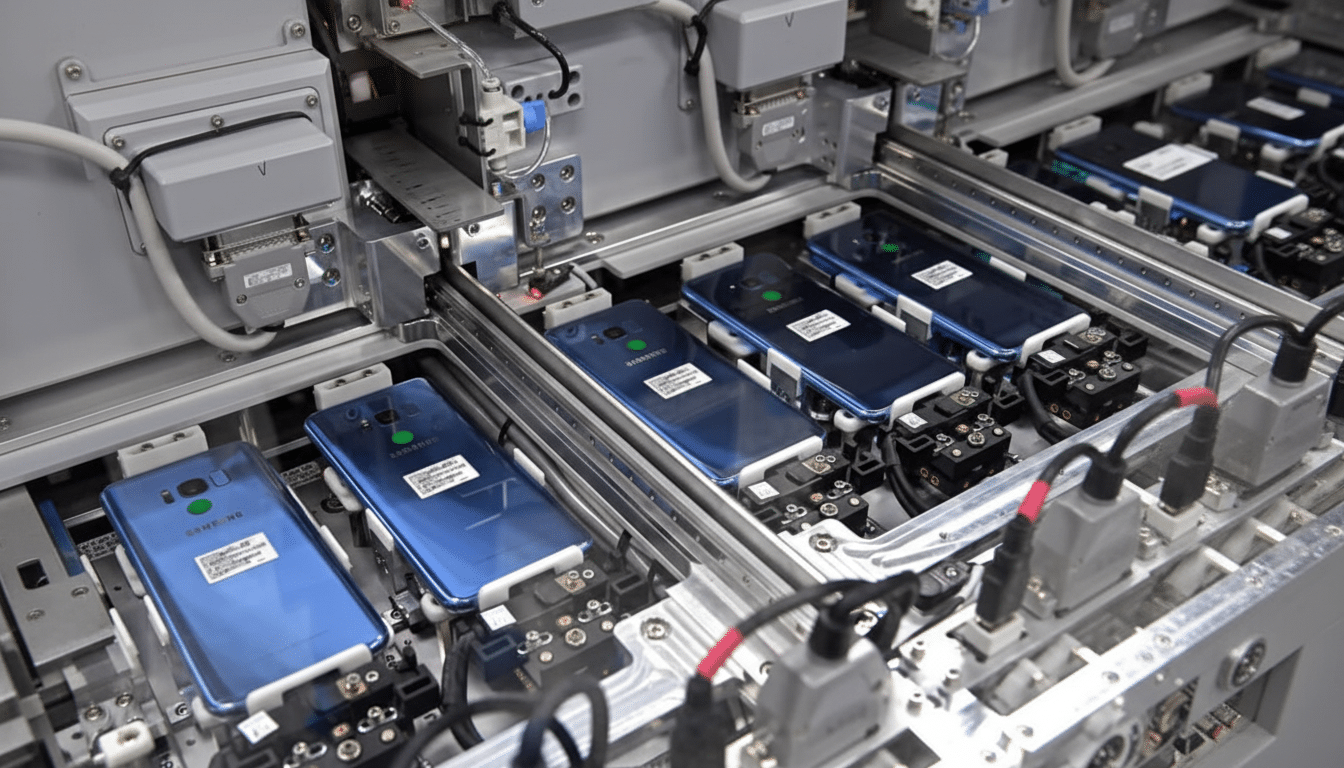
Scale of Samsung’s Planned AI Rollout
Samsung’s plan involves scaling artificial intelligence across hundreds of millions of devices in a single year, positioning the company among the most aggressive adopters of consumer-grade AI hardware. This expansion covers a broad range of products, including flagship smartphones, mid-range devices, tablets, and smart wearables.
By embedding intelligence directly into hardware, Samsung aims to ensure that AI features are accessible to a wide global user base rather than limited to premium models. Analysts say the scale of Samsung AI mobile devices deployment could influence industry benchmarks for years to come.
Why On-Device AI Is a Priority
Unlike cloud-based AI services, on-device AI processes data locally, improving response times and reducing reliance on constant internet connectivity. This approach also addresses growing concerns about data privacy and regulatory compliance, particularly in Europe and other regions with strict data protection rules.
Samsung has emphasized that its AI tools are designed to function directly on the device, supported by advances in mobile processors and memory efficiency. As a result, Samsung AI mobile devices are increasingly optimized to deliver intelligent features without compromising performance or battery life.
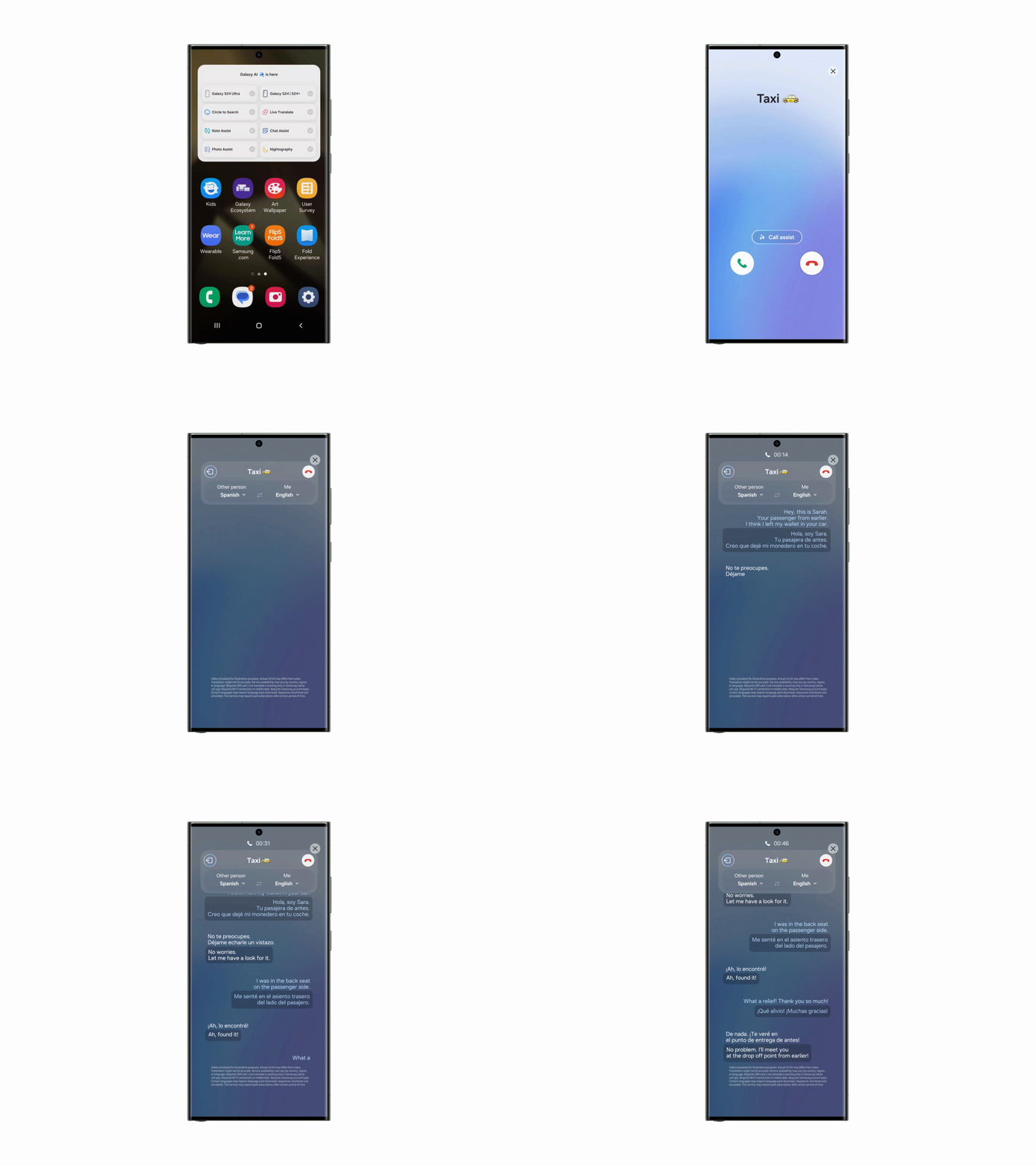
AI Features Becoming Everyday Tools
Artificial intelligence is now embedded in many everyday mobile functions, including photography enhancement, real-time language translation, voice recognition, predictive text, and personalized device settings.
Samsung’s strategy focuses on practical use cases rather than experimental features, aiming to integrate AI in ways that improve daily usability. Company executives believe this approach will accelerate consumer adoption as users come to expect intelligent assistance as a standard feature.
This emphasis has driven Samsung to expand Samsung AI mobile devices across multiple price tiers and geographic markets.
Competitive Pressure in the Mobile Industry
The smartphone industry has reached a point where hardware improvements alone no longer drive major differentiation. As displays, cameras, and processors mature, artificial intelligence has emerged as the next competitive frontier.
Samsung’s expansion highlights intensifying competition among global manufacturers to establish leadership in mobile AI. While rivals are also developing AI-driven features, Samsung’s manufacturing scale and supply chain integration provide a significant advantage.
Industry analysts say the widespread adoption of Samsung AI mobile devices could accelerate similar moves by competitors seeking to avoid falling behind.
Strategic Importance for Samsung’s Ecosystem
Mobile products remain a cornerstone of Samsung’s broader ecosystem, which spans semiconductors, consumer electronics, and connected home technologies. AI integration supports tighter connections between devices, enabling features such as seamless data sharing and intelligent automation across platforms.
Samsung has positioned AI as a unifying layer that links phones, tablets, wearables, and even household appliances. In this context, Samsung AI mobile devices are expected to serve as gateways to a more integrated digital environment.
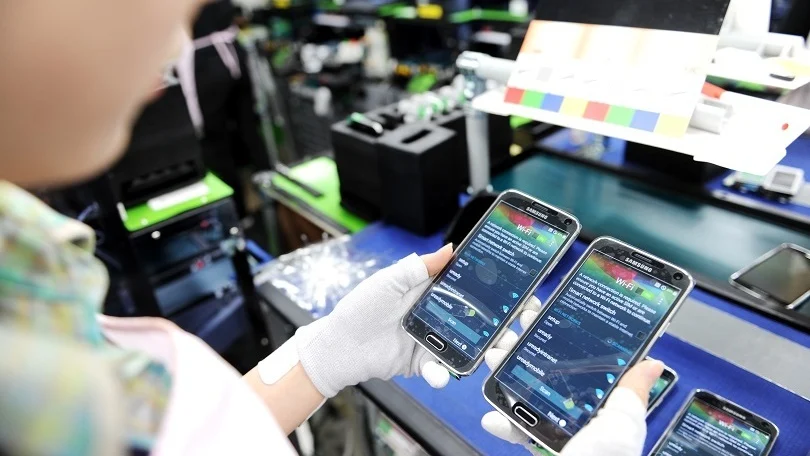
Supply Chain and Technology Investment
Scaling AI across hundreds of millions of devices requires substantial investment in hardware and software development. Samsung has expanded research in areas such as natural language processing, computer vision, and machine learning models optimized for mobile environments.
The company’s vertically integrated structure allows it to coordinate semiconductor production, device manufacturing, and software optimization more efficiently than many competitors. This integration is critical to ensuring Samsung AI mobile devices deliver consistent performance across different product categories.
Consumer Demand and Market Trends
Consumer interest in AI-powered features has grown steadily, driven by clear improvements in functionality rather than novelty. Features such as intelligent photo editing, real-time translation, and adaptive battery management are increasingly viewed as essential.
Market research suggests that users are more likely to upgrade devices when AI features offer tangible benefits. Samsung’s decision to expand Samsung AI mobile devices reflects confidence that demand for intelligent mobile technology will continue to rise.
Industry Perspective
“The scale at which Samsung AI mobile devices are being deployed shows that artificial intelligence has become a baseline expectation rather than a premium feature,” said an industry analyst who tracks global smartphone trends.
The analyst added that companies capable of delivering AI at scale while maintaining affordability are likely to gain long-term competitive advantages.
Broader Implications for Software and Developers
As AI becomes standard across mobile hardware, software developers are expected to adapt applications to take advantage of on-device intelligence. This shift could influence how mobile apps are designed, prioritizing local processing over cloud-dependent models.
The widespread availability of Samsung AI mobile devices may also encourage developers to build more advanced AI-driven tools, accelerating innovation across mobile platforms.
A Turning Point for Mobile Intelligence
The rapid expansion of Samsung AI mobile devices marks a significant moment in the evolution of consumer technology. Artificial intelligence is no longer a future concept but a core component of everyday devices used by millions of people worldwide.
As Samsung continues to scale its AI capabilities, the company is shaping expectations for what mobile technology can deliver, setting the stage for a new era in which intelligence is embedded directly into the devices people rely on most.