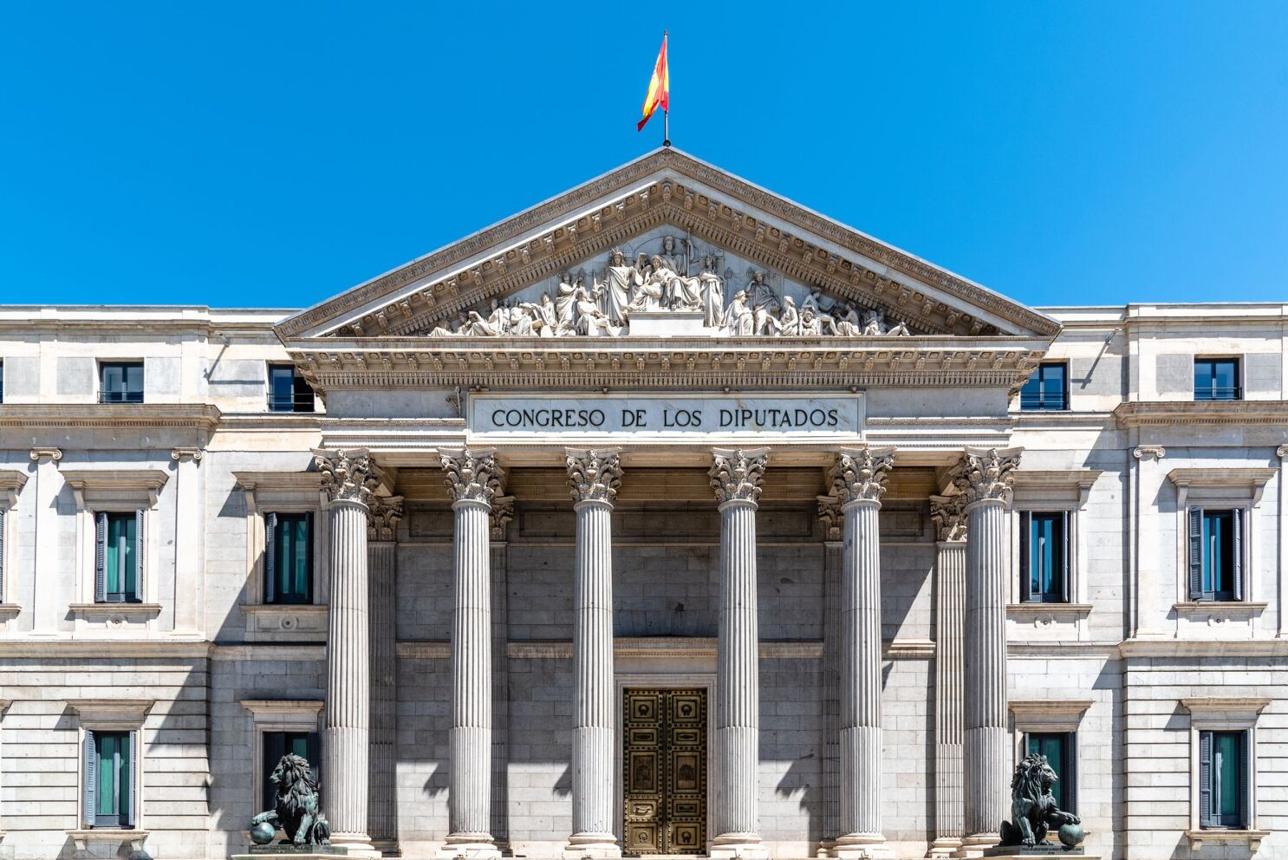
This Sunday, on 29 November, Spaniards go to the polls after housing triggered a snap election. And while corruption hangs over the campaign, the consequences of this election go much further. It will determine who gets a home, who gets work, who gets cast as the problem and, if the polls hold, whether the far-right Vox party enters government. Recent polls predict a tight race with People’s Party (PP) and Sánchez’s Socialists at around 30% and far-right Vox in third place at around 18%.
Against this background, there is another decisive story that mainstream parties have thus far failed to reckon with: Close to a million Roma live in Spain. Of these, according to an analysis by Roma for Democracy, the European foundation working to strengthen Roma political participation, between 600,000 and 700,000 are eligible to vote. In at least seven provinces, that electorate is larger than the margin that decided the last parliamentary seat. If they can be mobilised, Roma votes could prove to be the margin by which a seat is decided, just as they were in Bulgaria and Hungary.
Roma have more at stake in this election than most. On housing, work and safety, they face enormous disadvantages. In Spain, a study by the EU’s Fundamental Rights Agency found that three in ten Roma faced discrimination when looking for a home. Only 31 per cent are in paid work, against 71 per cent of the general population as a whole. One-in-four faced hate-motivated harassment in a single year; to us Roma, every one of those incidents has a name, a family and a life behind it.
Of course, none of this is new, which raises the question: Why should Roma vote this time more than ever, even when no party makes any effort to engage them?
The centre-right Partido Popular (PP), the likely winner, on most polls – has not even asked for the Roma vote. It has announced a programme of 249 measures; not one of them mentions Roma, and some would actively harm them. Of particular concern is the party’s “Measure 98”, which promises priority access to aid, benefits and public resources for those with “a real, lasting and verifiable tie to Spain”. This would be measured by registration, contribution history and permanence, rather than nationality alone. Alberto Núñez Feijóo hasn’t explained if this measure would penalise citizens whose economic exclusion is precisely what public support is supposed to help overcome.
In effect, the PP would be building a queue for help, with access to public support determined by papers and payslips. In doing so, they would be pushing furthest to the back those that the labour market has excluded longest, and nearly seven in ten working-age Roma are not in paid work. Roma citizens are entitled to know whether “Measure 98” would disadvantage them, and what Feijóo’s red lines on equality would be worth once Vox’s votes are needed.
Vox’s record isn’t so subtle. In 2022, every other party – including the PP – supported the inclusion of anti-Roma motives to the Criminal Code, making anti-Roma hatred an explicit ground for prosecuting hate crimes. Vox alone abstained. Later, its deputies unsuccessfully challenged before the Constitutional Court elements of the equal-treatment law. Any government dependent on Vox would give a party that has opposed or challenged important anti-discrimination protections greater influence over the policies and institutions that affect Roma citizens.
The Socialist Party’s (PSOE) on the other hand, does not ignore the Roma vote, but rather, depends on it. Its programme promises to advance the national Roma strategy, intended to improve equality, inclusion and participation, and to properly fund the Autoridad Independiente para la Igualdad de Trato y la No Discriminación (A.A.I.), the authority responsible for enforcing equal-treatment protections. Challenges remain in delivery.
The remedy must start within the party, with Roma accounted for when electoral lists and budgets are decided, and with delivery that can be measured. Fear of Vox might be enough to bring Roma to the polls, but it cannot hold a party to its word once the votes are counted.