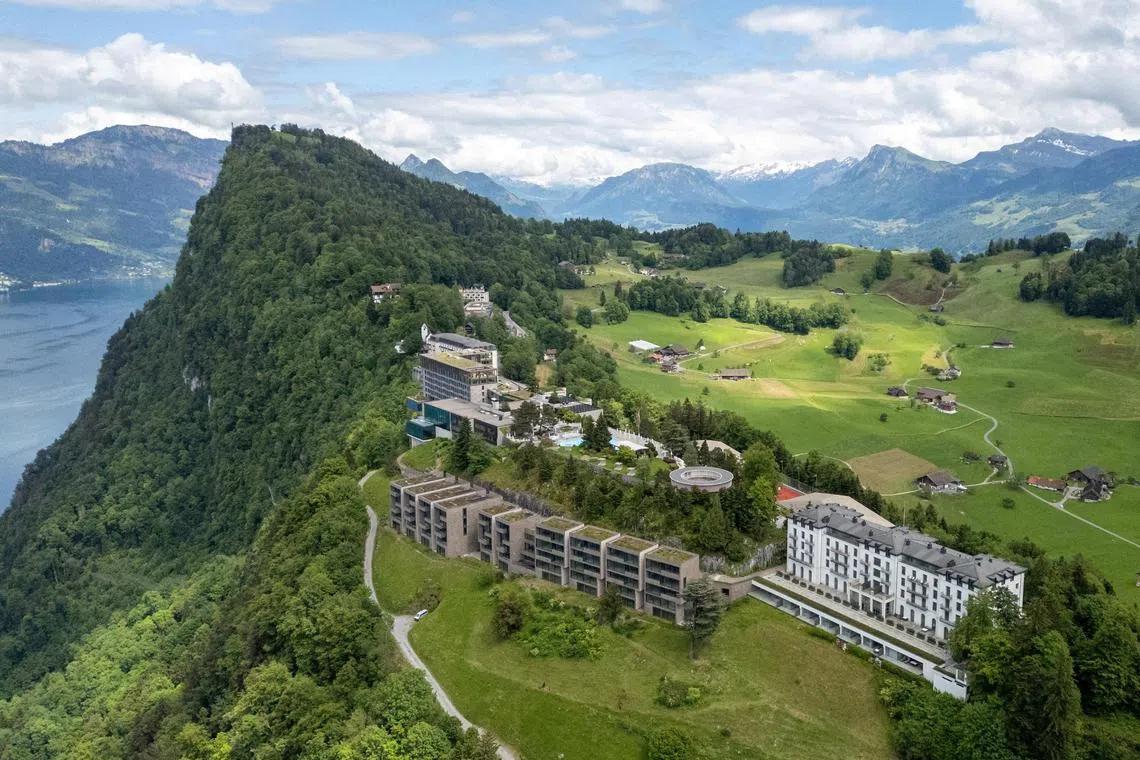
Early Monday morning, as Lake Lucerne reflected the first light over the Bürgenstock resort, something unusual happened in the history of American foreign policy. Foreign Minister Abbas Araghchi of Iran declared publicly that “tireless Pakistani and Qatari mediation has delivered major progress to end the Lebanon War.” Iran, which has spent decades treating Washington with contempt and suspicion, publicly credited a third country for narrowing the gap. That country was not France, not Germany, not the United Nations. It was Pakistan.
The conventional media narrative this week frames the Bürgenstock summit as an American diplomatic triumph. Vice President JD Vance flew to Switzerland, sat across from Iran’s parliamentary speaker Mohammad Bagher Ghalibaf, and the two sides agreed to a 60-day roadmap toward a final deal, with nuclear, sanctions, and dispute-resolution working groups to follow. The headline writes itself: Trump delivers where Biden failed.
But that reading misses the structural story. The real shift at Bürgenstock was not American leverage. It was Pakistani credibility, built painstakingly over twelve months by two men who spent the past year transforming their country’s place in the world: Prime Minister Shehbaz Sharif and Field Marshal Asim Munir. Washington supplied the political weight. Islamabad supplied the trust. Without that combination, there would have been no summit to attend.
To understand Bürgenstock, you have to start in May 2025. When India launched Operation Sindoor on May 7, striking targets inside Pakistan and Pakistan-administered Kashmir, the assumption in many capitals was that Islamabad would absorb the blow, absorb the humiliation, and quietly de-escalate. Instead, Pakistan responded with precision in what became a four-day conflict that ended only after US-brokered backchannel diplomacy secured a ceasefire on May 10. Pakistan’s National Assembly formally celebrated the outcome as a national victory. General Asim Munir was elevated to the five-star rank of Field Marshal, a distinction last held in Pakistan in the 1960s.
The significance was strategic, not ceremonial. Pakistan did not simply emerge from the India conflict intact. As analysts have noted, it emerged emboldened. Field Marshal Munir moved immediately to convert that military credibility into geopolitical currency. He made multiple visits to Washington – including one-one-lunch with President Trump – developing what American officials describe as a direct and trusted line to the White House. In September 2025, Prime Minister Sharif and Field Marshal Munir met President Trump at the White House, signing a mutual defence agreement with Saudi Arabia along the way and repositioning Pakistan as an active, constructive presence in Gulf security architecture.
This is the twelve-month arc that produced Bürgenstock. It was not accidental. It was engineered.
When the US-Iran conflict began in February 2026 and the world searched for a credible intermediary between Washington and Tehran, the answer was already clear to those who had watched Pakistan’s trajectory. Pakistan hosts no US military bases and maintains functional diplomatic ties with Tehran. In a conflict ecosystem where every major power is perceived as partisan, Islamabad occupied the rare middle position: close enough to Washington to carry credibility, trusted enough by Tehran to carry messages.
Field Marshal Munir and Prime Minister Sharif worked this channel with relentless discipline. Munir made multiple personal trips to Tehran, sitting across from Iranian President Masoud Pezeshkian and Parliamentary Speaker Mohammad Bagher Ghalibaf. Interior Minister Mohsin Naqvi visited the shrine of Imam Reza in Mashhad hours before the Bürgenstock meeting, a gesture of cultural seriousness that no Western envoy could credibly replicate. Foreign Minister Ishaq Dar shuttled between capitals. The ceasefire that took hold on April 8, 2026, and the subsequent first round of direct talks hosted in Islamabad, were the direct product of this sustained, unglamorous effort.
The White House noticed. When a Republican senator attempted to cast doubt on Pakistan’s role in May, President Trump was unequivocal: “They’re great. I think the Pakistanis have been great. The field marshal and the prime minister of Pakistan have been absolutely great.” On May 7, Trump reinforced the point publicly: “Pakistan has been fantastic. And its leaders have been fantastic – the marshal and the prime minister.” The White House issued a formal statement confirming that “Prime Minister Shehbaz Sharif and Field Marshal Asim Munir have been helpful mediators, and the United States is grateful for Pakistan’s efforts to bring an end to the conflict.”
At Bürgenstock on Sunday, Vance went further. Speaking publicly at the opening ceremony, he made a personal remark that captured the depth of the working relationship he had built with Field Marshal Munir over the preceding months. “I have joked that I have two very, very important people in my life. An Indian and a Pakistani. The Indian is my wife, and the Pakistani is Field Marshal Munir,” Vance said, adding that he had “probably talked to Field Marshal Munir more than anyone else over the last few months.” That is not diplomatic courtesy. That is a senior American official publicly confirming that the most consequential back-channel of a major geopolitical crisis ran through a Pakistani general and a Pakistani prime minister.
The formal framework for last weekend’s talks was the Islamabad Memorandum of Understanding, signed on June 17, 2026, with Prime Minister Sharif as co-signatory representing the mediating party. That framing matters legally and politically. Pakistan is not merely a go-between; it is a named party to the foundational document governing this negotiation. When the summit nearly collapsed Saturday Israel struck Lebanon, Iran threatened to close the Strait of Hormuz again, and Vance originally cancelled his attendance the Pakistani team, led by Prime Minister Sharif and Field Marshal Munir, held bilateral sessions with both the American and Iranian delegations through the night, threading through the disagreements that threatened to derail everything.
The Pakistan-Qatar joint statement confirmed the outcome: a High Level Committee with political oversight, IAEA inspectors invited back into Iran, oil and petrochemical waivers for Tehran, the lifting of port blockades, and a reconstruction plan. Both sides left the table claiming progress. That is the hardest thing to achieve in any mediation. It is craft, not luck. And it was delivered by the same duo that had spent twelve months building the conditions that made it possible.
Pakistan’s transformation over the past year carries implications that extend well beyond this one negotiation. Before May 2025, Islamabad was frequently dismissed in Western foreign policy circles as a security liability, a country defined by internal fragility rather than regional ambition. That framing is now empirically obsolete.
Pakistan today maintains its strategic partnership with China, sustains functional ties with Iran, operates a mutual defence agreement with Saudi Arabia, and holds a direct working channel to the Trump White House simultaneously. This is the definition of a middle power that has learned to operate across otherwise incompatible geopolitical spheres. Pakistan is fast emerging as a “third pillar” alongside Saudi Arabia and Turkey in southwest Asian security architecture, a shift that was inconceivable before the May 2025 conflict and the diplomatic sprint that followed it.
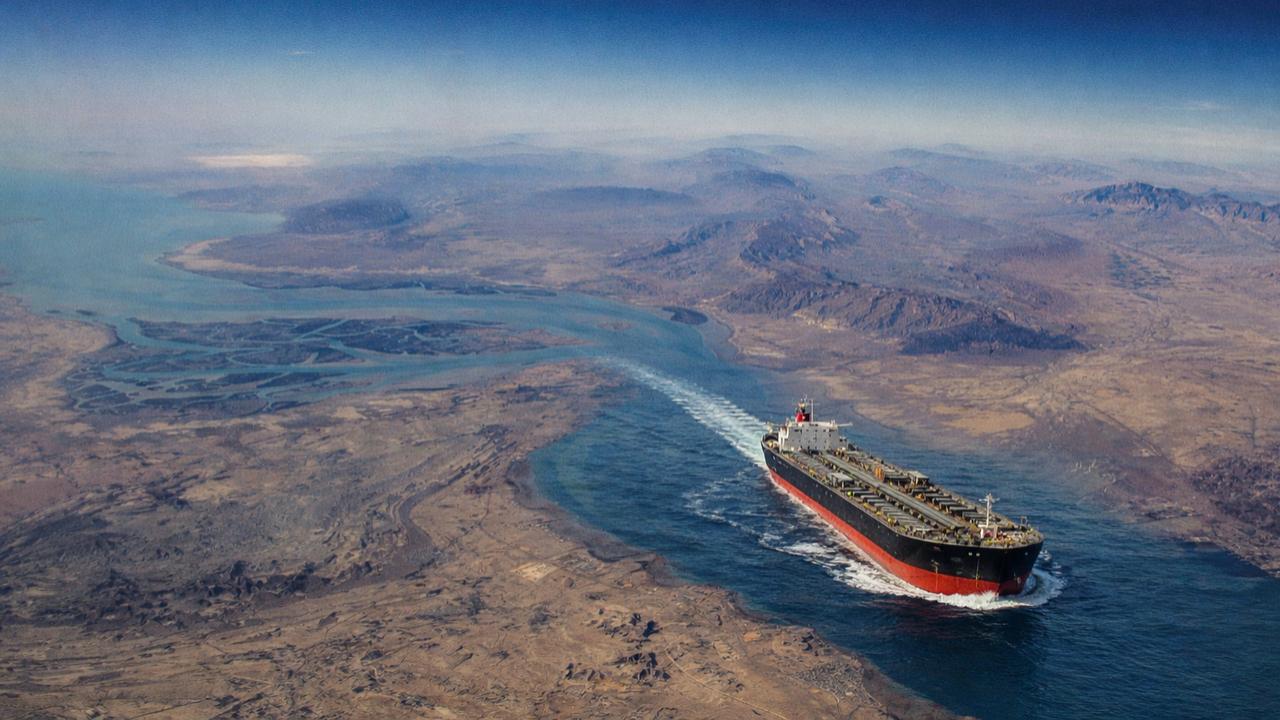
The work is unfinished. Iran’s enrichment capacity, the stockpile of highly enriched uranium, the future of Lebanon, the Strait of Hormuz’s long-term status, and the sanctions architecture all remain contested. Israel, absent from the talks and explicitly hostile to the accord, retains the ability to disrupt the process at any moment. The High Level Committee and the technical working groups now provide the structure. Pakistan and Qatar provide the trusted channel.
Two months from now, if a final agreement takes shape, the world will credit the leaders who signed it. It will not automatically credit the two men who made the signing possible: the Prime Minister who flew to Zurich on a Saturday night and the Field Marshal who had spent months earning the trust of both Washington and Tehran before that flight was ever scheduled.
That invisibility is, in some ways, the mark of effective mediation. The mediator succeeds when the principals take the credit.
Pakistan, and the Sharif-Munir partnership that built this moment, should take its own.