It may be thousands of kilometres away but a Belgian animal park is doing its bit to protect the rainforest.
Pairi Daiza,near Mons, is helping to preserve 50 hectares (124 acres) of rainforest in one of the world’s most biodiverse regions.
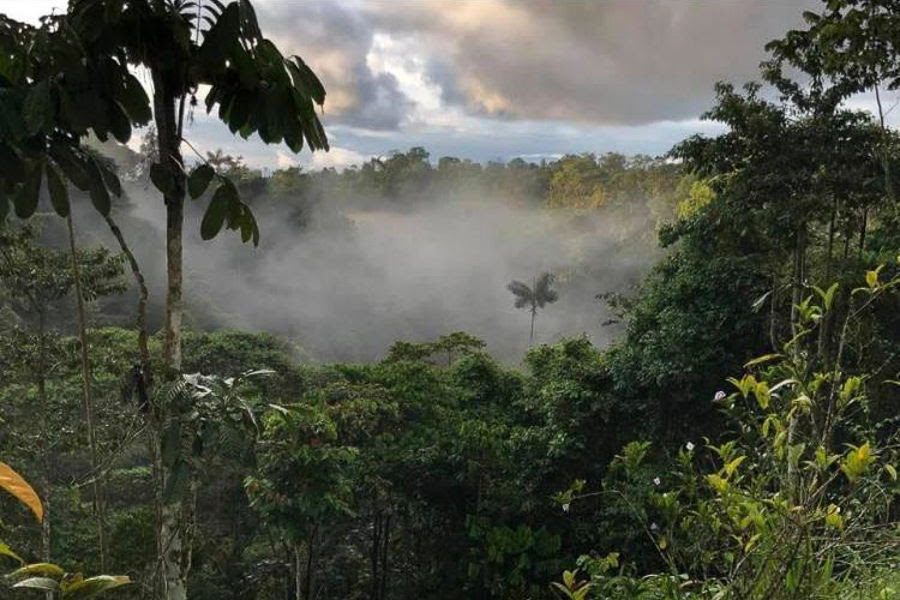
The Chocó Andino in Ecuador in South America is a haven for biodiversity one of the regions with the greatest diversity of butterflies in the world.
Ecuador is home to nearly 4,000 species of butterflies, compared with around a hundred in Belgium.
With Edenya, the world’s largest indoor tropical garden, Pairi Daiza already gives visitors the chance to discover the richness and fragility of tropical ecosystems, particularly in a butterfly garden spanning more than 1,500 m².
Comment on the collaborative effort came from Fanny Cloutier, head of nature conservation programmes at the Pairi Daiza Foundation.
She said, “Protecting butterflies means much more than simply safeguarding these fascinating species.
“It means preserving an entire forest, the plants on which they depend and the countless other forms of life that share their habitat.
“This collaboration with the Monowa Foundation perfectly illustrates our belief: to conserve species, we must first and foremost look after the ecosystems in which they live,” said Cloutier.
The Kalymé project aims to ensure the long-term protection of around 50 hectares of forest in the Mindo region, around the Quinta de Goulaine estate, in the heart of Ecuador’s Chocó Andino.
Located on the western slopes of the Andes, the Chocó Andino was designated a UNESCO Biosphere Reserve in 2018.
At the crossroads of the Chocó rainforests and the tropical Andes, this area is home to exceptional biodiversity.
In the Mindo region, several hundred species of butterfly live alongside a wide variety of birds, orchids and other animal and plant species. However, this rich biodiversity is threatened by deforestation, habitat fragmentation and climate change.
Protecting butterflies means protecting the habitats they depend on.
Their survival depends in particular on specific plants, which are indispensable for the development of their caterpillars. By preserving the forest, the ecological interactions that are essential to this entire ecosystem are maintained.
The Monowa Foundation, based in Andalusia, is committed to the conservation of butterflies, sharing scientific knowledge and raising awareness about biodiversity.
Building on the experience of the Monowa Entomological Centre, which welcomes thousands of visitors each year to discover the world of butterflies, the foundation develops projects that combine research, scientific heritage, education and the protection of natural habitats.
A Pairi Daiza spokesman told this site: “The collaboration within Kalymé goes beyond protecting a natural area: the shared ambition is to establish a sustainable nature conservation project, combining habitat protection, scientific research, awareness-raising and the involvement of local stakeholders.”
To realise this ambition, Pairi Daiza and the Pairi Daiza Foundation are committing €200,000 to the project.
The spokesman said, “Protecting butterflies means much more than simply safeguarding these fascinating species.
“It means preserving an entire forest, the plants on which they depend and the countless other forms of life that share their habitat. This collaboration with the Monowa Foundation perfectly illustrates our belief: to conserve species, we must first and foremost look after the ecosystems in which they live.” Fanny Cloutier, head of nature conservation programmes at the Pairi Daiza Foundation.”
In the long term, Kalymé aims to become an international centre of excellence for research into and conservation of tropical butterflies. In addition to protecting the forest, the project aims to develop a genuine scientific and educational platform dedicated to butterflies and their ecosystems.
Biodiversity surveys and an initial baseline assessment will help document the forest’s condition, the species present and the characteristics of their habitats.
The gradual development of scientific monitoring programmes, focusing in particular on butterflies, pollinators and flora, will then contribute to a better understanding of the dynamics of this ecosystem, the identification of conservation priorities and the determination of targeted conservation measures.
Butterflies are particularly sensitive to changes in their habitat, making them valuable indicators of ecosystem health.
In the longer term, Kalymé also aims to promote the exchange of knowledge, educational initiatives and the development of specialised activities centred on butterflies.
The aim is to turn this area not only into a protected nature reserve, but also into a centre for research, knowledge-sharing and collaboration, through an approach that combines biodiversity conservation with sustainable local development.
Knowledge transfer and raising public awareness form another essential pillar of Kalymé.
By sharing their field discoveries, the two foundations aim to enable as wide an audience as possible to better understand the role of butterflies in ecosystems and the close links between species and their habitats.
The Kalymé project builds on this with concrete conservation measures in the natural environment, while creating new opportunities for research, knowledge transfer and the long-term protection of tropical butterflies.