Milan, Italy, January 2026 — Brussels Morning Newspaper: In Milan, the global headquarters of Italian luxury group Moncler, senior executives gathered to outline a carefully structured transition at the top of the company. The announcement places Moncler leadership at the center of a broader discussion about continuity, governance, and long-term strategy within Europe’s high-end fashion industry, as brands adapt to a rapidly changing global environment.
The timing and location were deliberate. Milan remains the operational and symbolic heart of Moncler, and the decision to address the transition from this city underscores the company’s intention to keep strategic authority firmly anchored at its core.
Milan as the Strategic Nerve Center
Milan’s role in the luxury ecosystem extends far beyond fashion weeks and runway shows. It is where brand identity, executive authority, and long-term planning converge. For Moncler, Milan has long served as the city where creative ambition is balanced with disciplined management.
The leadership transition announced here reflects that balance. Executives emphasized that Moncler leadership decisions are being made with an eye toward preserving the brand’s DNA while ensuring the structure is robust enough to manage a global footprint that spans Europe, Asia, and the Americas.
The Evolution of a Global Luxury Brand
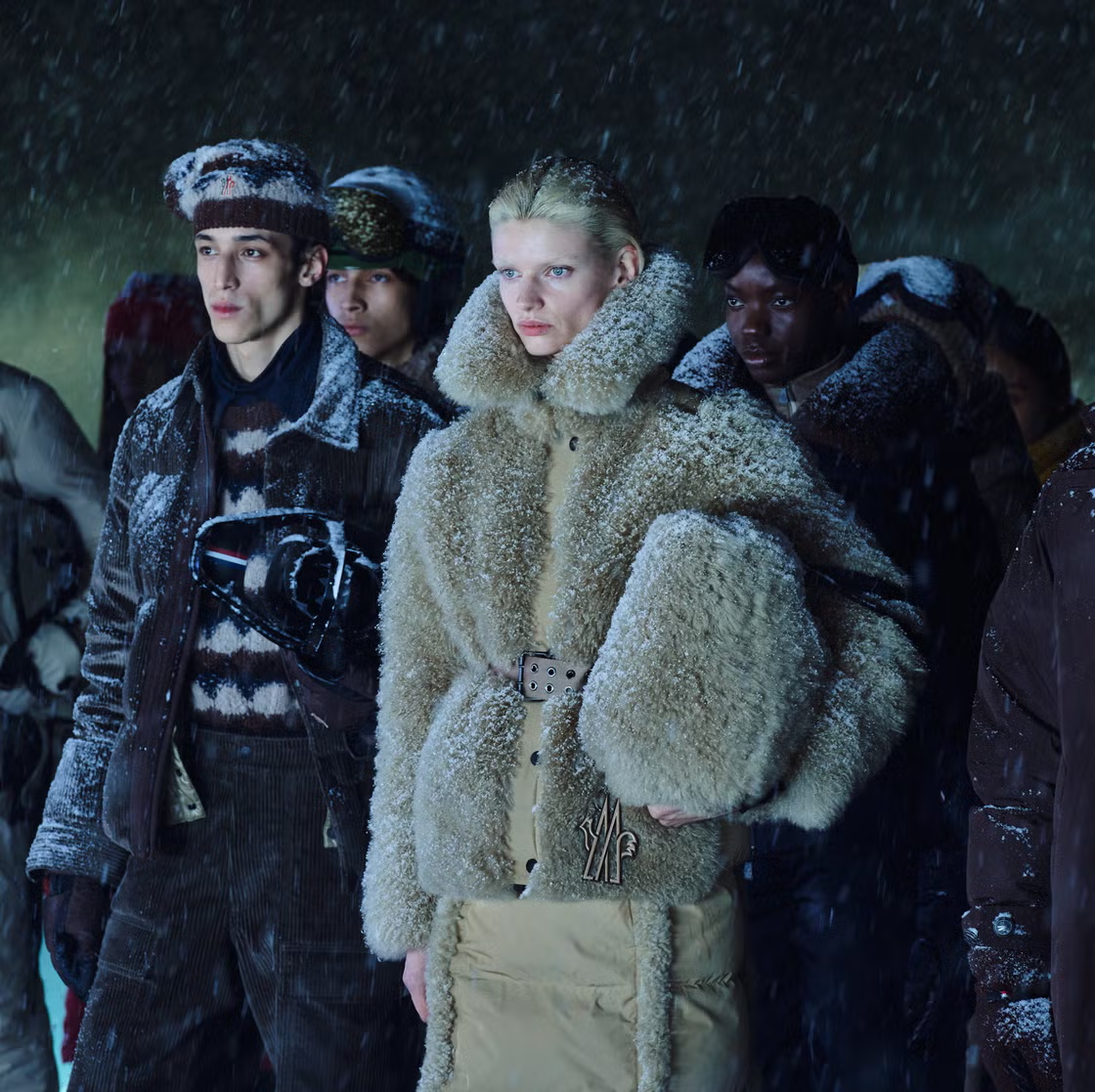
Moncler’s transformation over the past two decades is widely viewed as one of the most successful reinventions in modern luxury. Originally known for functional alpine wear, the company evolved into a symbol of technical excellence combined with high-fashion credibility.
This evolution was driven by a clear vision and steady governance. As the brand scaled globally, the complexity of operations increased. The current leadership transition reflects recognition that the company has reached a stage where operational excellence must be matched with strategic continuity, a principle guiding Moncler leadership as it looks beyond 2026.
Remo Ruffini and Long-Term Vision
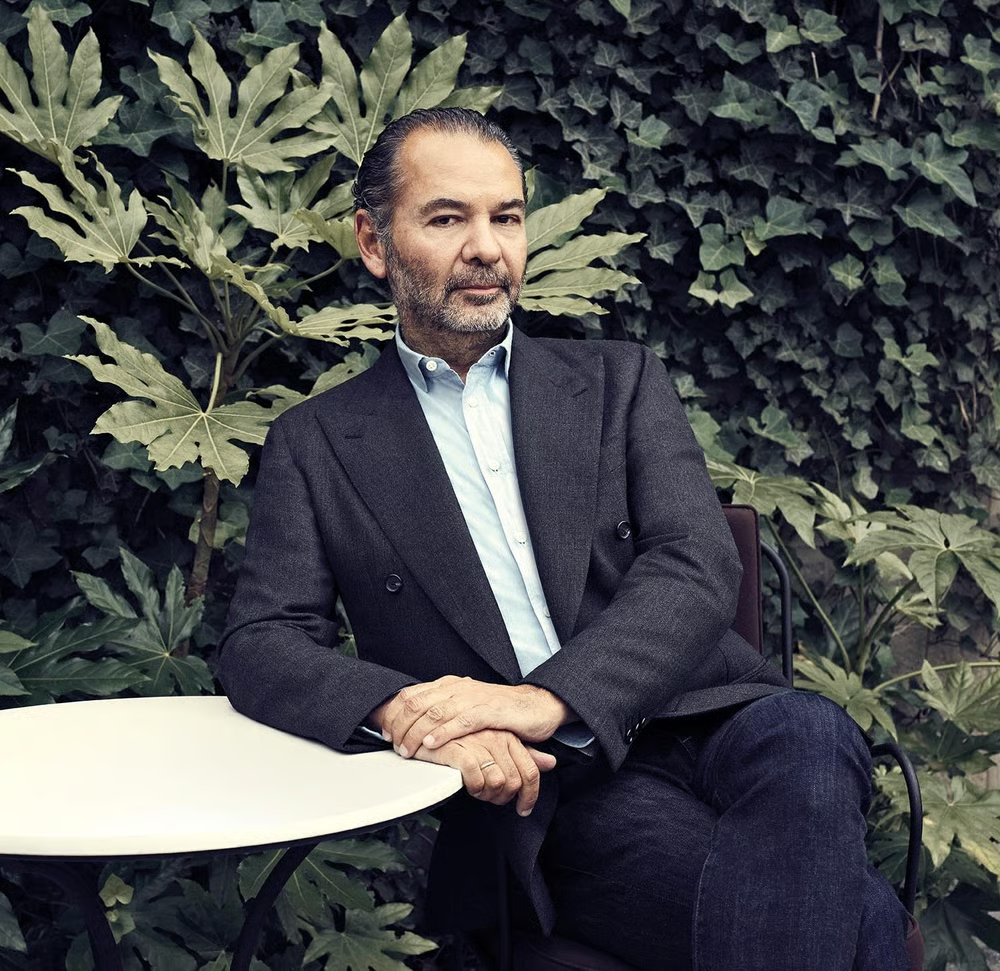
Central to Moncler’s identity is Remo Ruffini, whose leadership reshaped the brand’s trajectory. Ruffini’s tenure emphasized selective growth, creative collaboration, and disciplined brand management.
Under the transition plan, Ruffini is expected to remain deeply involved in strategic oversight while gradually stepping back from daily operational control. This model allows the company to retain its visionary influence at the top while empowering experienced executives to manage execution. Within this framework, Moncler leadership is designed to evolve without losing the clarity that has defined the brand’s rise.
Bringing in External Executive Experience
A notable element of the transition is the decision to bring executive expertise from Bottega Veneta, a house known for its understated elegance and operational discipline. Industry observers see this as a strategic fit rather than a disruptive move.
The experience gained at Bottega Veneta is viewed as complementary to Moncler’s culture. It reinforces the idea that leadership skills can transfer across luxury houses when values align. This approach signals that Moncler leadership prioritizes competence and cultural coherence over experimentation for its own sake.
Governance and Stability in Focus
Across the luxury sector, governance has become a defining issue. Investors and partners increasingly scrutinize how brands manage succession, accountability, and strategic risk. Moncler’s methodical approach reflects these expectations.
By clearly outlining roles, timelines, and responsibilities, the company reduces uncertainty and speculation. Analysts note that Moncler leadership is positioning governance as a strength, reinforcing confidence among stakeholders who value predictability in an industry often associated with volatility.
Market Reaction and Industry Confidence
Early market reactions to the announcement have been measured, reflecting confidence rather than concern. Luxury analysts point to the gradual nature of the transition as a key stabilizing factor.
Rather than signaling upheaval, the move suggests foresight. By planning leadership evolution in advance, Moncler leadership demonstrates an understanding of the importance of continuity, particularly during periods of economic and geopolitical uncertainty.
Creative Direction Remains Intact
One of the primary questions following any leadership change is its impact on creativity. Moncler’s success has been built on a careful balance between technical innovation and fashion-forward storytelling.
Executives reassured stakeholders that creative strategy will remain consistent. Collaborations, limited editions, and runway presentations are expected to continue as core pillars of brand engagement. Under the evolving structure, Moncler leadership aims to give creative teams stability rather than impose abrupt shifts in direction.
Internal Alignment and Workforce Communication
Internally, leadership transitions can unsettle teams if not handled transparently. Moncler addressed this risk through early and direct communication with managers, designers, and regional leaders.
Workshops and briefings were used to explain how responsibilities would evolve and what aspects of the organization would remain unchanged. This emphasis on clarity reflects an understanding that internal alignment is essential to maintaining momentum during periods of change. In this respect, Moncler leadership has focused as much on people management as on strategic planning.
Digital Strategy and Global Reach
Digital transformation remains central to Moncler’s growth ambitions. Investments in e-commerce, data analytics, and direct-to-consumer platforms have already reshaped how the brand engages with customers worldwide.
The leadership transition is expected to support further digital expansion, particularly in fast-growing markets across Asia and the Middle East. Executives indicated that Moncler leadership views digital capability as integral to long-term competitiveness rather than a supplementary channel.
Sustainability as a Strategic Priority
Sustainability has moved from a peripheral concern to a core expectation in luxury fashion. Consumers, regulators, and investors increasingly demand transparency and measurable progress.
Moncler has made public commitments to reduce environmental impact and improve supply-chain oversight. Leadership oversight is critical to delivering on these goals. During the Milan discussions, executives reiterated that sustainability considerations are embedded in decision-making processes, reinforcing the idea that Moncler leadership sees responsibility as inseparable from brand value.
Milan and the Italian Luxury Identity
Italy’s luxury industry has long been defined by craftsmanship, heritage, and regional expertise. Milan, as its commercial capital, plays a central role in shaping global perceptions of Italian fashion.
By anchoring the leadership transition in Milan, Moncler aligns itself with this tradition. The city represents continuity, authority, and authenticity. For international audiences, this reinforces the credibility of Moncler leadership at a time when provenance matters as much as innovation.
Competitive Landscape in 2026
The luxury market in 2026 is shaped by shifting consumer behavior, digital acceleration, and heightened geopolitical risk. Brands must navigate these challenges while preserving exclusivity and desirability.
Within this environment, Moncler’s measured approach stands out. Rather than pursuing dramatic change, Moncler leadership has opted for a disciplined transition that prioritizes resilience and long-term relevance.
One Industry Perspective
One senior European luxury strategist familiar with the Milan discussions said,
“This transition shows that careful leadership planning can protect a brand’s identity while preparing it for future complexity.”
Consumer Trust and Brand Loyalty
From a consumer perspective, leadership changes matter primarily when they affect product quality or brand storytelling. By maintaining continuity, Moncler minimizes the risk of eroding trust built over years.
Brand analysts suggest that Moncler leadership understands this dynamic well, framing the transition as an evolution that strengthens the brand’s ability to deliver consistent value.
Looking Beyond the Transition
While the immediate focus is on execution, the implications of the leadership change extend far beyond the current cycle. Decisions made now will influence how Moncler responds to future challenges, from technological disruption to evolving luxury values.
By grounding the transition in Milan and communicating a clear road-map, Moncler leadership signals confidence in its long-term trajectory and commitment to disciplined growth.
A Deliberate Path Forward
As the luxury industry continues to evolve, Moncler’s leadership transition offers a clear example of strategic patience. By planning carefully, communicating transparently, and anchoring decisions in its Milan headquarters, the company reinforces its position as a disciplined global player.
In a sector often driven by spectacle, Moncler’s approach highlights the enduring value of clarity and continuity. For stakeholders across the industry, Moncler leadership in 2026 represents not uncertainty, but a confident step toward sustained relevance.