European Parliament challenges Commission’s fund release to Hungary, setting the stage for a legal confrontation in Luxembourg.
The European Parliament has pursued through with its warning and is taking legal action against the European Commission regarding the release of €10.2 billion in frozen funds to Hungary.
The move, expected on Monday evening, was approved on Thursday morning by the Parliament’s president, Roberta Metsola, during a discussion with the leaders of the political groups. Metsola has the absolute authority to launch legal measures against other institutions before the European Court of Justice. The last date for submission is 25 March.
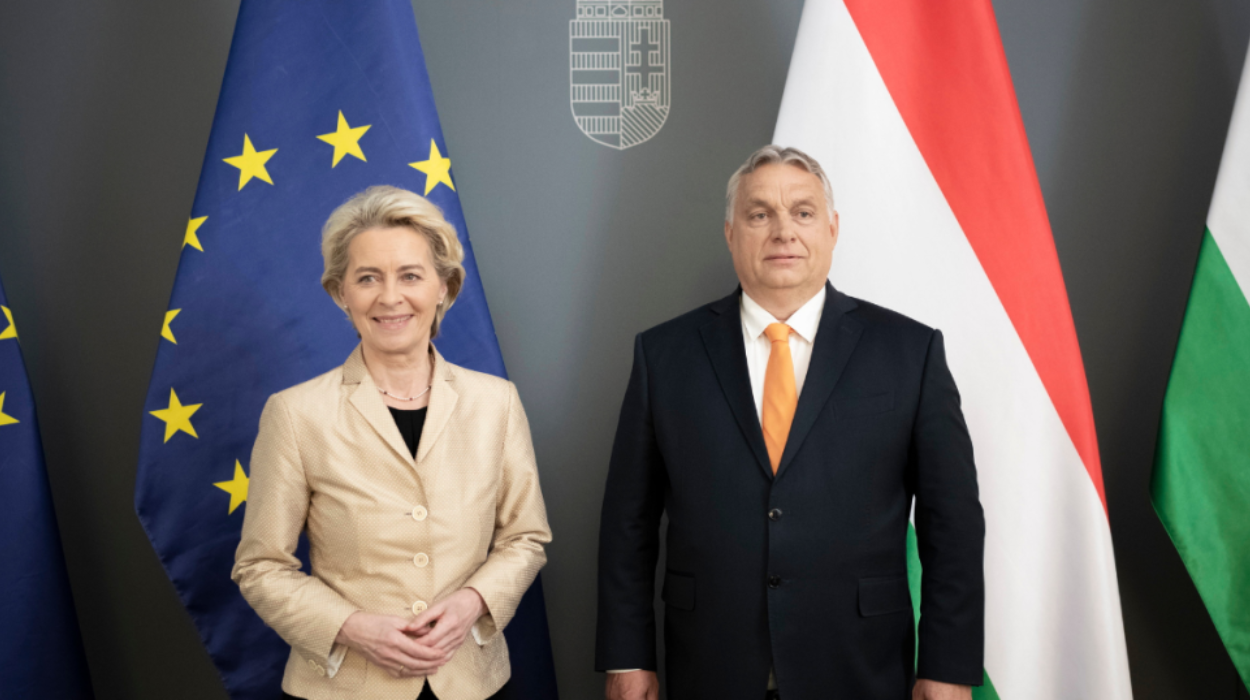
With the case, the hemicycle piles stress on Ursula von der Leyen as she desires a second term at the helm of the Commission and pledges to stand firm on the rule of law, a prudent issue that has fascinated considerable energy of her first mandate.
The anger of lawmakers derives from the finding taken by the Commission in December that approved €10.2 billion in cohesion funds for Hungary, which the government had been incapable of accessing due to constant deficiencies in the rule of law. The executive asserted the action was justified because Budapest had in May last year enacted a reform to maintain judicial independence and stop political interference in the courts, in line with four “super milestones” that Brussels had assessed.
Legislators, mirroring the concerns voiced by civil society, contested the reasoning and expressed the decision was not up to the mark. They also whined the money had been unfrozen one day before an important summit of EU leaders in which Prime Minister Viktor Orbán had jeopardized to veto of key deals on Ukraine.
In a strongly worded resolution broadly consented in January, MEPs raised the option of legal action and underlined that “in no way can the EU give in to squeeze and trade the strategic claims of the EU and its partners by renouncing its values.”
“Hungary does not satisfy the standard of judicial freedom set out in the EU laws as the measures embraced do not ensure adequate safeguards against political influence and can be either bypassed or inadequately involved,” they stated. Days later, MEPs quizzed Commissioners Didier Reynders, Nicolas Schmit, and Johannes Hahn for approving what they expressed was a backroom deal with Orbán to confirm the lifting of his veto in exchange for the €10.2 billion. They also grumbled the validation of the judicial reform was poured and the executive should have remained to see results on the ground before unleashing the cash.
The three Commissioners remained firm in their ground and urged Hungary had provide sufficient evidence to display compliance with the four “super milestones,” which comprised measures to bolster the National Judicial Council, a self-governing supervisory board, and crack down on political interference inside the Supreme Court. “The Commission was under lawful obligation to abide a decision,” Reynders conveyed.
In the present day, Brussels is yet withholding about €12 billion from Hungary’s issued share of cohesion funds and most of its €10.4-billion recuperation and strength plan, a situation that Orbán has constantly denounced as “financial blackmail.” Each action is subject to different sets of situations that require legislative modifications in fields like LGBTQ+ rights, asylum guidelines, public procurement and anti-corruption. Commission officials have expressed that little to no progress has been made in this regard.
In their January explanation, MEPs alerted that the funds that remain barred “must be treated as a single, essential package and that no amounts should be made even if advancement is made in one or more areas but lacks persist in another.” This is not the first time the Parliament has resorted to the high court in Luxembourg to propel the Commission’s hand. In October 2021, the hemicycle pointed out a lawsuit against the executive for its “failure to apply” an unexplored mechanism that linked expenditures of EU funds to respect for the bloc’s fundamental rights.