Halle (The Brussels Morning Newspaper) – 14 October 2026 – A nationwide ban on alcohol consumption at Deutsche Bahn railway stations has come into force, including at Halle Central Station in Saxony-Anhalt. The measure prohibits passengers from drinking alcoholic beverages in station halls and on platforms covered by the railway operator’s rules. Deutsche Bahn says the policy is intended to improve safety, reduce conflicts and maintain cleaner public areas. Restaurants and bars operating within stations are exempt, while alcohol consumption generally remains permitted on trains.
- Nationwide Alcohol Ban Covers Approximately 5,700 Railway Stations
- Why Has Deutsche Bahn Introduced the Alcohol Consumption Ban?
- Which Areas of Halle Central Station Are Covered by the Ban?
- What Exceptions Apply to Alcohol Sales and Consumption?
- How Will Deutsche Bahn Enforce the New Station Rules?
- How Does the New Policy Build on Earlier Alcohol Restrictions?
- What Do Officials and Passengers Say About the Restrictions?
- What Does the Alcohol Ban Mean for Passengers Travelling Through Halle?
- Background: Germany’s Wider Railway Station Safety Measures
- What Happens Next Following the Alcohol Ban at Halle Central Station?
Nationwide Alcohol Ban Covers Approximately 5,700 Railway Stations
The new restrictions apply across Deutsche Bahn’s railway station network, making alcohol consumption prohibited in designated station areas throughout Germany from 15 October 2026. According to Deutsche Bahn’s announcement on 14 October, the policy covers approximately 5,700 stations, comprising around 5,400 stations managed by DB InfraGO and a further 300 operated by DB RegioNetz.
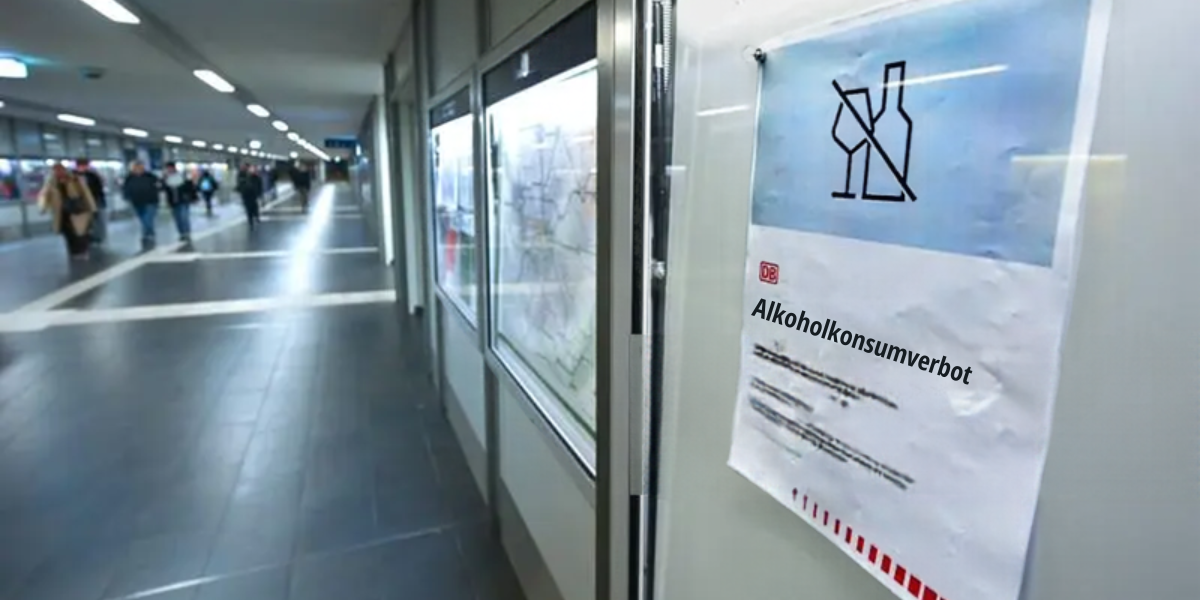
Halle Central Station is among the locations affected by the nationwide measure. A notice displayed at the station on 15 October confirmed the introduction of the new rules, according to a photograph distributed by dpa through Reuters Connect.
The policy represents the completion of a phased implementation process announced by the national railway operator in July. Rather than introducing the restrictions at every station simultaneously, Deutsche Bahn progressively extended the measure to additional locations before the nationwide start date.
The railway operator says its objective is to improve conditions for passengers and employees by reducing alcohol-related disturbances and litter in public station areas. The company has also reported positive experiences at locations where comparable restrictions were already in place.
Why Has Deutsche Bahn Introduced the Alcohol Consumption Ban?
Deutsche Bahn has presented the restrictions as part of its wider efforts to improve security and cleanliness throughout its railway network.
When the company announced the policy in July, chief executive Evelyn Palla said the operator was responding to concerns about the relationship between excessive alcohol consumption and violence at railway stations. The company stated that protecting passengers and employees was a central reason for introducing the measure.
Railway stations serve as public transport interchanges where large numbers of people gather to travel, meet others and access commercial services. The presence of intoxicated individuals can create additional challenges for railway staff and security personnel, particularly during busy periods.
The policy is intended to establish a consistent rule across the network rather than relying exclusively on restrictions at individual stations. Deutsche Bahn has said the measure forms part of its broader approach to creating more orderly public spaces.
The company also cited experience from stations where alcohol restrictions had already been introduced. In its announcement immediately before the nationwide launch, Deutsche Bahn reported reductions in litter and conflicts at nearly 40 major stations where the rule was already operating. It described the results as positive.
These findings were presented by Deutsche Bahn as evidence supporting the expansion of the policy. They are the operator’s reported experience rather than an independently established assessment of the effect at every station.
Which Areas of Halle Central Station Are Covered by the Ban?
The restrictions concern the consumption of alcoholic beverages in station areas covered by Deutsche Bahn’s rules, including station halls and platforms.
The railway operator’s stated policy is based on its property and operating rules, commonly referred to in Germany as Hausrecht. This provides the company with a basis for directing people to comply with the conditions governing access to its premises.
For passengers travelling through Halle Central Station, the practical distinction is between drinking alcohol on railway premises and carrying alcohol for consumption elsewhere.
A passenger waiting for a train may no longer drink beer, wine, spirits or another alcoholic beverage in an area covered by the ban. The same restriction applies to people who are simply passing through the station rather than boarding a train.
However, the rule does not amount to a general prohibition on possessing alcoholic drinks. Sealed containers may be carried in luggage or as part of purchases, provided the circumstances fall within the stated exemptions.
The precise application of the restrictions can depend on ownership and the areas governed by Deutsche Bahn’s rules. Public spaces adjoining a station may not all fall under the same arrangements if they are owned or managed by another organisation.
Passengers should therefore follow the notices displayed at individual locations and check whether a particular area is covered by the railway operator’s regulations.
What Exceptions Apply to Alcohol Sales and Consumption?
The nationwide restrictions include exemptions for station hospitality businesses, meaning restaurants and bars can continue to serve alcoholic drinks within the areas permitted under the policy.
This distinction allows commercial hospitality services to operate while prohibiting people from consuming alcohol in the station’s general public areas. Deutsche Bahn confirmed that station restaurants and bars are exempt from the ban.
The rules also permit passengers to transport sealed alcoholic beverages. Someone purchasing a bottle to take home, for example, is not automatically prohibited from carrying it through the station.
Alcohol consumption is generally still permitted aboard trains, subject to the rules applicable to the particular service. Long-distance trains may continue selling alcoholic beverages in their onboard bistros.
The distinction between railway premises and train services is important because the new policy focuses on station environments. It does not establish a blanket prohibition on drinking alcohol throughout the German railway system.
Passengers should nevertheless check the conditions of their individual train operator, as separate restrictions may apply to particular services.
The exemptions also mean that the policy does not eliminate alcohol sales at railway stations. Instead, it separates consumption in designated hospitality areas from drinking in the wider public spaces used by passengers.
How Will Deutsche Bahn Enforce the New Station Rules?
Deutsche Bahn says its security employees will monitor compliance during their regular patrols. Staff are expected to approach individuals who breach the restriction and ask them to comply with the rules.
The company has indicated that enforcement will be proportionate, with staff initially addressing violations directly. Repeated breaches can result in a station ban, preventing the individual from entering the relevant premises.
The measure is being implemented through Deutsche Bahn’s own property rules. It is therefore important to distinguish the station alcohol restriction from a nationwide criminal offence specifically created by the policy.
The consequences described by the railway operator centre on compliance with its conditions for using station premises. The available announcements do not establish a universal automatic fine for every person found drinking alcohol.
The approach is intended to give railway security personnel a clear basis for intervening when they encounter prohibited consumption. It also allows staff to address the situation without treating every initial violation in the same way.
Deutsche Bahn spokesperson Anja Bröker said the ban would apply every day, including during major events such as Bundesliga football matches. The company has said staff will continue to use judgement when handling breaches, including at times when large numbers of passengers are travelling.
For Halle Central Station, the nationwide policy places alcohol consumption within the same general framework used at other Deutsche Bahn stations. The precise response to a violation will depend on the circumstances and the operator’s enforcement procedures.
How Does the New Policy Build on Earlier Alcohol Restrictions?
The nationwide launch follows earlier measures at stations where Deutsche Bahn had already introduced restrictions on drinking alcohol.
Locations cited by the operator include Cologne Central Station, Heidelberg Central Station, Munich Central Station and Hamburg Central Station. Berlin Central Station, Berlin Gesundbrunnen, Kiel Central Station and Braunschweig Central Station were among the locations scheduled to follow on 1 September 2026.
The phased approach allowed Deutsche Bahn to extend the restrictions across different locations before making them standard throughout its network.
Earlier reporting by Euronews and the Associated Press also described the policy as part of a national effort to improve safety and cleanliness. Those reports highlighted exemptions for hospitality businesses and the continued ability to transport sealed alcoholic drinks.
The move follows an approach already used in several major German railway stations, where local restrictions had been introduced before the nationwide decision.
The expansion means passengers can expect the same basic prohibition at stations covered by Deutsche Bahn’s rules, rather than having to determine whether drinking alcohol is permitted at each individual stop.
However, the exemptions remain relevant. The ownership of station buildings, the status of adjoining public areas and the rules governing hospitality premises can affect how the policy applies in particular places.
What Do Officials and Passengers Say About the Restrictions?
Deutsche Bahn has reported support for the policy among passengers and station tenants.
In its 14 October announcement, the company said a representative survey found that approximately 80 per cent of respondents supported alcohol-free stations. It also reported that businesses renting premises within stations backed efforts to improve safety in public areas.
The survey figure was published by Deutsche Bahn. The company’s announcement does not, by itself, provide an independent evaluation of public attitudes towards the policy.
Germany’s federal government’s drug commissioner, Hendrik Streeck, has also expressed support for the restrictions. Speaking to Rheinische Post, he said alcohol was not the cause of every confrontation but could intensify conflicts and lower inhibitions, according to reporting by Tagesschau on 15 October.
The comments reflect the stated rationale behind the restrictions: limiting alcohol consumption in shared transport spaces is intended to help prevent disturbances and improve the environment for passengers and staff.
Earlier coverage by German broadcaster MDR also examined reactions to the proposed ban at Halle Central Station in July. The broadcaster reported that people questioned at the station expressed support for the planned restrictions.
That report concerned reactions during the planning stage. It should not be interpreted as a comprehensive survey of all passengers using Halle Central Station.
What Does the Alcohol Ban Mean for Passengers Travelling Through Halle?
Passengers using Halle Central Station must now distinguish between carrying alcohol and drinking it in areas covered by the new restrictions.
People travelling with sealed bottles in their luggage can generally continue to do so. Those who wish to drink alcohol while waiting in station halls or on platforms covered by the ban must comply with the new rules.
Customers using station bars and restaurants remain subject to the exemptions for those businesses. Alcohol consumption on trains is also generally permitted under the applicable service rules.
For passengers, the main practical change is the removal of alcohol consumption as an option in the station’s general public areas. The restriction applies regardless of whether a traveller is commuting, making a longer journey or travelling to a major sporting event.
Deutsche Bahn’s announcement indicates that the measure applies every day, rather than only during periods associated with higher passenger numbers or particular events.
The policy also gives railway security employees a consistent basis for addressing drinking in prohibited areas. Passengers who ignore instructions risk further action under the operator’s rules, including a possible station ban for repeated violations.
Background: Germany’s Wider Railway Station Safety Measures
The alcohol restrictions form part of Deutsche Bahn’s wider efforts to improve conditions for passengers and employees across its station network.
The company announced the nationwide initiative in July 2026, setting 15 October as the deadline for its full implementation. At the time, the operator referred to concerns about violence and the safety of railway staff and travellers.
The policy was subsequently extended in stages. By the time of the nationwide launch, Deutsche Bahn said restrictions were already in place at nearly 40 major stations and reported lower levels of litter and conflict at those locations.
The final phase brings approximately 5,700 stations under the general rule, while preserving exemptions for station hospitality businesses and sealed alcohol carried for transport. The operator’s announcement establishes the intended scope of the measure, although its longer-term effects will require assessment over time.
What Happens Next Following the Alcohol Ban at Halle Central Station?
The immediate next step is the implementation of the rules through routine security patrols and notices informing passengers of the restrictions.
Deutsche Bahn has stated that employees will address breaches during their regular duties and may issue station bans in cases of repeated violations. The company has also said that enforcement will take account of the circumstances rather than automatically treating every incident identically.