
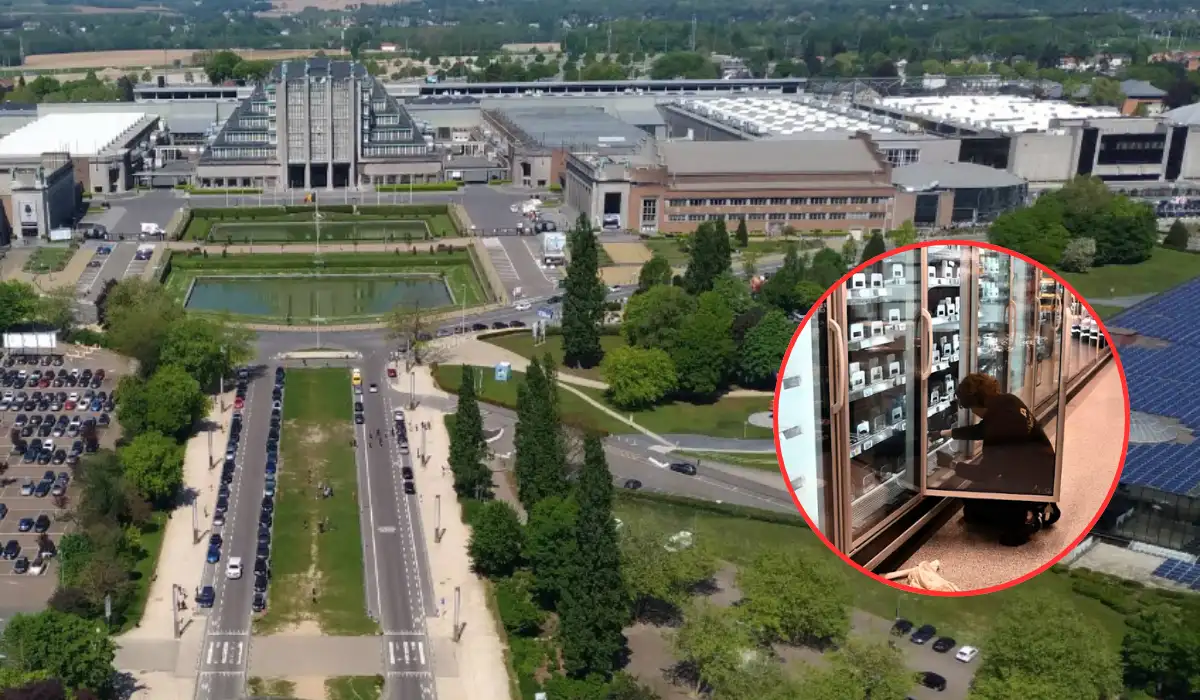
Brussels (Brussels Morning Newspaper) November 02, 2026 – Freezers at dozens of supermarkets across Sweden and Belgium have suddenly overheated in a suspected cyber attack, ruining food worth millions of euros just weeks after French retailers suffered similar operational disruptions. The unauthorized interventions forced cooling equipment settings upward, with temperatures in some units rising to as high as 55°C on Monday, triggering widespread food spoilage and store-level emergency protocols.
Refrigeration systems in Swedish supermarket chains ICA and Coop, alongside Belgian outlets belonging to Ahold Delhaize, Carrefour, and Spar, experienced severe remote tampering. Local media reports indicate that approximately 40 Delhaize branches in Belgium were impacted, in addition to 15 Carrefour locations and five Spar stores. In Sweden, Coop confirmed that unidentified hackers tampered with cooling equipment across seven of its roughly 800 stores, while ICA reported breaches at multiple locations.
Store managers across the affected regions described immediate operational disruptions as cooling systems failed to respond to manual overrides. As reported by Swedish newspaper Aftonbladet, Rickard Nilsson, manager of an ICA store in Sjöbo, stated: “We can’t adjust the temperatures, we can’t change them. Hot air is blowing into the freezers. Everything is ruined”. Nilsson noted that temperatures exceeding 50°C destroyed food inventory valued at hundreds of thousands of Swedish krona at his location alone. Camilla Nilsson, store manager of ICA St Olof in Österlen, confirmed that attackers “managed to get into our refrigeration management systems and change the settings”.
In response to the incident, parent company Ahold Delhaize issued an official statement acknowledging “an IT incident affecting the refrigeration systems in a number of Delhaize stores” and confirmed that technical teams were actively assessing the scope of the disruption.
Technical Vulnerabilities In Industrial Refrigeration Systems
Cyber security experts have repeatedly warned of vulnerabilities within industrial hardware—known in the technology sector as operational technology (OT)—which often controls physical infrastructure, including commercial food storage networks, power distribution, and municipal water utilities. Operational technology systems frequently rely on legacy software or unpatched internet-connected controllers, making them vulnerable to remote exploitation.
Many of the refrigeration units compromised during the previous month’s cyber attack in France utilized control software manufactured by Danfoss, a major privately owned Danish industrial group. Researchers at cyber security company Claroty published a report in August identifying multiple vulnerabilities within Danfoss systems, which the Danish group subsequently patched. Danfoss stated that the French attacks targeted older refrigeration systems running outdated firmware that were no longer receiving security updates. Following Monday’s incidents in Sweden and Belgium, Danfoss stated that no link had been established between the latest attacks and its products.
Escalating Scale Of Operational Technology Incidents
The coordinated disruption of supermarket freezers across multiple European nations highlights a changing risk profile in cyber operations targeting physical infrastructure. Historically, attacks on operational technology required highly specialized domain knowledge and proved difficult to execute across multiple geographically dispersed targets simultaneously.
Robert Lee, chief executive of cyber security firm Dragos, explained that large language models and automated tools have made it easier for threat actors to access the expertise and tools required to hit multiple devices and sites concurrently. Lee observed that while operational technology attacks were historically isolated, one-off events, recent incidents exhibit unprecedented reach, drawing parallels to earlier cyber attacks where suspected Iranian hackers targeted dozens of water utilities across the United States simultaneously.
The previous month’s attacks in France remain under active investigation by the cyber crime unit of the Paris public prosecutor’s office alongside ANSSI, the French government’s cyber security agency. Law enforcement authorities and technical teams in Belgium and Sweden have initiated preliminary reviews to assess the origin and entry points of Monday’s breaches.
Status Of Investigations And Damage Assessments
Verified Factual Findings
-
Multi-Country Impact: Dozens of retail outlets in Belgium and Sweden recorded abnormal temperature increases in commercial freezer units on Monday, November 2, 2026.
-
Corporate Statements: Ahold Delhaize, ICA, and Coop confirmed IT incidents affecting local store refrigeration systems.
-
Prior Incident Precedent: French prosecutor offices and national cyber authorities continue investigating an October breach that forced supermarket fridges up to 80°C.
Pending Inquiries
-
Attribution: No state-sponsored entity or independent hacking group has formally claimed responsibility for the breaches in Sweden or Belgium.
-
Financial Audits: Total financial losses across inventory disposal, store downtime, and hardware remediation remain under formal review by retail management and insurers.