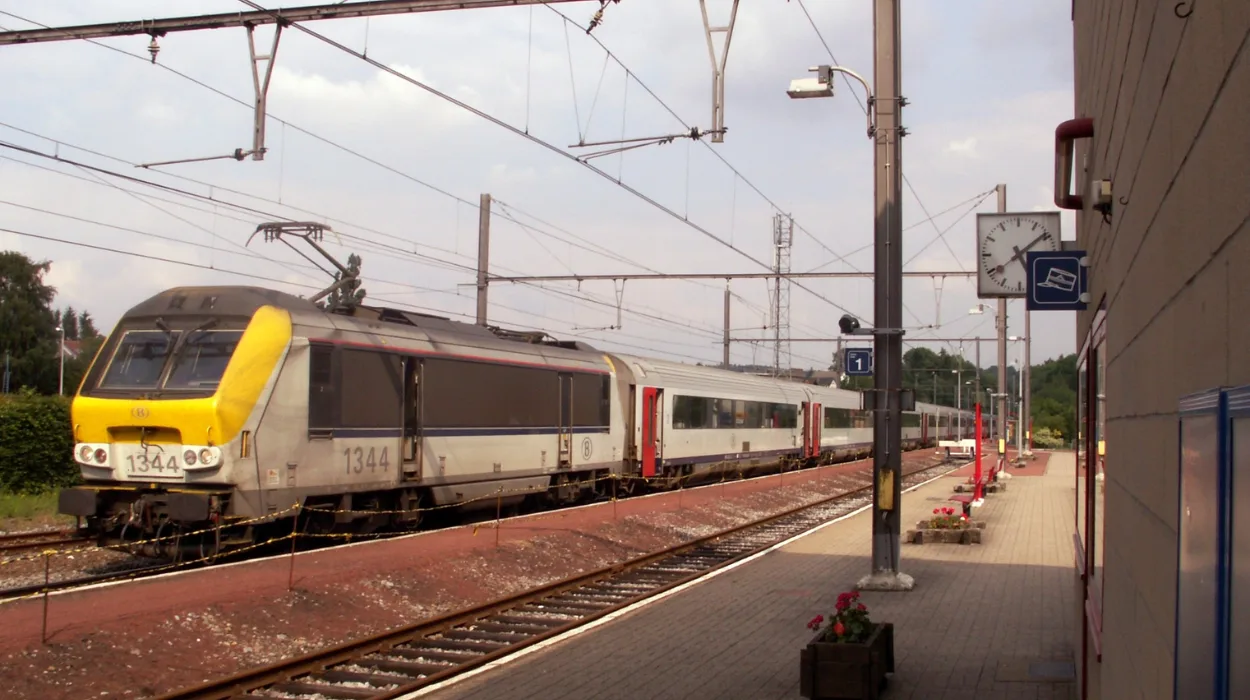
Aarschot (Brussels Morning Newspaper) – Train traffic between Holsbeek and Aarschot in Flemish Brabant was disrupted on Monday after grass fires broke out close to the railway line, forcing authorities to take precautionary measures and advise passengers to choose alternative routes.
The incident caused disruption to trains moving on the track route connecting both the Belgian sites. People were advised to ascertain their travel plans and ensure that they do not depend on the trains which are disrupted before the relevant authority confirms that it is safe to commence rail services. There was no immediate information about the number of trains that were delayed, canceled or rerouted due to the incident. No information could be obtained about the site of the fire.
What happened near Holsbeek and Aarschot?
Fires in grassland have been noticed on the tracks between Holsbeek and Aarschot, posing the risk of a hazard to train operations, passengers, and track assets. Grassland adjacent to railway tracks is likely to catch fire quickly especially when there are high temperatures and strong winds, which may obstruct the vision of the train driver and other rescue workers. The disruption was brought up as a precaution measure and not due to actual major damage to the rail network.
Fire close to railway tracks poses a threat to signalling systems, power cables, railway sleepers, overhead systems, and even embankments. Emergency services might require access to the railway to control the fire and stop it from spreading. Travelers were asked to consider using an alternative route. The advisory implies that travelers need to check the latest information offered by Belgium’s national railway carrier, SNCB/NMBS, before starting their trips.
Why was rail traffic interrupted?
Before deciding whether to allow train passage into the fire-affected zone, railway companies typically evaluate different risk factors. The factors include how far the flames are from the railway track, the amount of smoke produced, wind direction, whether sparks could reach the railway and whether firefighters would be safe from being hit. Temporary suspension of operations gives the infrastructure manager time to inspect the track once the fire is under control. Although the rails look fine visually, heat alone may damage the equipment. Signalization and electric wires need to be checked before normal-speed service can be resumed. In case the fire is small and extinguished quickly, rail services may be restored promptly. However, the operation may take more time if the fire spreads in the embankment area.
What did railway authorities advise passengers?
The first piece of advice given to travelers was to take a different route and to refer to service status information. Travelers using the region for their travel were cautioned against taking anything for granted, especially regarding the operation of the train since there can be a sudden change in the restrictions imposed by the fire. The disruption might also extend beyond Holsbeek and Aarschot in the event of diversion or holding of trains on the line in nearby stations.
Travellers should verify:
- Whether their train is running.
- Whether a replacement bus service is available.
- Which alternative stations or routes can be used.
- Whether delays continue after the fire is extinguished.
No separate official information was immediately available on compensation, ticket validity or arrangements for passengers who miss connecting services.
How does the incident compare with earlier fires?
This is part of a series of disruptions resulting from fires around railway lines in recent times in Europe. In Holland, a fire in the area of Oostrum and Venray caused a disruption to train travel on the Maaslijn between Venray and Boxmeer at the start of August 2026. The fire started at the Rosmolen nature area on 3rd August 2026, spreading in the dry woodland. Reports stated that approximately 100 hectares of forests were destroyed by the fire.
Train services were suspended because of the location of the fire relative to the railway track, as well as because of the risk of an emergency situation making it unsafe to use the rail tracks. Bus substitutes were provided while firefighters were dealing with the fire, as well as assessing the state of the track by rail officials. There was not an immediate resumption of the train service due to the fire since there was another fire outbreak later.