
New York, United States — January, 2026: Brussels Morning Newspaper says the gold price forecast has become a central topic in global financial markets as investors react to political friction, monetary policy uncertainty, and rising demand for safe-haven assets at the start of 2026. Analysts tracking bullion flows and institutional positioning say current conditions suggest a potential shift in how gold is valued amid broader concerns about economic stability and policy credibility.
Political Tensions and Market Sensitivity
Political uncertainty has once again emerged as a major driver of investor behavior. Public disagreements over economic direction, fiscal discipline, and central bank independence have increased volatility across equity and bond markets. Market participants say such instability has sharpened attention on the gold price forecast, as gold is often viewed as insurance during periods of policy conflict.
Strategists note that political pressure on monetary institutions can weaken confidence in traditional assets, encouraging portfolio diversification into tangible stores of value.
Central Bank Policy and Interest Rate Uncertainty
Interest rate expectations remain one of the most influential variables shaping commodity markets. With policymakers signaling caution amid uneven growth and persistent inflation, forward guidance has become less predictable. Analysts argue that uncertainty around rates directly influences the gold price forecast, as lower or volatile yields reduce the opportunity cost of holding non-yielding assets.
Investors are increasingly positioning for scenarios in which monetary policy remains constrained by political and economic pressures.
Safe-Haven Demand and Investor Behavior
Periods of elevated risk typically lead to stronger demand for assets perceived as stable. Gold’s appeal lies in its independence from credit systems and government balance sheets. As risk sentiment deteriorates, trading desks report higher allocations tied to the gold price forecast, particularly among institutional investors seeking long-term hedges.
This behavior reflects a broader reassessment of portfolio resilience rather than short-term speculation.
Price Targets and Market Expectations
Forecasts for gold prices vary widely, reflecting divergent views on growth, inflation, and policy coordination. Some analysts project moderate gains, while others outline more aggressive scenarios driven by sustained uncertainty. The gold price forecast increasingly incorporates geopolitical and fiscal risk alongside traditional supply-and-demand metrics.
Market participants caution that projections are not predictions but frameworks for navigating uncertainty.
Role of Inflation and Currency Stability
Inflation remains a persistent concern for households and policymakers alike. While headline figures have moderated in some regions, structural pressures continue to influence expectations. Analysts say the gold price forecast is closely tied to perceptions of currency stability, particularly in economies running large deficits or facing political constraints on fiscal reform.
Gold’s historical role as a hedge against currency debasement has regained relevance in this environment.
Central Bank Gold Accumulation
Beyond private investors, central banks have continued to increase gold holdings as part of reserve diversification strategies. This trend has provided structural support to the market, reinforcing confidence in the gold price forecast over the medium to long term.
Officials rarely comment on timing, but sustained accumulation signals trust in gold’s enduring monetary role.
Market Volatility and Sentiment Indicators
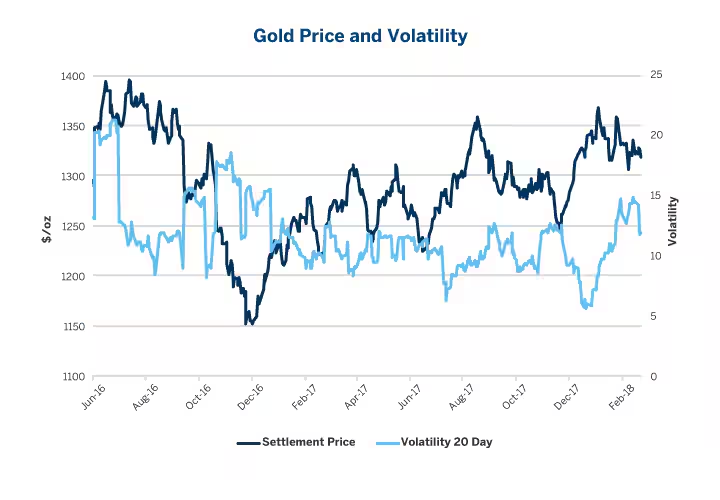
Volatility across asset classes has intensified sensitivity to macroeconomic signals. Equity corrections, bond yield swings, and currency fluctuations have all contributed to renewed interest in precious metals. Analysts tracking sentiment indicators say the gold price forecast now reflects a higher baseline of risk aversion than in previous cycles.
This shift suggests that investors are pricing in uncertainty rather than temporary disruption.
Historical Context and Comparisons
Gold rallies have historically coincided with moments of systemic stress, from inflation shocks to financial crises. Comparing current conditions to past episodes, analysts note similarities in policy uncertainty and investor psychology. The gold price forecast today reflects lessons learned from earlier periods when confidence eroded rapidly.
However, today’s global interconnectedness adds complexity to forecasting outcomes.
Global Demand Beyond the United States
While US policy plays a significant role, demand for gold is global. European and Asian markets have also increased exposure, driven by concerns over growth and currency volatility. This international dimension strengthens the gold price forecast, as demand is not dependent on a single economic narrative.
Diversified demand reduces the likelihood of abrupt reversals driven by localized developments.
Risks and Alternative Scenarios
Not all analysts are uniformly bullish. Some argue that improved policy coordination or stronger-than-expected growth could reduce demand for gold. Others warn that speculative positioning could amplify corrections. Still, even cautious outlooks acknowledge that the gold price forecast is supported by structural factors unlikely to disappear quickly.
Risk management remains central to navigating these competing scenarios.
One Analyst Perspective
One senior commodities strategist said,
“Gold tends to perform best when confidence in long-term policy direction weakens, and that dynamic is clearly influencing current market behavior.”
This single observation captures the cautious tone shaping investor decisions.
Long-Term Portfolio Strategy
Beyond short-term movements, gold’s role in portfolios is evolving. Asset managers increasingly frame allocations as strategic insurance rather than tactical trades. Within this context, the gold price forecast serves as a guide for balancing risk rather than chasing returns.
This approach reflects a broader shift toward resilience in asset allocation.
Liquidity, Storage, and Market Infrastructure
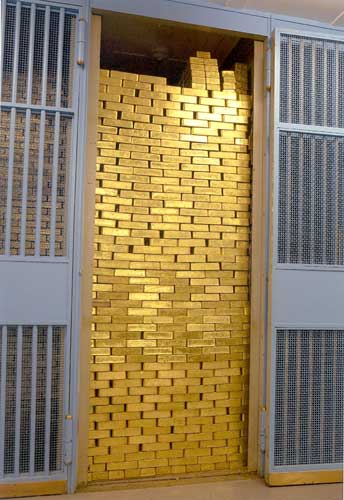
Physical gold markets have also adapted to rising interest. Vaulting, logistics, and settlement systems are under greater scrutiny as volumes increase. Market participants say infrastructure readiness supports confidence in the gold price forecast, ensuring that demand can be met efficiently.
Operational resilience is now viewed as part of market stability.
Outlook for the Remainder of 2026
As 2026 unfolds, attention will remain focused on policy signals, inflation trends, and geopolitical developments. Analysts suggest that while volatility may persist, underlying demand dynamics provide support. The gold price forecast is therefore less about precise targets and more about direction amid uncertainty.
Investors are preparing for a year defined by cautious positioning rather than aggressive risk-taking.
A Distinct Phase for Precious Metals
The current environment marks a distinct phase for precious metals markets. Gold is once again central to discussions about stability, trust, and long-term value. How policymakers respond to economic and political challenges will shape sentiment and influence the gold price forecast as the year progresses.
Where Markets Go From Here
Looking ahead, clarity on fiscal discipline, central bank independence, and global cooperation could alter risk perceptions. Until then, gold remains a focal point for investors seeking balance. The gold price forecast will continue to evolve alongside broader debates about economic governance and financial resilience.
A Unique Moment for Market Confidence
The renewed focus on gold reflects deeper questions about confidence in institutions and policy frameworks. Whether conditions stabilize or further uncertainty emerges, the current period will be remembered as a moment when gold reassumed prominence in global finance, guided by the gold price forecast shaping expectations across markets.