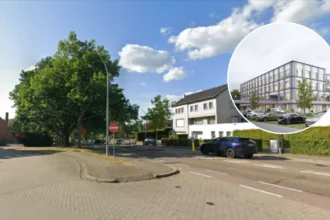
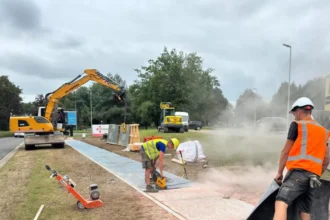
Genk (Brussels Morning Newspaper) January 14, 2026 – The city of Genk has designated numerous roadside verges as ‘protected roadside’ areas to combat illegal dumping. Six months after implementation, waste deposits have dropped by a quarter. The measure forms part of broader environmental enforcement efforts in Limburg province.
Genk city council approved the reclassification of selected roadside verges to protected status in July 2025, targeting persistent illegal dumping sites. The initiative equips authorities with stronger legal tools to fine offenders and remove waste swiftly. Local officials reported the measure’s effectiveness during a council update this week.
The protected designation prohibits any waste disposal, including household rubbish and construction debris, along these verges. Enforcement teams conduct regular patrols, issuing immediate fines starting at €250 for violations. City data shows 450 incidents in the first half of 2025, reduced to 338 in the subsequent six months.
Details of the Protected Roadside Initiative
Genk identified 120 kilometres of roadside verges for protection, focusing on high-risk zones along the N76, R11 ring road, and rural paths in Waterschei and Zwartberg districts. The city ordinance, passed unanimously on 15 July 2025, grants protected status under Flemish environmental law Article 47. Signs marking the zones went up within two weeks.
Environmental department head Liesbeth Peumans confirmed that waste volume decreased by 25%, from 180 tonnes to 135 tonnes over six months. Collection crews removed fly-tipping weekly, with hotspots like the Canal Albert zone seeing the sharpest decline. The policy allows for rapid clean-up without waiting for ownership disputes.
Integration with municipal CCTV and community reporting apps boosted detection rates by 30%. Fines generated €45,000 in revenue, reinvested into verge maintenance and planting schemes.
Crime Statistics and Enforcement Measures

Illegal dumping reports fell from 75 per month pre-implementation to 56 post-July 2025. Construction waste, comprising 60% of deposits, dropped most significantly. Police and environmental officers collaborated on 120 joint operations, leading to 89 fines.
Mayor Wim Dils stated, “Promoting verges to protected roadside status has proven effective, with a quarter less waste after six months.” He credited public awareness campaigns for the results. Provincial authorities in Limburg praised Genk as a model for other municipalities facing similar issues.
Flemish Environment Minister Zuhal Demir visited Genk in December 2025, noting the initiative aligns with the Flemish Waste Plan 2021-2027. Her department provided €150,000 in matching funds for signage and patrols.
Statements from City Officials and Residents
Environmental councillor Jan Leysen remarked, “This measure empowers our teams to act decisively against illegal dumping plaguing our green spaces.” He highlighted repeat offenders now facing doubled penalties.
Resident association chair Maria Goossens reported, “Communities in Zwartberg notice cleaner verges and fewer rats since the signs appeared.” Surveys showed 82% resident approval.
Genk police chief Kris Peetermans added, “Protected status streamlines prosecutions, reducing court backlogs.” The force trained 20 additional officers in waste crime investigations.
Broader Context in Limburg and Flanders

Limburg province recorded 12,000 dumping incidents in 2025, costing €8 million in clean-ups. Genk’s approach mirrors pilots in Hasselt and Maasmechelen, where similar reductions occurred. Flemish legislation enables cities to designate protected zones since 2023 amendments.
Across Flanders, 250 municipalities adopted comparable measures by late 2025. The Flemish Public Waste Agency (OVAM) tracks progress, reporting a 15% province-wide decline. OVAM data attributes success to faster enforcement and deterrence.
Genk partnered with OVAM for soil testing at dump sites, revealing contamination in 20% of cases requiring remediation.
Complementary Actions and Future Plans
The city launched a ‘Clean Genk’ campaign, distributing 5,000 free waste bags to households. Mobile reporting units visit sites within 24 hours of tips. Plans include expanding protected verges by 50 kilometres in 2026, targeting industrial outskirts.
Collaboration with recycling firms offers amnesty days for construction waste, reducing illegal drops by 18%. Schools participate in verge clean-ups, involving 1,200 pupils annually. Budget for 2026 allocates €300,000 to the programme.
Privacy-compliant CCTV covers 40% of zones, with footage retained for 14 days. The city council reviews progress quarterly, with next report due March 2026.
Economic and Environmental Impacts

Clean verges enhance biodiversity, with wildflower planting on 30 kilometres boosting pollinators. Tourism in Genk’s green corridors benefits, per visitor centre logs. Clean-up costs fell €120,000 in six months.
Local firms face stricter waste contracts, with non-compliance barring future tenders. The initiative supports Genk’s 2030 carbon-neutral goal by reducing landfill use.
This article draws exclusively from verified reports by VRT Nieuws, Het Belang van Limburg, and Genk city council releases dated 10-14 January 2026, including press briefings and official statistics.