Genk (The Brussels Morning Newspaper) October 14, 2026 – GEN Restaurant Group has signed a binding letter of intent with Chubby Group for a $100 million transaction covering operations at 47 US restaurants. The company’s board unanimously approved the agreement as the parties work towards closing within 30 days. GEN expects the transaction to substantially reduce its approximately $160 million in lease liabilities and enable it to eliminate outstanding debt. The company will retain its GEN brand, consumer packaged goods business and approximately three restaurants, while the proposed operational transfer will take place in four phases over 12 months.
- What Does the $100 Million Agreement Cover?
- Why Is GEN Restaurant Group Restructuring Its Business?
- How Will the Transaction Affect GEN’s Lease Liabilities and Debt?
- What Role Will Chubby Group Play in the Acquisition?
- How Will the Four-Phase Restaurant Transfer Work?
- What Will GEN Retain After the Restaurant Sale?
- Could GEN Convert an Unpaid Transaction Balance into Chubby Group Equity?
- What Did GEN’s Chairman Say About the Agreement?
- What Conditions Must Be Met Before the Deal Closes?
- Background: How Did the Restaurant Sale Proposal Develop?
What Does the $100 Million Agreement Cover?
The agreement covers the operations of 47 GEN restaurants in the United States, according to the announcement published on 14 October. GEN Restaurant Group will retain ownership of its brand and consumer packaged goods (CPG) business, separating the restaurant operations covered by the transaction from its packaged-food activities.
The board approved the binding letter of intent unanimously. The parties are working towards completing the transaction within 30 days, although completion remains conditional on the necessary agreements, approvals and transfers.
The proposed arrangement also establishes a phased transition rather than an immediate transfer of all 47 locations. The takeover is scheduled to proceed in four phases over 12 months, allowing the parties to coordinate the operational changes.
GEN said the transaction is expected to reduce its lease liabilities substantially. The company reported approximately $160 million in lease liabilities and expects to eliminate its outstanding debt following the transaction. These outcomes remain expectations contingent on completion and the final terms implemented by the parties.
Why Is GEN Restaurant Group Restructuring Its Business?
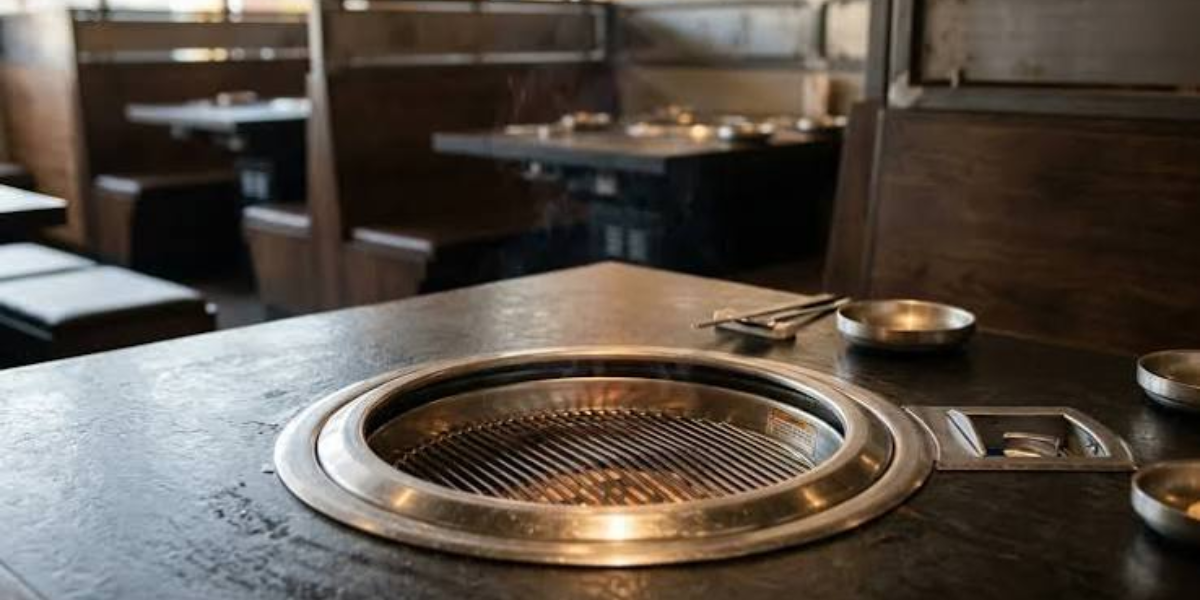
GEN Restaurant Group operates the GEN Korean BBQ brand, which specialises in Korean barbecue dining. The business was founded in 2011 in Los Angeles and subsequently developed a restaurant network alongside a consumer packaged goods operation.
The proposed sale represents a significant change in the company’s operating structure. Instead of continuing to manage the restaurant portfolio on the same basis, GEN intends to concentrate its corporate resources on packaged Korean food products for home consumption.
The company has stated that it will retain full ownership of its GEN brand and CPG business after the transaction. It will also retain approximately three restaurants to support staff training, staffing requirements and research and development for its packaged-food operation.
GEN has said its corporate overhead and infrastructure will be restructured to support the CPG business exclusively following completion. Its senior management will focus on developing that platform.
The arrangement therefore distinguishes between transferring restaurant operations and retaining the brand and packaged-food activities associated with GEN. The company has not announced a sale of the entire business, and its publicly traded status is expected to continue.
How Will the Transaction Affect GEN’s Lease Liabilities and Debt?
Lease liabilities are a central element of the proposed transaction. GEN has reported approximately $160 million in lease liabilities associated with its business, and the company expects the sale to reduce those obligations substantially.
Restaurant operators frequently enter into long-term agreements to occupy commercial premises. When a business transfers restaurant operations, the treatment of the associated leases depends on the transaction structure, contractual arrangements, landlord consents and other closing requirements.
In this case, the parties must complete the required lease transfers as part of the transaction. The announcement does not establish that every liability will disappear immediately when the letter of intent is signed.
GEN also expects to eliminate its outstanding debt following completion. The company said the transaction will add a term note receivable to its balance sheet, creating an asset linked to the agreed payment structure.
The company has indicated that proceeds from the transaction are expected to strengthen its cash position. It has also identified potential uses for additional capital, including reinvestment in growth, dividends and share repurchases.
These are proposed financial outcomes rather than completed results. The extent to which liabilities are removed, debt is repaid and cash becomes available will depend on the final transaction arrangements and their implementation.
What Role Will Chubby Group Play in the Acquisition?
Chubby Group is the acquiring party named in the binding letter of intent. The company operates a portfolio of Asian dining concepts in the United States, including Chubby Cattle, Wagyu House, The X Pot, NIKU X, Chubby Skewers and Chubby Bowls.
According to the transaction announcement, Chubby Group operates more than 70 locations across more than 25 brands. It was founded in 2016 by Haibin Yang, David Zhao and Joyce Li.
The company also describes its operations as extending beyond restaurant management. Its business includes supply-chain activities, restaurant design and construction, media operations and a membership application known as Chubby Club.
Chubby Group has stated that it expects systemwide sales of $400 million in 2026 and plans to open 30 additional restaurants by the end of the year. Those figures are company projections, not independently established results for the full year.
David Zhao, a founder of Chubby Group, said the acquisition would give the company an established restaurant platform from which to expand nationally. He also said Chubby intended to build on the existing Korean barbecue customer experience with a menu focused on wagyu beef.
The proposed transfer would give Chubby responsibility for the operations covered by the agreement, subject to the staged transition and completion requirements.
How Will the Four-Phase Restaurant Transfer Work?
The transaction establishes a four-phase takeover schedule extending across 12 months. Rather than transferring all 47 restaurant operations at once, the parties intend to complete the transition in stages.
Chubby Group is expected to fund restaurant conversions and build-outs using its own capital. GEN will retain operating profits from the relevant restaurants until each takeover takes place.
This structure separates the initial agreement from the subsequent operational transfers. Signing the binding letter of intent establishes the parties’ agreed framework, but it does not mean that every restaurant has already changed operators.
The phased approach will require coordination involving restaurant operations, lease arrangements, licences and any applicable regulatory requirements. The parties must also complete definitive agreements and satisfy the other conditions attached to closing.
The announcement does not provide a complete location-by-location schedule identifying when each restaurant will transfer. It also does not establish that all 47 locations will be converted to a particular format on the same date.
The parties have instead committed to a transition framework under which the restaurant operations will move in four phases over the stated 12-month period.
What Will GEN Retain After the Restaurant Sale?
GEN will retain full ownership of its brand and consumer packaged goods business. It will also retain approximately three restaurants intended to support training, staffing and CPG research and development.
The packaged-food business is a central component of GEN’s continuing operations. Its products include ready-to-cook Korean barbecue meats and other Korean food products marketed for preparation at home.
The company has previously reported distribution through major grocery and warehouse retailers, including Albertsons and Costco. Its product distribution network is separate from the proposed transfer of restaurant operations.
GEN’s second-quarter 2026 financial reporting also described expansion in its CPG activities. The company reported revenue of $55.7 million for the quarter ended 30 June 2026, compared with $55 million in the same period of 2025. Its reported operating loss for the quarter was $5.2 million, compared with $1.9 million a year earlier.
The results provide context for the company’s stated decision to focus its corporate structure on packaged products. However, the quarterly figures cover the entire reported business before the proposed transaction is completed and should not be treated as a forecast of future CPG performance.
Under the proposed arrangement, GEN intends to continue investing in the retained business while restructuring the corporate resources that previously supported its restaurant operations.
Could GEN Convert an Unpaid Transaction Balance into Chubby Group Equity?
The agreement includes an option concerning any unpaid balance of the term note receivable. Upon completion of the transaction, GEN would have the option to convert that remaining balance into equity in Chubby Group at a valuation of $1.5 billion.
The provision gives GEN a potential alternative to receiving the entire outstanding note balance solely through repayment. If exercised under the agreed terms, it could result in GEN holding an equity interest in Chubby Group.
However, the announcement does not state that GEN has already acquired an equity stake through this mechanism. The option relates to an unpaid balance and would depend on the conditions governing its exercise.
The $1.5 billion figure is the stated valuation for the potential conversion mechanism. It should not be confused with the $100 million value of the restaurant transaction itself.
The agreement also does not establish the ultimate value of any equity interest that GEN might receive. That would depend on the applicable terms and the circumstances at the time of conversion.
The option is therefore one component of the proposed transaction’s financial structure rather than a completed equity investment.
What Did GEN’s Chairman Say About the Agreement?
David Kim, GEN Restaurant Group’s chairman and chief executive, described the transaction as a milestone in the company’s development towards becoming a Korean consumer packaged goods platform.
Kim said the proposed arrangement would substantially reduce liabilities on the balance sheet while giving GEN the option to participate in Chubby Group’s growth through the term-note conversion provision.
He also stated that the company expected the transaction proceeds to support the elimination of outstanding debt and strengthen its cash position.
Kim’s comments reflected the company’s stated intention to monetise its restaurant operations while retaining ownership of the packaged-food business.
David Zhao of Chubby Group said the acquisition would provide access to 47 restaurants and support the group’s national expansion plans. He also referred to the planned transition as a phased process.
The statements were issued in connection with the transaction announcement. Neither company’s comments establish that the deal has closed or that the anticipated financial benefits have already been realised.
What Conditions Must Be Met Before the Deal Closes?
Although the letter of intent is binding, the transaction remains subject to several completion requirements.
The announcement identifies the need for definitive agreements, restaurant licence transfers, lease transfers and regulatory approvals. The parties must complete the relevant processes before the transaction can be regarded as fully implemented.
The companies are working towards closing within 30 days of the announcement, but this is a target rather than confirmation of a completed sale. The separate 12-month schedule concerns the phased takeover of restaurant operations.
The final transaction documentation will determine the detailed obligations of each party, including the implementation of the agreed financial arrangements.
The announcement also identifies risks that could affect completion, including the possibility that required consents or approvals are not obtained, that definitive agreements are not completed, or that the transaction does not proceed on the proposed terms.
Consequently, the $100 million transaction remains a proposed acquisition under a binding letter of intent, rather than a completed transfer of the 47 restaurants.
Background: How Did the Restaurant Sale Proposal Develop?
The agreement follows an earlier announcement in August 2026, when GEN disclosed that it had received a non-binding letter of intent from a nationwide, multi-concept restaurant operator interested in acquiring its US restaurant operations.
At that stage, the prospective buyer had not been identified publicly. The proposal contemplated a transaction valued at approximately $100 million and allowed GEN to retain its consumer packaged goods and retail business.
Restaurant industry publications reported that the proposed sale could enable GEN to redirect its attention towards packaged products rather than restaurant expansion. The company subsequently named Chubby Group in the binding letter of intent announced on 14 October.
GEN’s earlier corporate disclosures also documented its efforts to restructure its restaurant portfolio. In March 2026, the company entered into a partnership involving five existing restaurants with Chubby Cattle, in which GEN was to contribute most of the assets of each restaurant in exchange for a 49% ownership interest in the new restaurant entities.
That earlier partnership was distinct from the new agreement covering operations at 47 US restaurants. It nevertheless provides relevant context for GEN’s use of partnerships and changes to its restaurant portfolio.
The October announcement represents a further development in the company’s stated plans to retain its brand and packaged-food operations while transferring a substantial portion of its restaurant business.