Cairo, Egypt, 16 August (Brussles Morning Newspaper) Donald Trump’s envoys have joined a fresh round of high-level talks in Egypt aimed at breaking the deadlock over the Gaza peace plan, bringing US representatives together with Egyptian, Qatari and Turkish mediators as the future of the ceasefire hangs on unresolved demands from Israel and Hamas.
Jared Kushner and former UN Middle East envoy Nickolay Mladenov travelled to Cairo for the negotiations on Sunday. Hamas officials took part in some of the discussions, according to Reuters, giving mediators another opportunity to tackle the central dispute: whether Hamas disarms before Israeli forces leave Gaza, or whether those steps take place as part of a linked process.
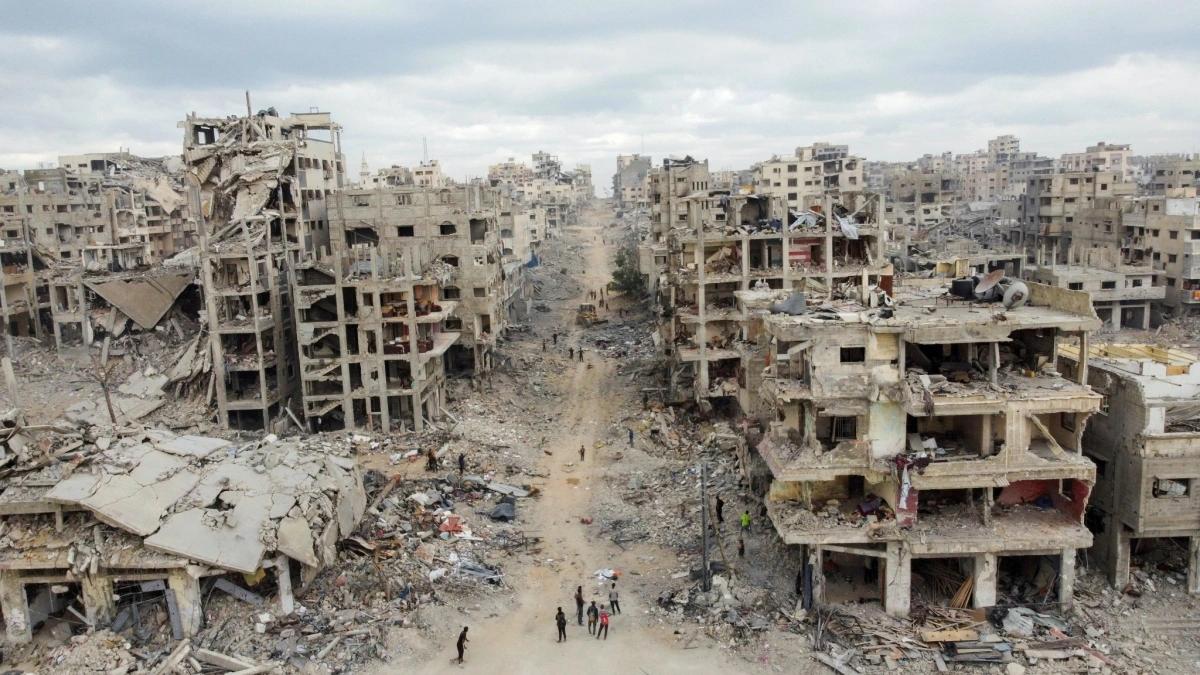
The diplomatic push comes at a difficult moment. The ceasefire that halted the main fighting has survived, but Israeli strikes have continued and there is still no agreement on how the next stage of the US-backed framework should be carried out.
Cairo becomes centre of renewed Gaza diplomacy
Kushner and Mladenov met representatives from Egypt, Qatar and Turkey, the regional powers involved in efforts to keep the process moving.
Kushner also met Egyptian President Abdel Fattah el-Sisi. Egypt has been central to Gaza negotiations throughout the conflict and again finds itself trying to bridge positions that remain far apart.
The US framework calls for Hamas to disarm and Israeli troops to withdraw, followed by reconstruction and a transition towards Palestinian civilian administration in Gaza. The principle is laid out; the order and practical implementation of those steps remain contested.
Disarmament and withdrawal remain the sticking points
Hamas has signalled that it is prepared to proceed with the agreement, but has insisted that Israel must also fulfil its commitments, including withdrawing its forces and ending attacks.
Israeli Prime Minister Benjamin Netanyahu has rejected that sequencing. He has argued that Israeli forces should not leave while Hamas remains armed and last week publicly described the latest US roadmap as unacceptable.
That leaves mediators with a problem that goes beyond diplomatic language. Both sides are demanding assurances about what the other will do first.
Hamas leader Khalil al-Hayya was in Egypt as the negotiations took place. His involvement gives Cairo a direct channel to the group as mediators try to establish whether a workable compromise can be reached.
US peace team takes a larger role
Mladenov serves as High Representative for Gaza under Trump’s Board of Peace, while Kushner is a founding member of its executive board. Former UK prime minister Tony Blair is also among the board’s members, according to US government records.
Their role reflects Washington’s attempt to move the Gaza peace plan beyond a ceasefire and towards longer-term arrangements covering security, governance and reconstruction.
But events on the ground continue to expose how vulnerable that process remains.
Reuters reported that Israeli strikes injured Palestinians in Khan Younis and the Nuseirat refugee camp during the latest diplomatic effort. Israel says its military action is directed at militants who threaten its forces.
Why the Cairo talks matter
For Palestinians in Gaza, the negotiations could determine when large-scale reconstruction can move forward and what form of government eventually administers the territory.
For Israel, the central question is whether any withdrawal can take place without guarantees that Hamas will no longer retain the military capability to threaten the country.
The talks also matter well beyond Gaza. Egypt, Qatar and Turkey have invested heavily in mediation, while Washington is seeking to turn a fragile halt in major fighting into a political settlement capable of lasting.
The continued violence makes that task considerably harder.
What happens next?
Kushner and Mladenov are expected to continue their regional discussions, including talks with Netanyahu, as US officials try to narrow the gap over disarmament and Israeli withdrawal.
No breakthrough had been announced from Sunday’s negotiations at the time of reporting.
The next test for the Gaza peace plan is therefore practical rather than rhetorical: whether mediators can produce an agreed sequence for disarmament, withdrawal and security guarantees that both Israel and Hamas are prepared to implement.