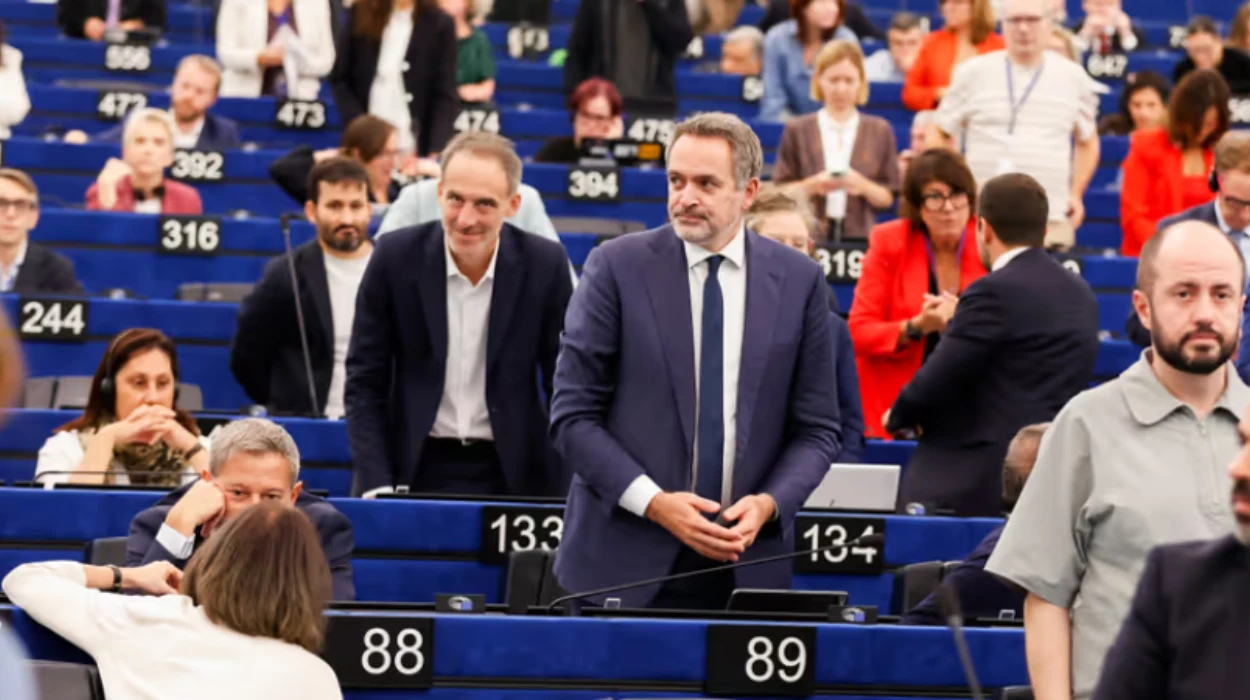
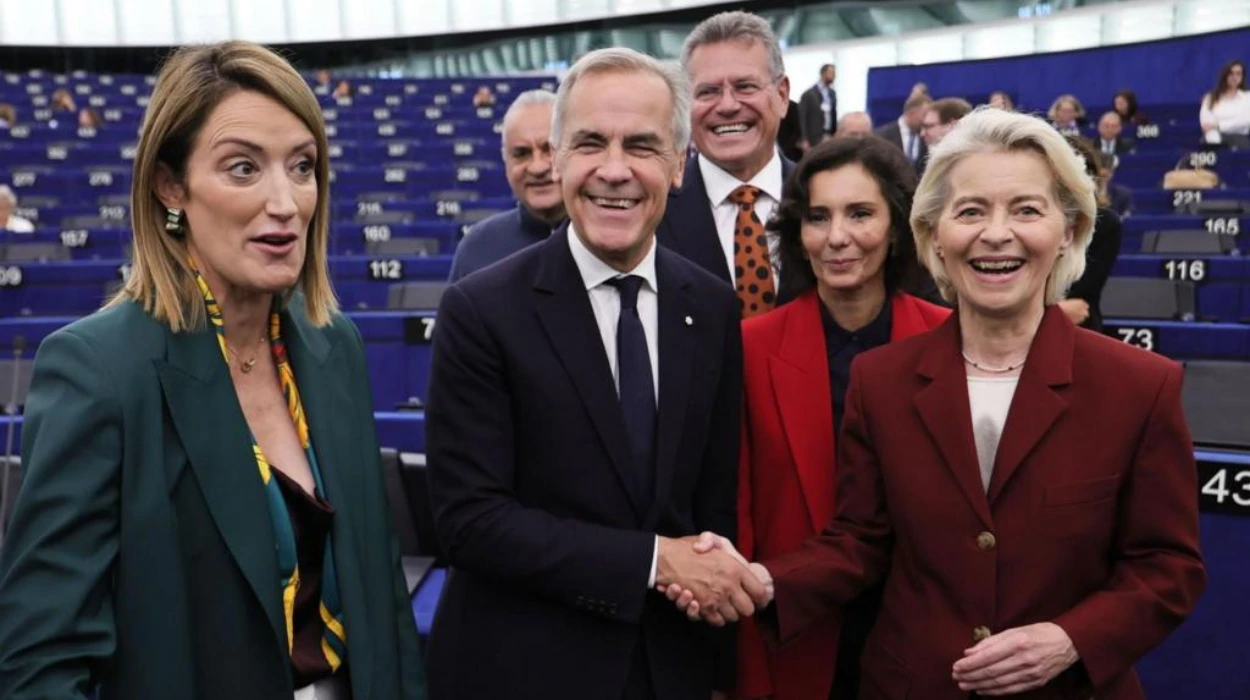
Brussels (Brussels Morning Newspaper) September 24, 2026 – Europe’s research and innovation sector has started evaluating European Commission President Ursula von der Leyen’s proposal to offer Canada associate membership in the European Union. Policy specialists are actively debating how this political outreach will affect bilateral scientific collaboration, technology alliances, and funding frameworks like Horizon Europe. While Canadian leadership has expressed strong interest in expanding institutional linkages, details regarding the implementation of associate status remain under discussion.
The ongoing discussions follow high-level statements delivered in the European Parliament by European Commission President Ursula von der Leyen and Canadian Prime Minister Mark Carney. During her state of the European Union address in Strasbourg, von der Leyen proposed building a comprehensive alliance aimed at shared economic security and common prosperity. Concurrently, Prime Minister Carney addressed Members of the European Parliament, highlighting potential avenues for deeper integration in research, innovation, and student mobility.
Political Context and Strategic Rationale Behind Proposed Integration
The framework for bilateral relations between the European Union and Canada has historically been anchored by the Strategic Partnership Agreement and the Comprehensive Economic and Trade Agreement. More recently, cooperation advanced when Canada officially became associated with Pillar II of the Horizon Europe research and innovation programme in July 2024. This association enables Canadian researchers and institutions to participate in collaborative research projects on equal terms with counterparts inside the European Union.
President von der Leyen’s recent offer expands upon these existing foundations by proposing broader strategic alignment. Her outlined vision includes cooperation in intelligent manufacturing, defense industrial bases, critical raw materials, batteries, artificial intelligence, quantum technology, cyber security, and joint projects concerning the Arctic region. Prime Minister Carney responded positively to these overtures, emphasizing that closer institutional alignment would permit both economies to pool resources and effectively tackle shared technological frontiers.
Evaluating Horizon Europe Expansion and Potential Obstacles
Within the European research policy community, analysts are closely examining the practical mechanics of integrating Canada further into union-wide frameworks. Canada currently participates exclusively in Pillar II of Horizon Europe, which centers on collaborative research consortia addressing global challenges. Science policy experts are debating whether future arrangements could encompass broader access or modify existing rules that govern non-European participants.
Mona Nemer, Canada’s chief science advisor, noted that political statements from leadership in Ottawa and Brussels serve to open doors for heightened cooperation. Speaking on the broader implications, Nemer suggested that the current diplomatic alignment is rooted in the long-standing scientific diplomacy established through Horizon Europe. She indicated that the Canadian government is expected to formulate concrete proposals regarding research coordination ahead of an upcoming bilateral summit scheduled for October.
A key point of discussion among policy wonks involves the limitations typically placed on non-European associated countries. Under current guidelines, nations associated with Horizon Europe—such as South Korea, Japan, and Australia—are restricted from hosting prestigious European Research Council grantees locally. Canadian academic institutions have signaled an interest in revisiting these parameters to foster more fluid researcher mobility and bidirectional talent sharing.
Future Prospects for Student Mobility and Educational Frameworks
In addition to industrial research and technological development, the debate encompasses wider educational exchanges. During his address to the European Parliament, Prime Minister Carney explicitly referenced the Erasmus+ student mobility scheme as a prime target for future collaboration. He argued that Canadian membership in Erasmus+ would grant students on both sides of the Atlantic greater opportunities to study at leading global universities and build lasting professional networks.
While limited academic exchanges currently occur via specific strands like Erasmus Mundus, full associate membership would substantially scale up transnational movement. European policy specialists are reviewing the administrative and financial adjustments required to accommodate a non-European nation within an educational framework historically restricted to neighboring countries.
Harmonising Standards in Emerging Technologies and Research Infrastructure
Beyond funding programmes and student exchanges, Canadian and European science advisors are exploring cooperative frameworks for setting international standards in emerging fields. Discussions center on establishing unified approaches to artificial intelligence safety, data sovereignty, and ethical technology governance. Furthermore, policy discussions highlight the potential for joint utilization of large-scale research infrastructures, including marine research fleets and particle accelerators.
As preparations continue for the upcoming EU-Canada summit, science policy analysts across Brussels and Ottawa continue to assess how political intent will be formalized into regulatory agreements. Both jurisdictions maintain that existing scientific cooperation provides a solid baseline, but transforming broad political declarations into operational realities will require detailed multilateral negotiations in the months ahead.