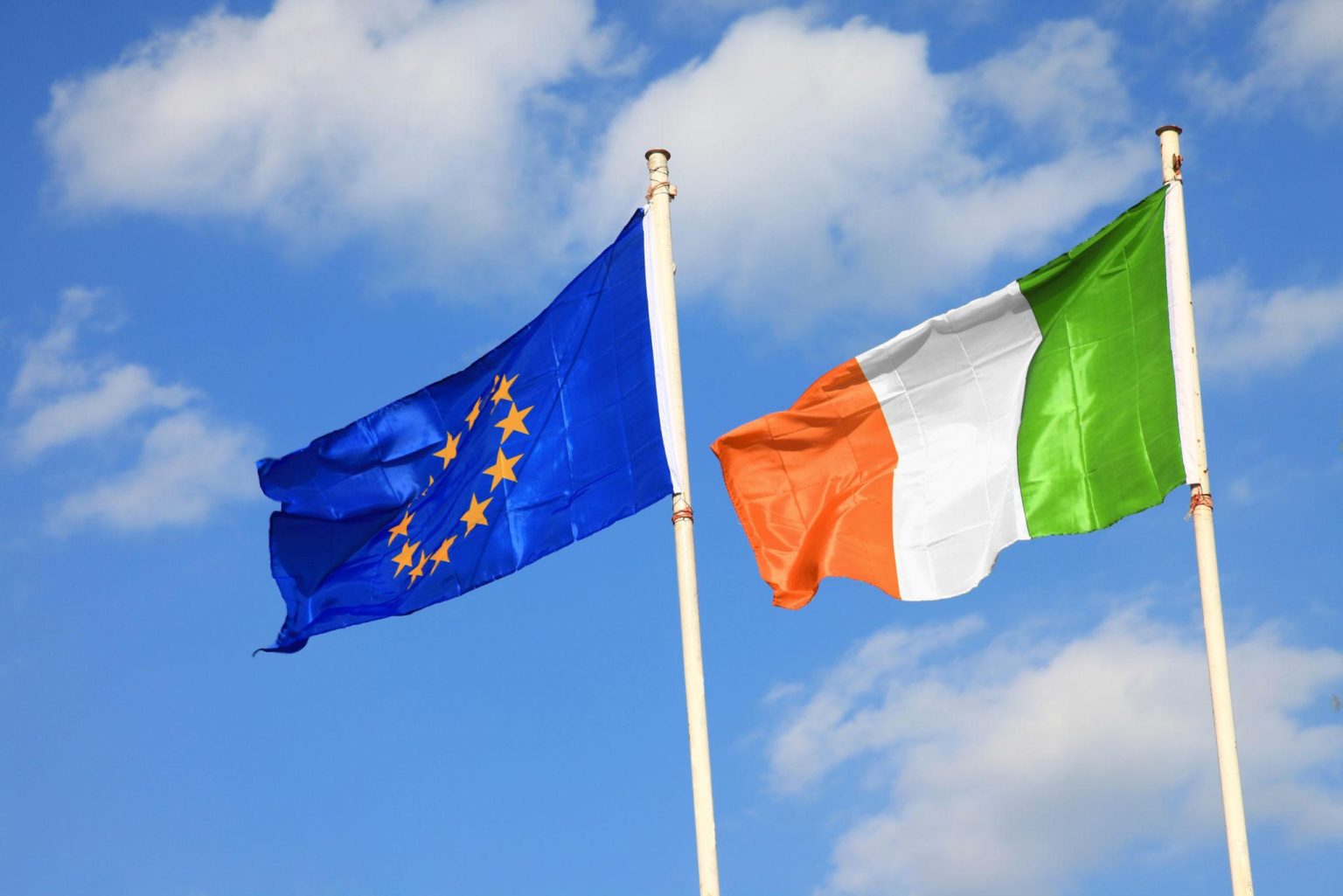
European Parliament President Roberta Metsola and political group leaders will next week visit Dublin to prepare for the upcoming Irish presidency of the Council of the EU.
On Tuesday, European Parliament leaders will meet with Ireland’s President Catherine Connolly, the Taoiseach Micheál Martin and government ministers.
They will also hold meetings at the Houses of the Oireachtas, including with the Ceann Comhairle and the Cathaoirleach, speakers of the two houses of parliament.
Discussions are expected to centre around the priorities of the forthcoming Irish presidency – including competitiveness and the One Europe, One Market roadmap, the next EU long-term budget, and broader issues relating to EU values and security.
On 1 July, Ireland will assume the presidency of the Council of the EU, taking on a central role in shaping the Union’s agenda. As customary, the European Parliament’s conference of presidents, comprising President Roberta Metsola and the leaders of the political groups – travels to Ireland to prepare for the upcoming presidency.
On Friday, Metsola said, “Ireland takes on the Council Presidency at a defining moment for Europe.
“Together, the Council and the European Parliament can turn ambition into action – delivering on competitiveness, strengthening our security, and building a long-term budget fit for a new era, while remaining true to the values that define our Union. With this visit we will make sure to hit the ground running as of day one,” says Metsola.
Also next week (Wednesday), the Commission will present a taxation omnibus.
he EU has produced several directives to ensure fair taxation, prevent tax avoidance and facilitate cross-border trade with common tax rules.
The taxation omnibus will look at how Europe can clean up and streamline the whole architecture.
Meanwhile, the TRAN and SEDE committees will vote next week on the interinstitutional agreement reached this week, marking a key step toward finalising new rules to make it far easier and faster for military equipment, goods and troops to move across EU borders.
The idea, often called a “military Schengen,” responds to a problem widely recognised by defence experts: national red tape and uncoordinated rules are currently seen by some to slow down Europe’s ability to react quickly to security threats.
Elsewhere, the EPP Group is calling for stronger action to shield European democracies from foreign interference, disinformation and hybrid threats.
This objective will guide Tuesday’s vote in Parliament’s special committee on the European Democracy Shield.
Tomas Tobé MEP, EPP Group vice-chair, said, “The European Democracy Shield is a welcome initiative, but it does not yet match the scale and urgency of the threats facing Europe’s democracies. Foreign information manipulation, disinformation and hybrid interference are becoming increasingly sophisticated and coordinated. Russia remains the primary threat to Europe’s democratic integrity, and no Member State can counter it effectively on its own.
“That is why the report calls for a concrete reform agenda centred on stronger operational capabilities, greater accountability and enhanced preparedness,” says Tobé.