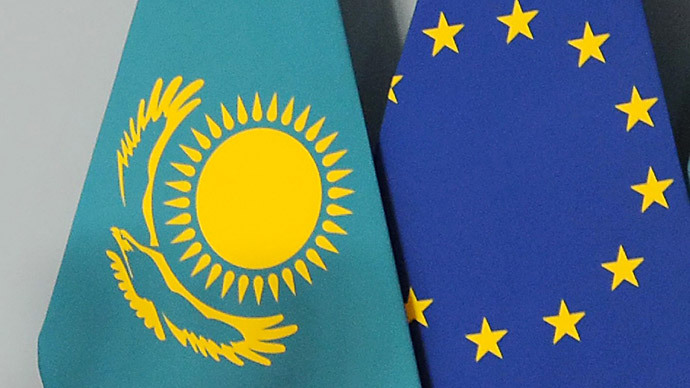
Kazakhstan and the European Union are deepening their engagement at a moment when Europe is reassessing not only its geopolitical relationships, but also the economic architecture that underpins its long-term resilience.
Across Brussels and other European capitals, policymakers are focused on supply chain diversification, industrial competitiveness, energy transition, and transport connectivity. In this environment, Central Asia, and Kazakhstan in particular, are attracting growing attention.
This is not simply the result of diplomatic momentum following numerous high-level visits and meetings between the EU and Kazakhstan. It reflects a broader structural shift in how Europe views Central Asia’s role within Eurasian trade, energy, and industrial networks.
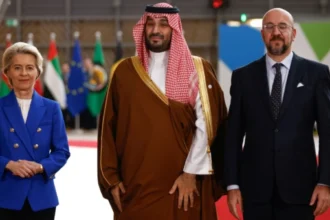
The first EU–Central Asia Summit in Samarkand in 2025, where European Commission President Ursula von der Leyen announced a €12 billion Global Gateway investment package for the region, highlighted this shift. Europe’s engagement with Central Asia is moving from episodic diplomacy toward a more strategic and economically driven partnership. As the region’s largest economy and accounting for 80% of the EU’s trade with Central Asia, Kazakhstan has naturally emerged as a focal point of this recalibration.
Several factors explain why. The first is Europe’s growing focus on robust supply chains.
The European Union’s industrial policy has changed substantially in recent years. Legislation such as the Critical Raw Materials Act reflects a growing recognition that economic competitiveness depends on secure access to strategic inputs for advanced manufacturing, digital technologies, and the green transition. Europe is seeking to diversify sourcing, reduce overdependence on concentrated supply chains, and build stronger industrial ecosystems.
Kazakhstan is directly relevant to this agenda. The country produces 21 of the 34 critical raw materials identified by the EU as strategically important, including uranium, copper, titanium, tungsten, cobalt, lithium, and rare earth elements. It already plays a major role in Europe’s resource security, supplying key materials to sectors ranging from aerospace to clean energy.
The EU–Kazakhstan Strategic Partnership Roadmap on critical raw materials, batteries, and renewable hydrogen suggests a more ambitious objective to build deeper industrial cooperation around processing, refining, technology transfer, and value-chain integration. This marks an important shift. For Europe, resilience depends not only on access to raw materials, but also on trusted industrial partnerships further along the value chain.
The second reason for Europe’s growing interest is connectivity. As geopolitical fragmentation and trade disruptions reshape global commerce due to the ongoing instability in the Middle East and the war in Ukraine, transport routes that once appeared peripheral are becoming strategically significant. Few examples illustrate this more clearly than the Trans-Caspian International Transport Route, better known as the Middle Corridor.
The route, connecting China and Central Asia to Europe via Kazakhstan, the Caspian Sea, the South Caucasus and onward to European markets, has become central to efforts to diversify Eurasian freight connectivity.
Kazakhstan’s role here is substantial. The country has invested heavily in railway expansion, port modernisation, logistics hubs, and digital freight infrastructure. The Dostyk–Mointy rail expansion, for example, is expected to increase cargo throughput and improve freight efficiency across one of the corridor’s most important sections.
Europe is backing this transformation through direct infrastructure financing. In 2025, EIB Global signed a €200 million financing agreement with the Development Bank of Kazakhstan to support sustainable transport infrastructure, including projects linked to the Trans-Caspian corridor. The European Union and the EBRD have also committed additional funding for the expansion of Aktau Port, Kazakhstan’s principal Caspian gateway, as part of wider efforts to strengthen corridor capacity. These investments form part of the EU’s €10 billion Global Gateway commitment to developing the Trans-Caspian route as a faster and more durable trade connection between Europe and Central Asia.
This is notable because the Middle Corridor is no longer merely a transport route. It is becoming a strategic logistics platform, one supported through the EU’s Global Gateway framework and connected to Europe’s wider economic diversification agenda.
The third driver is energy transition and industrial transformation. Europe’s decarbonisation goals require large-scale infrastructure partnerships. Here too, Kazakhstan is becoming increasingly relevant.
Alongside TotalEnergies’ $1.2 billion Mirny wind and battery storage project in Kazakhstan, Italy’s Eni has expanded its renewable energy presence through hybrid solar and wind projects, while EU-backed cooperation on renewable hydrogen and electricity infrastructure is helping lay the foundations for deeper long-term energy integration.
At the same time, Kazakhstan is also preparing for the long-term energy demands of industrial expansion. Following the 2024 national referendum, the country is building a nuclear power plant as part of a marked strategy to ensure reliable baseload energy for future industrial growth.
Taken together, these developments suggest Kazakhstan is seeking to build the infrastructure foundation required for a more industrially diversified economy, one integrated into European economic networks.
The fourth reason Europe is paying closer attention is human capital and institutional exchange.
Economic partnerships are rarely sustained by infrastructure and trade flows alone. Over time, they depend on deeper networks of knowledge exchange, mobility, and institutional familiarity. Here too, EU–Kazakhstan relations are expanding.
Recent progress on visa facilitation talks between Kazakhstan and the European Union suggests a growing recognition that closer economic ties require easier movement for businesspeople, researchers, students, and professionals. At the same time, Kazakhstan’s participation in European programmes such as Erasmus+ and Horizon Europe has deepened academic and scientific cooperation, opening new channels for research collaboration and educational exchange. The launch of the 2026 Erasmus+ call for Kazakh institutions and the growing number of joint higher-education initiatives illustrate how this dimension of the relationship continues to expand.
This is important because Europe’s engagement with Kazakhstan is no longer defined solely by commercial transactions. It is creating the people-to-people and institutional links that tend to underpin more durable long-term partnerships. In practical terms, this helps create the trust, familiarity, and professional networks that make wider economic cooperation more sustainable.
None of this suggests a dramatic geopolitical shift. Europe’s closer attention to Kazakhstan is better understood as a pragmatic response to changing economic realities. In a period defined by supply chain resilience, industrial diversification, energy transition, and transport connectivity, Kazakhstan sits at the intersection of several European priorities. It establishes a deeper recognition that Europe’s economic map is evolving and that Kazakhstan is becoming an increasingly relevant part of it.