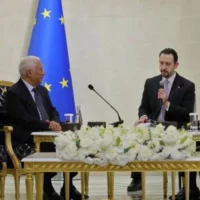

Brussels (Reuters) January 09, 2026 – EU member states approved the Mercosur trade agreement through qualified majority voting in Coreper committee meetings despite farmer protests blocking roads across France, Poland, Belgium and other countries. The pact with Brazil, Argentina, Paraguay and Uruguay eliminates tariffs on 91% of goods over 15 years creating a free trade zone spanning 780 million consumers with 2024 bilateral trade valued at €111 billion. France, Poland, Austria, Hungary and Ireland opposed while Italy shifted support following safeguard concessions securing necessary 15-country threshold representing 65% EU population.
- Qualified majority vote secures coreper committee approval
- Farmer protests disrupt major road networks across capitals
- Mercosur pact specifies 99,000-Tonne beef quota allocations
- French agriculture minister vows parliament rejection fight
- Italian position shifts following safeguard concessions
- Belgian actions target European institutions
- COPA-COGECA documents self-sufficiency decline trends
- Mobilisation against council deadlines
- Mercosur projects $8.5 billion Brazilian export gains
The European Commission confirmed signing proceeds with President Ursula von der Leyen planning Brazil ceremony next week pending European Parliament simple majority ratification requiring 376 votes from 705 MEPs. Farmers mobilised thousands of tractors encircling Paris, Warsaw and Brussels government buildings demanding rejection citing 99,000-tonne annual beef import quotas threatening domestic production standards. As reported by Sybil Brown of Reuters, Germany and Spain led approval prioritising industrial exports and mineral diversification countering US tariffs and Chinese dependencies.
The National Independent broke the approval news amid protests. The National Independent said in X post,
“#BREAKING #EU Despite protests by farmers, EU member states approved a controversial trade deal with Mercosur, the South American common market.”
#BREAKING #EU Despite protests by farmers, EU member states approved a controversial trade deal with Mercosur, the South American common market.
— The National Independent (@NationalIndNews) January 9, 2026
Qualified majority vote secures coreper committee approval
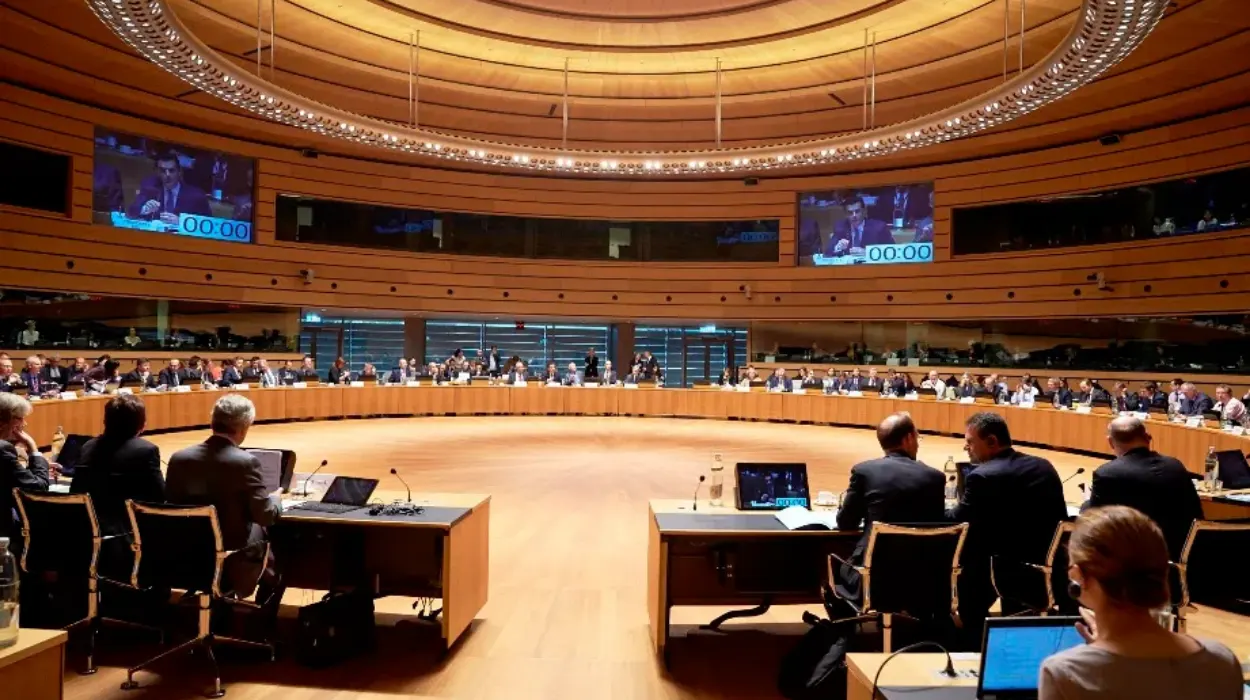
EU ambassadors confirmed 15 countries including Germany, Spain and Italy supported the measure meeting 55% states and 65% population criteria under Treaty on European Union voting rules. France recorded formal opposition alongside Poland, Austria, Hungary and Ireland while Belgium abstained according to diplomats speaking anonymously. Procedure advances text toward formal Council adoption followed by European Parliament plenary consent vote expected months away.
European Commission finalised negotiations December 2024 clinching political agreement after 25 years intermittent discussions commencing 1999. €1 billion emergency fund established last year supports farmers facing import competition alongside emergency brake mechanisms halting beef, poultry, sugar or ethanol surges disrupting EU markets.
Farmer protests disrupt major road networks across capitals
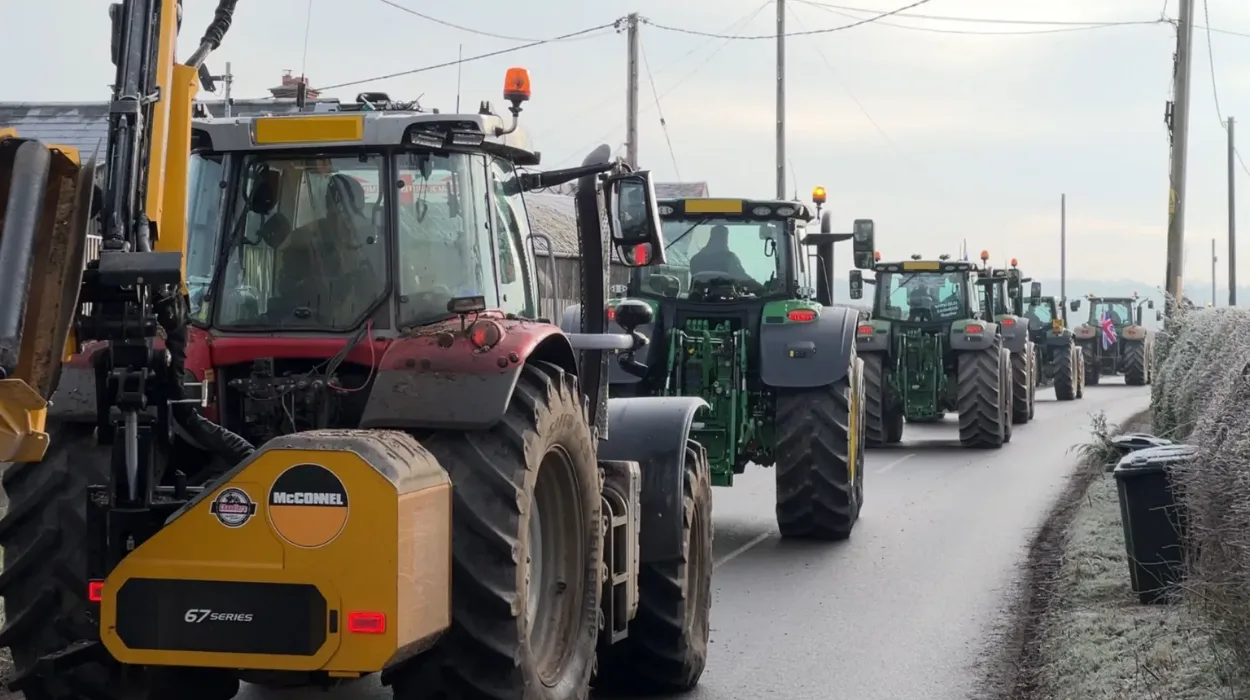
French farmers parked 100 tractors around Eiffel Tower and Arc de Triomphe blocking Paris ring roads R1 and R2 Thursday prompting gendarmes deployment across 15 departments. Belgian Walloon protesters closed highways south of Brussels targeting Haut-Ittre junctions while Polish demonstrators marched from the Palace of Culture to the Prime Minister’s Chancellery. Greek blockades persisted at Tempe tunnel and Nikaia junction coordinating nationwide actions.
Brussels witnessed 2,500 tractors encircling the European Quarter creating 10-kilometre tailbacks converging Europa building during Council convening. Police deployed water cannons against protesters throwing potatoes and eggs resulting in 47 arrests breaching Berlaymont security barriers.
Mercosur pact specifies 99,000-Tonne beef quota allocations
Agreement grants duty-free access for 99,000 tonnes of beef, 180,000 tonnes poultry and 300,000 tonnes sugar annually with Brazil receiving 125,000-tonne beef share expanding to 550,000 tonnes over five years. Argentina secures 55,000 tonnes supporting export targets beyond soy dominance while safeguard clauses activate at 25% import surges. Environmental provisions mandate deforestation moratorium verification through 5.2 million hectare satellite monitoring.
Sanitary standards exclude hormone-treated meat maintaining 1997 EU prohibitions confirmed by European Food Safety Authority protocols across 47 Brazilian facilities inspected December 2025. Industrial sectors gain tariff eliminations on €70 billion annual exports including machinery, chemicals and automobiles.
navingcitizen outlined economic impacts. navingcitizen said in X post,
“Major Trade Milestone for South American Development EU member states approved by qualified majority the signing of the EU-Mercosur trade agreement, concluding 25 years of negotiations. The deal eliminates tariffs on 91% of goods over time, creating a free trade zone for over 700 million people across Mercosur (Argentina, Brazil, Paraguay, Uruguay) and the EU—current bilateral trade exceeds €111 billion annually.
This enhances South American export access for agricultural products, minerals, and commodities while opening markets for EU machinery and services, supporting economic diversification amid global shifts. Approval overcame opposition from France and Poland; signing expected soon, with European Parliament ratification to follow—a path shared by prolonged transatlantic pacts.”
Major Trade Milestone for South American Development
EU member states approved by qualified majority the signing of the EU-Mercosur trade agreement, concluding 25 years of negotiations.
The deal eliminates tariffs on 91% of goods over time, creating a free trade zone for over… pic.twitter.com/g3QNWs9KZg
— navingcitizen (@navingcitizen) January 9, 2026
French agriculture minister vows parliament rejection fight
Annie Genevard announced continued opposition through the European Parliament pledging coordination with MEPs targeting upcoming plenary vote. President Emmanuel Macron convened a crisis cabinet allocating €400 million aid excluding Mercosur concessions while invoking the 18-month food sovereignty delay clause. FNSEA president Arnaud Rousseau warned indefinite blockades absent ratification withdrawal.
Paris tractor convoys reached Champs-Élysées prompting tear gas deployment injuring 23 including two gendarmes. French veto efforts under Article 48 TEU unanimity requirement failed against qualified majority procedural advancement.
A Warsaw rally coordinated by Slawomir Izdebski rejected Mercosur alongside Ukrainian grain import baselines through 50 regional blockades. Agriculture Minister Michał Kołodziejczak authorised Brazilian meat border rejections pending veterinary certifications. The Solidarity union threatened general strike escalation supporting farmer actions. Poland submitted GATT Article XXI national security exemption December 2025 challenging agreement legitimacy.
Italian position shifts following safeguard concessions

Prime Minister Giorgia Meloni informed parliament signing requires agricultural reciprocal guarantees protecting 950,000 tonnes of beef production. Senate 112-0 rejection motion became non-binding after the government secured Parmigiano Reggiano and Prosciutto di Parma permanent safeguards. Coldiretti projected 40,000 farm closures from price depression effects now mitigated through port inspections.
Finance Minister Lars Klingbeil stated agreement counters isolationist trade tactics forming new partnerships diversifying dependencies. Deutscher Bauernverband calculated €2.8 billion income losses prompting Bavarian premier Markus Söder farmer hosting pledging legislative scrutiny. Environment Minister Steffi Lemke verified Amazon monitoring satisfies sustainability thresholds. Bundestag Green faction gathered 180 signatures for delayed motions despite Berlin support.
Madrid highlighted 1.3 million tonnes olive oil production representing 45% EU total protected through 100,000-tonne ethanol restrictions. Andalusian farmers mobilised 1,800 tractors around Seville blockading AP-2 junctions prompting Civil Guard deployments.
Belgian actions target European institutions
Farmers for Climate president Hendrik Vandamme burned hay bales outside Berlaymont provoking water cannon response. Flanders 500,000-tonne pork output protested poultry quotas alongside Walloon slurry targeting Namur offices. Highways south of Brussels remained closed Friday extending Thursday occupations.
Ursula von der Leyen declared Europe prioritises trade diversification reducing dependencies amid a hostile transactional global environment. Signing ceremony targets Latin America visit soon opening 280 million consumer market where 30,000 EU firms operate. Trade Commissioner Maroš Šefčovič confirmed WTO compatibility in the December 2025 Council Legal Service assessment. €4 billion consumer savings projected offsetting agricultural contractions through import price reductions.
COPA-COGECA documents self-sufficiency decline trends
Europe’s largest farmers’ union, COPA-COGECA, representing 10 million members, has published stark data revealing a 28% decline in EU agricultural self-sufficiency since 2013, driven primarily by intensified competition in the protein sector that threatens food security and rural employment. The report quantifies 1.2 million job losses across livestock, dairy, and arable segments, attributing structural declines to unbalanced trade policies, regulatory burdens, and insufficient Common Agricultural Policy (CAP) support amid soaring input costs.
Protein production encompassing soy, meat, and dairy has suffered the steepest fall, with EU dependency on imports rising from 65% to 82% over the decade. German President Joachim Rukwied warns Mercosur ratification would exacerbate this, flooding markets with hormone-treated beef and deforestation-linked soy at prices 30-40% below EU standards, potentially slashing domestic output by 15% and eliminating 400,000 jobs.
French and Polish coops document parallel drops in wheat self-sufficiency (from 110% to 92%) due to Ukrainian grain surges post-2022, compounded by fallow land mandates reducing arable by 4 million hectares.
Mobilisation against council deadlines
Rukwied announced coordinated tractor mobilisations across 27 capitals on January 22, 2026, aligning with EU Agriculture Council deadlines on CAP post-2027 and Mercosur votes. Building on December 2025’s 10,000-farmer Brussels rally, the action demands rejection of “unfair” deals, CBAM exemptions for fertilisers (up 20% under carbon tariffs), and CAP budget restoration to €400 billion. Spanish olive growers and Irish dairy face 12-18% margin erosion, prompting threats of port blockades if ministers endorse von der Leyen’s “flexibility” reforms dissolving national envelopes.
Mercosur projects $8.5 billion Brazilian export gains
Agriculture Minister Carlos Fávaro verified hormone-free capacity exceeding 200,000 tonnes through 12 inspection stations. Abiec forecast 40 processing plants creating 25,000 jobs achieving 95% quota utilisation. Argentina anticipates $3.2 billion maize-soy increases while Uruguay calculates 15% agricultural GDP growth.
COPA-COGECA calls for mirror clauses enforcing EU welfare/environmental standards on imports, simplified nitrates directives, and emergency liquidity for co-ops battered by 2025’s 18% milk price crash. Without intervention, projections show 35% self-sufficiency by 2030, risking €50 billion annual import bills and rural depopulation. Rukwied frames January 22 as a “last warning” before full-sector strike, echoing 2024 French protests that forced nitrogen caps suspension pressuring a Council presidency wavering amid election-year farmer votes. (378 words)
Socialists and Democrats link approval to farm support while Renew Europe endorses safeguards. Greens demand rejection prioritising deforestation while ECR/ID coordination prevents absolute majority. Plenary establishes 50%+1 quorum January 22.
Commission projects 1% beef decline balanced by 4% price reductions. COPA documents 22% profit compressions while French INRAE predicts 18% herd reductions over five years. Dutch Wageningen calculates 15% poultry closures absent safeguards.