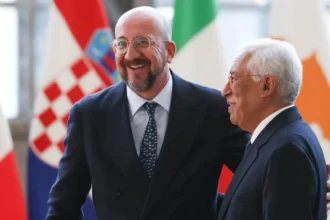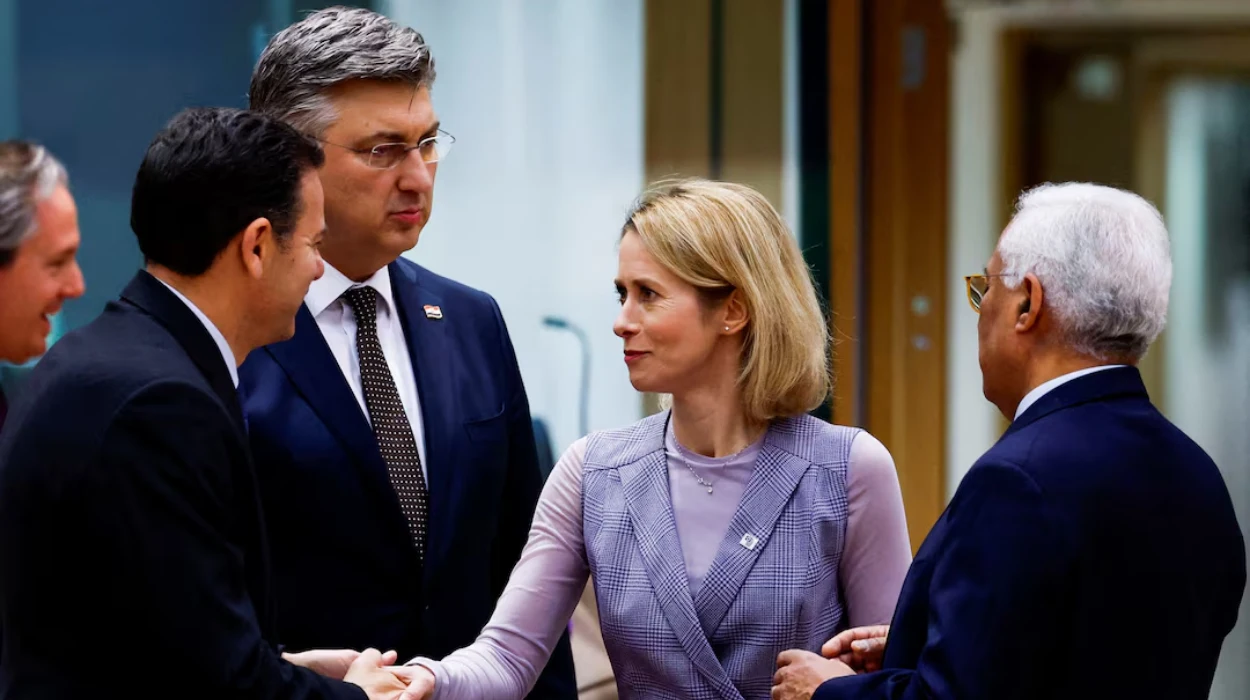
Brussels (Brussels Morning Newspaper) September 19, 2026 – European Union leaders are actively weighing challenging budgetary compromises as discussions move into a decisive phase over the bloc’s upcoming long-term spending framework. European Council President António Costa has confirmed that member states broadly support reaching a definitive agreement by the end of the year on the 2028–2034 multiannual financial framework, balancing structural reforms, enhanced defence priorities, and strict limitations on national contributions.
The ongoing high-level negotiations, which have seen European Council President António Costa conduct a series of bilateral discussions during his recent capital visits, centre on redefining how European funds are structured, raised, and allocated. As geopolitical tensions, technological shifts, and climate pressures intensify, policymakers face the difficult task of satisfying divergent national interests while preventing any funding interruptions for critical regional projects.
Shifting Geopolitical Realities and the 2028–2034 Budget Framework
The fundamental driver behind the current urgency is the stark shift in the geopolitical and economic landscape since the previous seven-year budget was adopted in 2020. European leaders have underscored that the bloc can no longer rely on legacy funding models to navigate modern security and economic challenges.
During recent meetings across European capitals—including consultations in Dublin with Ireland’s Taoiseach Micheál Martin and in Vienna with Austria’s Chancellor Christian Stocker—António Costa emphasised that the upcoming financial framework requires a fundamentally new approach. This new approach involves restructuring resource allocation to direct greater financial muscle toward industry, innovation, digital transformation, border protection, and strategic defence capabilities.
At the same time, traditional expenditure categories remain a major point of discussion. Cohesion policy and the Common Agricultural Policy (CAP) have been repeatedly defined by leaders as essential pillars required to guarantee food security, support regional development, and maintain employment across rural and urban communities. Reconciling the expansion of new priorities with the preservation of these legacy sectors forms the core of the current compromise talks.
Balancing National Contributions and New Own Resources
A critical hurdle in finalising the 2028–2034 financial blueprint involves managing the overall volume of the budget and the specific financial burdens placed on individual member states. With various national governments advocating for fiscal prudence, European officials are pressured to keep overall spending and national contributions at reasonable levels.
To bridge the gap between ambitious investment targets and finite national treasuries, the introduction of new “own resources”—designated EU-level revenue streams—has emerged as a crucial component of the financial package. These alternative revenue mechanisms are intended to provide the bloc with budgetary flexibility, reduce the direct reliance on gross national income contributions from member states, and ensure that key transition programs remain adequately funded.
The European Commission and Council leadership are expected to bring forward clarified proposals regarding these new revenue streams at the upcoming European Council meeting in October, where member states will continue wrestling with the distribution mechanics of the multi-trillion-euro package.
Competitiveness, Single Market Integration, and Red Tape Reduction
Parallel to direct fiscal negotiations, EU leadership has strongly linked the budget debate to the broader economic competitiveness agenda. Highlighting persistent productivity concerns within Europe, officials have advocated for the rigorous execution of the “One Europe, One Market” roadmap.
This strategic agenda sets explicit timelines for 2026 and 2027 aimed at simplifying regulatory frameworks, cutting bureaucratic red tape, and fully completing the single market—with a distinct emphasis on integrating capital markets and securing affordable energy supplies for European industry. Economic commissioners have warned that persistent headwinds, including higher borrowing costs, debt pressures in select member states, and regional vulnerabilities linked to extreme weather events, make structural economic streamlining an urgent necessity.
Furthermore, legislative efforts concerning the development and potential rollout of a digital euro are advancing to strengthen the international standing of the European currency in electronic payments. European Parliament reports and Eurogroup discussions underscore a collective push to finalize these monetary frameworks concurrently with broader financial reforms.
External Pressures, Migration, and Enlargement Policies
Beyond internal financial architectures, the discussions among EU leaders consistently incorporate external policy commitments, including migration management, enlargement milestones, and geopolitical stability.
Migration continues to be framed consistently as a shared European challenge demanding a coordinated, continent-wide response. Leaders have noted that ongoing instability in adjacent regions, including the Middle East and the Eastern Mediterranean, exerts a direct influence on migration dynamics and energy security across member states.
Regarding EU enlargement, the European Council maintains that the integration pathways for Ukraine, Moldova, and countries of the Western Balkans must remain strictly merit-based and firmly anchored in adherence to the rule of law. Concurrently, member states have reiterated their commitment to sustaining financial and political backing for Ukraine while heightening economic pressure on Russia.
As the political timetable moves forward, Council President Costa is scheduled to continue his outreach across remaining member state capitals, including planned consultations with Dutch and Swedish leadership. The objective remains clear: secure a formalized political consensus before the close of the year to draft precise legislative texts throughout 2027, ensuring seamless continuity when the new financial period commences on 1 January 2028.