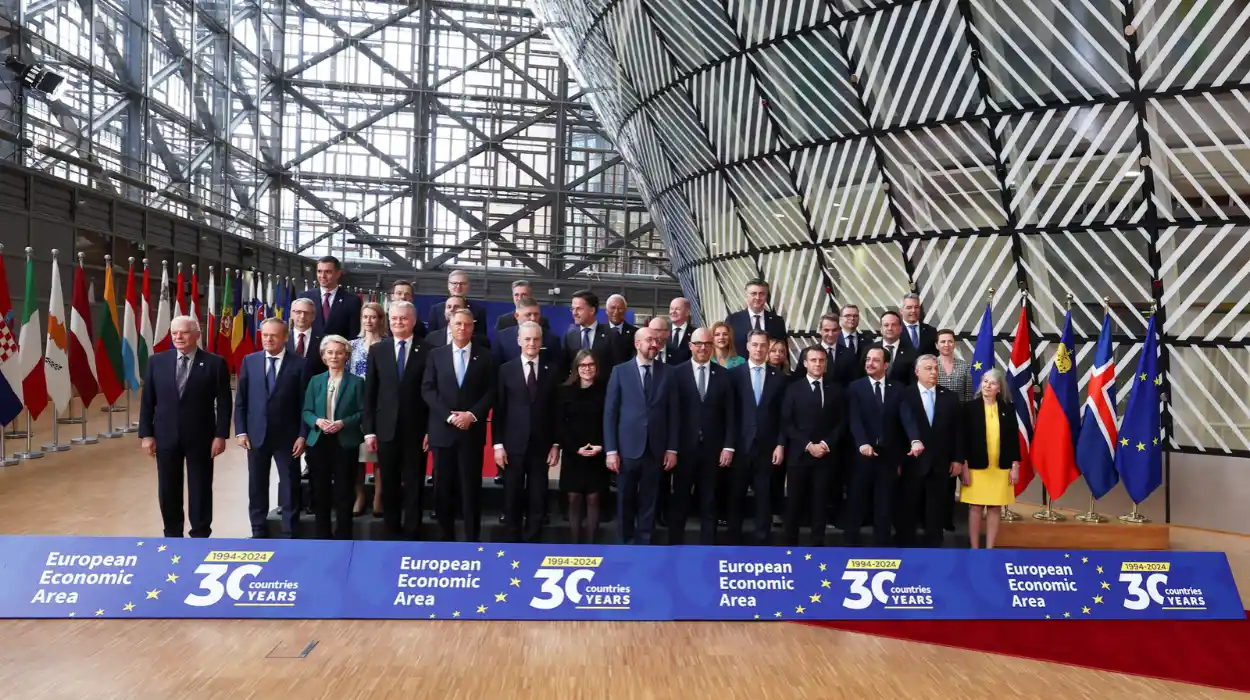
Brussels (Brussels Morning Newspaper) October 15, 2026 – European Union leaders gathered in Brussels for a high-level summit to address pressing continental matters, focusing extensively on regional security, European defence, economic competitiveness, and international relations. The multi-day meeting brought together heads of state and government to negotiate crucial policy frameworks, budgetary measures, and strategic responses to ongoing geopolitical challenges affecting member states.
Strategic Priorities and Economic Competitiveness Discussions
During the plenary sessions, the European Council concentrated heavily on boosting European competitiveness and enhancing the single market. Leaders evaluated comprehensive measures aimed at bolstering the bloc’s strategic autonomy and economic security amidst shifting global dynamics.
Discussions centered on establishing tangible progress towards removing barriers across the four freedoms by March 2027. Priority areas outlined for implementation included advancing a unified company law framework, introducing a voluntary e-declaration system for cross-border services, and improving the mutual recognition of professional qualifications across member states.
Furthermore, the council addressed the implementation of the ‘once-only’ principle, which incorporates the deployment of a European Business Wallet designed to streamline administrative procedures for enterprises operating across borders. Legislative bodies were urged to finalize pending omnibus packages, including an ambitious artificial intelligence regulatory framework, before the conclusion of the year.
Regional Security and European Defence Developments
Security and defence policy remained a central pillar of the summit agenda. Leaders reviewed ongoing challenges along the European Union’s eastern borders and evaluated the persistent hybrid campaigns directed against member states by external actors.
The council invited the relevant institutions to update the common understanding of current threats and challenges as originally outlined in the 2022 Strategic Compass. Additionally, participants called upon the Council of the European Union and the European Parliament to accelerate legislative work concerning proposals related to military mobility across the continent.
Discussions on international security extended to developments in the Middle East and neighboring regions. Member states reiterated their commitment to diplomatic efforts aimed at reducing regional tensions, protecting civilian lives, and supporting international initiatives designed to bring about lasting stability.
Financial Frameworks and Institutional Appointments
Alongside broader policy evaluations, the summit incorporated parallel financial and institutional deliberations. A dedicated Euro Summit convened alongside the main European Council meetings to review the economic policy recommendations for the euro area within the framework of the European Semester.
During the proceedings, the European Council formally appointed Boris Vujčić as the Vice-President of the European Central Bank, formalizing leadership structures crucial for guiding the monetary policies of the eurozone.
Multilateral Cooperation and External Relations
The summit further addressed multilateralism and the strengthening of democratic resilience within member states. Leaders emphasized the necessity of diversifying trade and investment ties while protecting key domestic sectors from unfair international competition and economic coercion.
The deliberations concluded with an reaffirmation of the European Union’s dedication to cooperative international frameworks, upholding international law, and maintaining coordinated responses to transnational challenges through ongoing diplomatic engagement.