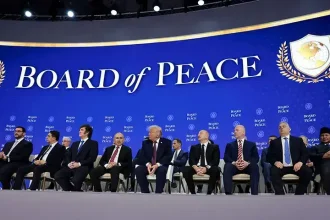

A Cambodia Thailand ceasefire has been declared for the second time in recent weeks as both governments attempt to contain escalating tensions along their disputed border. The renewed agreement follows days of diplomatic pressure from regional and global powers concerned that continued clashes could destabilize Southeast Asia and undermine broader security cooperation.
Officials from both sides confirmed the ceasefire after intense behind-the-scenes negotiations, signaling a shared desire to prevent further military escalation. However, cautious language from leaders and defense officials suggests confidence in the agreement remains fragile, reflecting deep-rooted mistrust and unresolved territorial disputes.
The declaration comes after intermittent artillery exchanges and troop movements raised fears that the conflict could spiral beyond localized skirmishes into a wider confrontation.
Background: A Border Dispute With Deep Roots
The Cambodia–Thailand border dispute dates back decades and centers on contested territory near historic temple complexes and poorly demarcated frontier lines. While international rulings and bilateral agreements have attempted to clarify boundaries, overlapping claims continue to fuel tensions.
The latest flare-up follows a familiar pattern:
- Localized incidents escalate into armed standoffs
- Diplomatic channels intervene to halt violence
- Temporary ceasefires are declared
- Underlying issues remain unresolved
This cycle has repeated multiple times over the past several decades, making long-term stability elusive.
What Triggered the Latest Escalation
The most recent confrontation erupted after both sides accused each other of violating previously agreed military positions. Border patrol encounters escalated rapidly, leading to exchanges of fire and the deployment of heavier military assets.
Each government has offered competing accounts of how the fighting began, reflecting the sensitivity and political stakes involved. Nationalist sentiment on both sides has complicated de-escalation efforts, as leaders face domestic pressure to defend territorial claims.
The second Cambodia Thailand ceasefire was announced only after it became clear that continued clashes risked broader regional consequences.
Why a Second Ceasefire Was Necessary
The collapse of the initial ceasefire raised alarm among international observers. While the first agreement reduced large-scale fighting, sporadic violations eroded trust and reignited hostilities.
The second ceasefire aims to:
- Reinforce communication between military commanders
- Establish clearer buffer zones
- Prevent accidental escalation
- Provide space for diplomatic mediation
International mediators emphasized that without stronger enforcement mechanisms, ceasefires risk becoming symbolic rather than effective.
Role of International Powers in De-escalation
Global and regional actors played a critical role in pressuring both Cambodia and Thailand to recommit to de-escalation. Diplomatic engagement intensified as concerns grew that instability could disrupt trade routes, tourism, and regional security arrangements.
Key international concerns include:
- Protection of civilian populations near the border
- Preservation of ASEAN unity
- Prevention of external interference exploiting instability
- Maintenance of economic confidence in Southeast Asia
While no foreign power has assumed a formal monitoring role, sustained diplomatic attention has been instrumental in securing renewed commitments from both governments.
Military Posture Following the Ceasefire
Despite the announcement of a Cambodia Thailand ceasefire, military forces remain on heightened alert along the border. Officials from both countries confirmed that troops have not been withdrawn entirely, citing the need to ensure security and respond to potential violations.
This posture reflects a delicate balance:
- Demonstrating restraint while maintaining readiness
- Avoiding provocations while preserving deterrence
- Managing domestic expectations
Military analysts warn that without clearly defined disengagement steps, even minor incidents could test the durability of the ceasefire.
Domestic Political Pressures on Both Governments
Leaders in Phnom Penh and Bangkok face significant domestic scrutiny. Border disputes often resonate strongly with nationalist sentiment, making compromise politically risky.
In both countries:
- Opposition figures have criticized perceived weakness
- Media coverage has intensified public expectations
- Military institutions retain strong influence
As a result, political leaders must balance diplomatic engagement with domestic perceptions of strength and sovereignty.
Impact on Civilians and Border Communities
For civilians living near the disputed areas, repeated clashes have disrupted daily life. Border communities have experienced temporary evacuations, economic disruption, and heightened security restrictions.
Local residents report:
- Interrupted trade and travel
- Fear of renewed fighting
- Limited access to farmland and markets
Humanitarian groups have urged both governments to prioritize civilian protection as part of any ceasefire framework.
ASEAN’s Credibility at Stake
The Cambodia Thailand ceasefire also carries implications for ASEAN’s role as a regional stabilizing force. As Southeast Asia’s primary diplomatic bloc, ASEAN’s ability to manage internal conflicts is closely watched.
A failure to sustain peace could:
- Undermine confidence in ASEAN-led mediation
- Encourage unilateral security measures
- Invite external influence
Conversely, a successful de-escalation could strengthen ASEAN’s standing as a regional peace broker.
Why De-escalation Matters Beyond the Border
The stakes extend beyond Cambodia and Thailand. Southeast Asia sits at the intersection of major global trade routes and geopolitical competition. Prolonged instability risks drawing in external powers or disrupting economic flows.
Investors and regional partners are closely monitoring developments, wary that unresolved conflict could affect:
- Cross-border infrastructure projects
- Tourism recovery
- Supply chains
The second ceasefire is therefore viewed as a necessary step toward preserving broader regional stability.
Challenges to Making the Ceasefire Stick
Despite renewed commitments, challenges remain:
- Lack of independent monitoring
- Unclear enforcement mechanisms
- Historical mistrust between forces
- Domestic political constraints
Without concrete confidence-building measures, analysts caution that ceasefire violations may continue, intentionally or otherwise.
What Comes Next
Diplomatic efforts are expected to continue in parallel with military de-escalation. Potential next steps include:
- Joint border commissions
- Third-party mediation frameworks
- Enhanced communication hotlines
- Confidence-building military measures
Whether these initiatives materialize will determine whether the Cambodia Thailand ceasefire becomes a foundation for lasting peace or another temporary pause.
The declaration of a Cambodia Thailand ceasefire for the second time underscores both the urgency of de-escalation and the fragility of peace along the disputed border. While international pressure has helped bring the parties back from the brink, lasting stability will depend on sustained diplomacy, restraint on the ground, and political courage on both sides.
For now, the ceasefire offers a cautious opportunity to prevent further violence—but the path to a durable resolution remains uncertain.