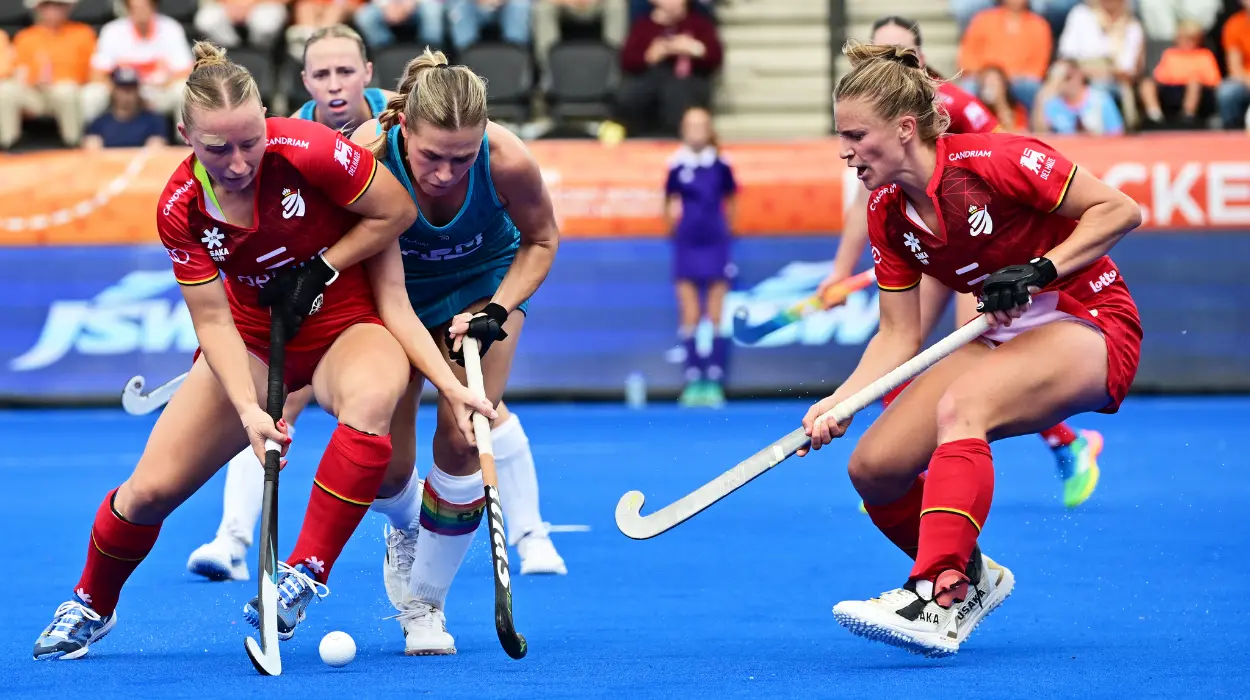
Amstelveen (Brussels Morning Newspaper) – In a nail-biting game in Amstelveen on a Saturday afternoon, the Belgian women’s hockey team or Red Panthers beat Australia by 1–0 to clinch the bronze medal in the FIH Women’s Hockey World Cup 2026. This victory achieved on 29 August 2026 at the Wagener Stadium is the first World Cup medal for Belgium since 1978 after 48 years of waiting. The winning goal was scored by Charlotte Englebert just before the half time in the match with the Hockeyroos, the two-time world champions.
What Was the Match Narrative and Turning Point?
The third-place play-off was a match played out tactically because both teams were wary after losing in their respective semi-finals. Having lost in a controversial 0-1 defeat against co-hosts Netherlands in their last match, Belgium entered the match with vigor and succeeded in getting a goal from Englebert to take a 1-0 lead into halftime. Australia continued pressuring their opponents in the second half, but Belgium was able to stand tall in defense with a disciplined defensive formation in order to maintain the narrow lead.
Belgian media portrayed the match as “a nail-biter” and “an absolute nagelbijter,” showing just how much was on the line for both sides. For Belgium, victory was not about aesthetics; they won through mental strength and execution at crucial moments. The fact that Belgium was able to hold on to a one-goal lead against the experience of Australia was testament to their growing maturity as a team.
Why Is This Medal a Milestone for Belgian Women’s Sport?
The importance of this bronze medal goes far beyond just the game. Until 2026, Belgium had just one Women’s World Cup medal – that bronze from the 1978 tournament in Madrid when they were both relegated to third place along with Argentina after the match between the two ended 0-0. This time, however, Red Panthers managed to secure themselves a solid bronze medal through a win, thus writing themselves into the history books of hockey.
Stephanie Vanden Borre, a key figure in the Belgian squad, captured the emotional weight of the moment.
“It’s very beautiful… It’s the first time we’ve won something at a world tournament, I’m very happy with that. Based on our tournament it’s well deserved. We grew every match. Today maybe wasn’t the most beautiful game, but it’s the result that counts and that’s 1–0 for us,”
she said. Her words reflected a team that prioritized substance over style, understanding that history would judge them by the medal around their necks, not the flair of their play.
How Did the Team Respond After the Semi-Final Controversy?
Going for bronze had its share of hurdles. In the semi-final match with the Netherlands, Belgium was denied an equalizer that was disallowed, losing 0-1 to the Dutch side, which caused a lot of outrage amongst players and supporters. This led to some heated debates and frustrating moments for the team. However, they used this frustration positively in the next match.
Judith Vandermeiren, a midfielder, revealed that officials had
“indirectly apologised”
for mistakes made during the semi-final. She added,
“As a group we said we especially have to look ahead… Bronze at the World Cup would be a historic achievement. There’s no question of us leaving this World Cup without a medal.”
This collective resolve transformed disappointment into determination, ensuring that Belgium would not return home empty-handed.
Justine Rasir, who was suspended following an emotional outburst after the semi-final, echoed this sentiment. Though unable to play in the bronze match, she expressed pride in her teammates.
“I’m angry and sad,”
Rasir admitted,
“but so proud of the team. I believe they will write history by winning bronze.”
Her words proved prophetic as the Red Panthers delivered when it mattered most.