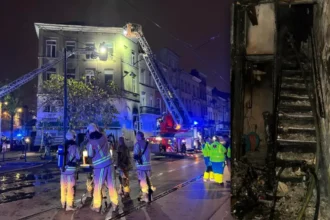
High Fens, Belgium, 19 August (Brussles Morning Newspaper) The fire in Belgium’s High Fens has put a difficult question back on the agenda: are there enough Belgium wildfire crews, and are firefighters receiving the specialist training needed when flames spread through forests, heathland and peat?
It is a question that goes beyond the number of fire engines sent to one incident. Wildfires can keep crews on the ground for hours, sometimes longer, while firefighters must still be available for house fires, road crashes and medical emergencies elsewhere.
The High Fens make that balancing act particularly demanding.
Why fires in the High Fens are difficult to tackle
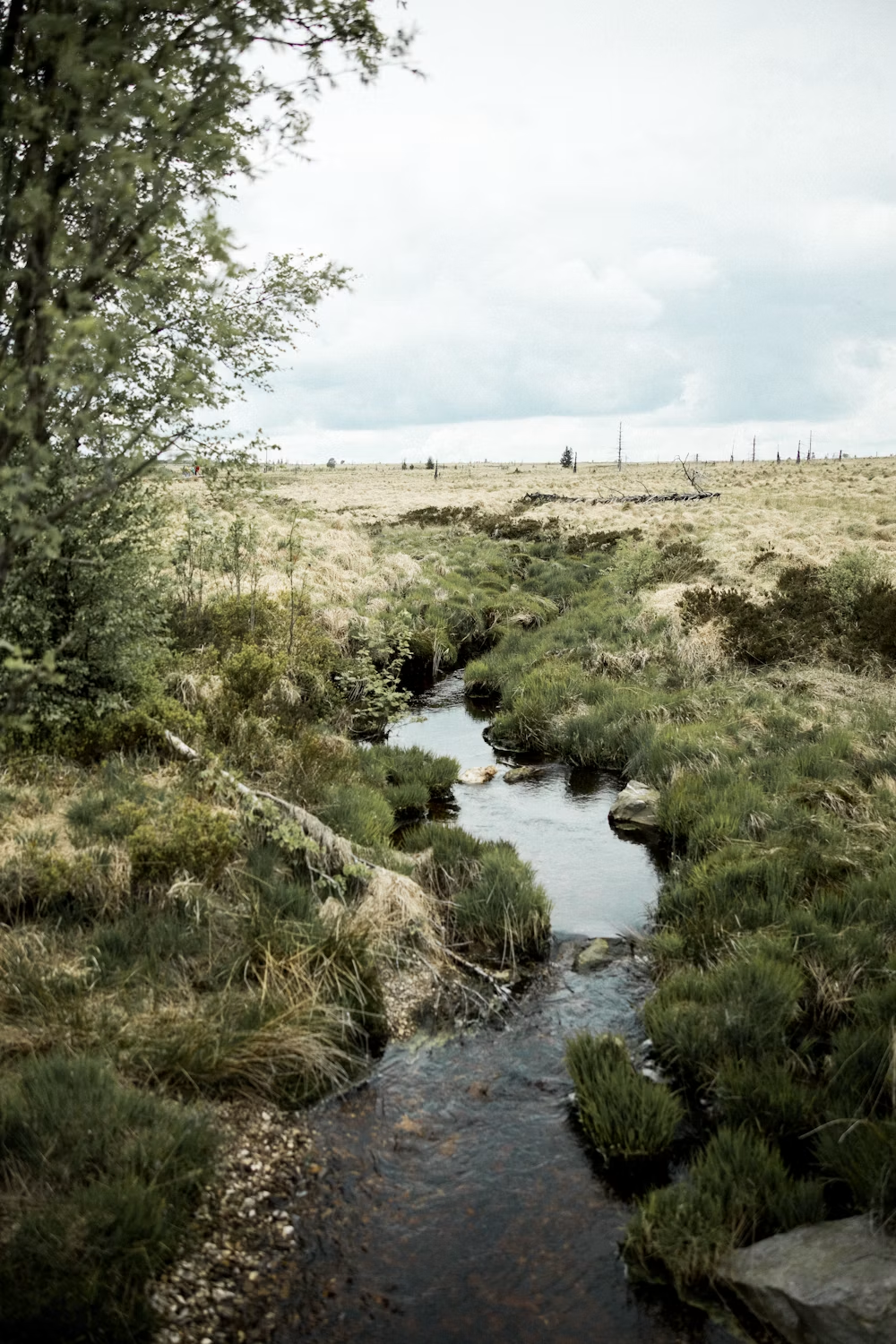
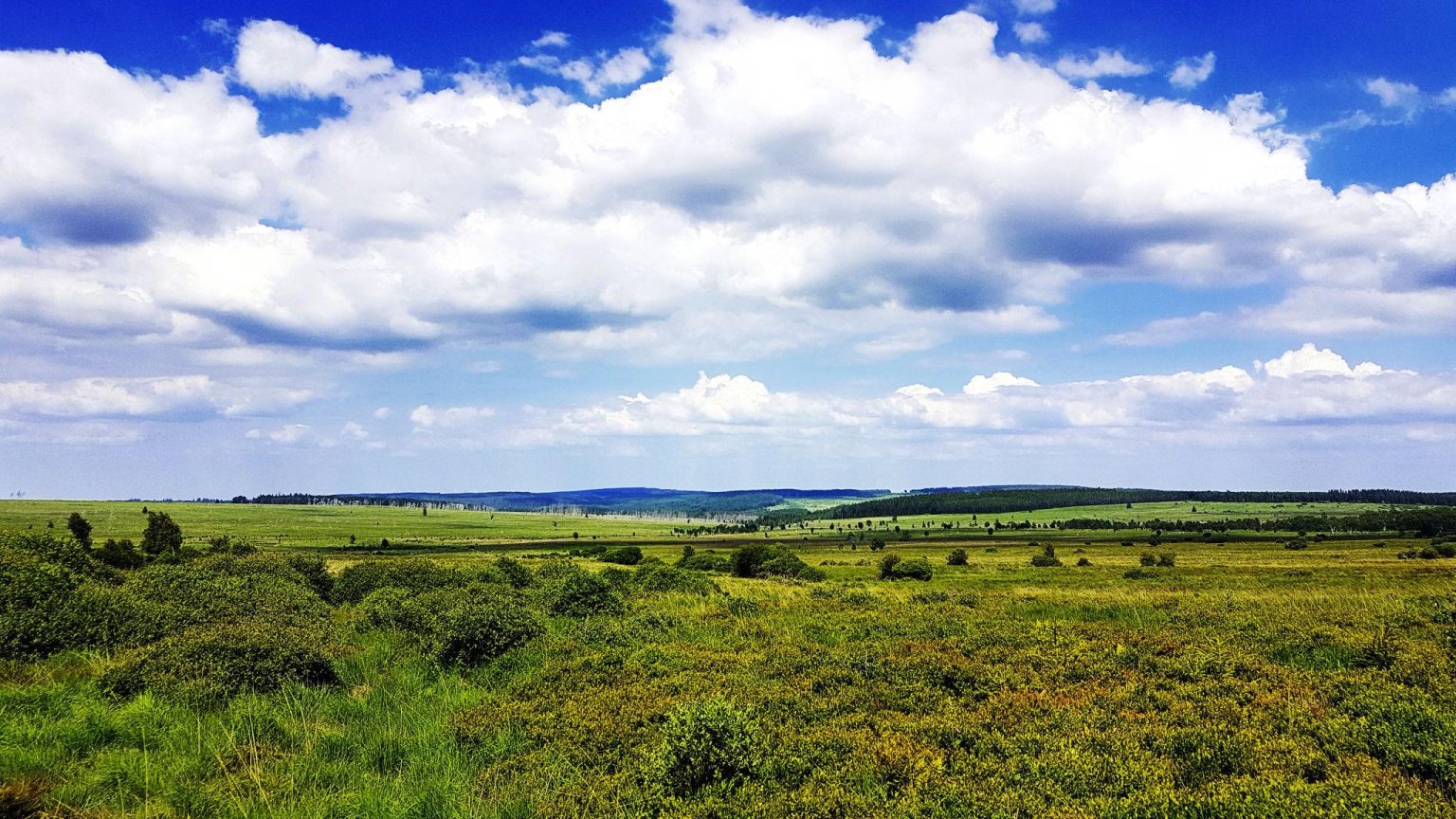
The High Fens, or Hautes Fagnes, cover an unusual landscape in eastern Belgium, where peatland, heath and woodland can make access difficult for emergency crews.
A vegetation fire behaves differently from a fire inside a building. Wind can alter its direction, flames can move through dry vegetation and firefighters may need to cover considerably more ground.
Even after the most visible flames have been extinguished, crews can face the task of checking affected ground and watching for renewed outbreaks.
That means a large fire is as much a test of endurance and staffing as it is of equipment.
Does Belgium have enough firefighters?
Belgium operates 34 rescue zones alongside Brussels’ Fire and Emergency Medical Service. The system includes both professional and volunteer firefighters, making the ability to recruit and retain personnel an important part of emergency planning.
The issue is already recognised at federal level.
Belgium’s federal coalition agreement says a robust fire service requires stable financing and sets out plans for multi-year funding for the country’s rescue zones. It also calls for federal funding to be indexed and for a longer-term path towards a more balanced division of costs between federal and local authorities.
Significantly, the agreement also refers to ensuring there is sufficient capacity during emergencies and examining more accessible recruitment and training requirements for certain specialised or supporting emergency roles.
Wildfire training is becoming harder to ignore
Having enough firefighters is only part of the problem.
Crews dealing with vegetation fires need to understand how terrain, wind and available fuel can influence the direction and intensity of a blaze. The decisions required can be very different from those made during a conventional structural fire.
That puts specialist preparation at the centre of the debate over Belgium wildfire crews.
Belgium’s federal government has already outlined broader ambitions to move its fire services from a largely reactive model towards one that places greater emphasis on prevention and new technology.
The challenge is turning those policy ambitions into practical capacity on the ground.
Pressure does not end when the wildfire starts
A major fire cannot be allowed to consume every available local resource.
While crews are deployed in the High Fens, emergency services must remain capable of responding to incidents elsewhere. Mutual assistance between rescue zones and additional specialist support therefore become particularly important when an operation grows.
This is why simply asking how many firefighters Belgium has does not provide the whole answer. What matters during a major incident is how many trained personnel can be deployed, for how long, and how quickly additional crews can relieve them.
Why the High Fens fire matters beyond Belgium
Wildfires have become a serious European emergency-management issue. This summer alone, major fires elsewhere in Europe have forced evacuations and required extensive deployments of professional and volunteer firefighters.
For Belgium, the High Fens provide a reminder that the country cannot treat vegetation fires as a challenge faced only by southern Europe.
Recruitment, specialist training, equipment and cooperation between emergency services will determine how effectively authorities can respond when the next serious fire breaks out.
What Happens Next?
The immediate priority remains protecting people, firefighters and the affected landscape whenever fires occur. Beyond individual incidents, attention will turn to whether Belgium’s planned reforms translate into stronger frontline capacity.
The federal government has already acknowledged the need for sufficient emergency personnel, sustainable funding and changes to recruitment and training.
The question raised by the High Fens is now more practical: whether Belgium wildfire crews will have the people, preparation and resources they need when the next difficult fire begins.