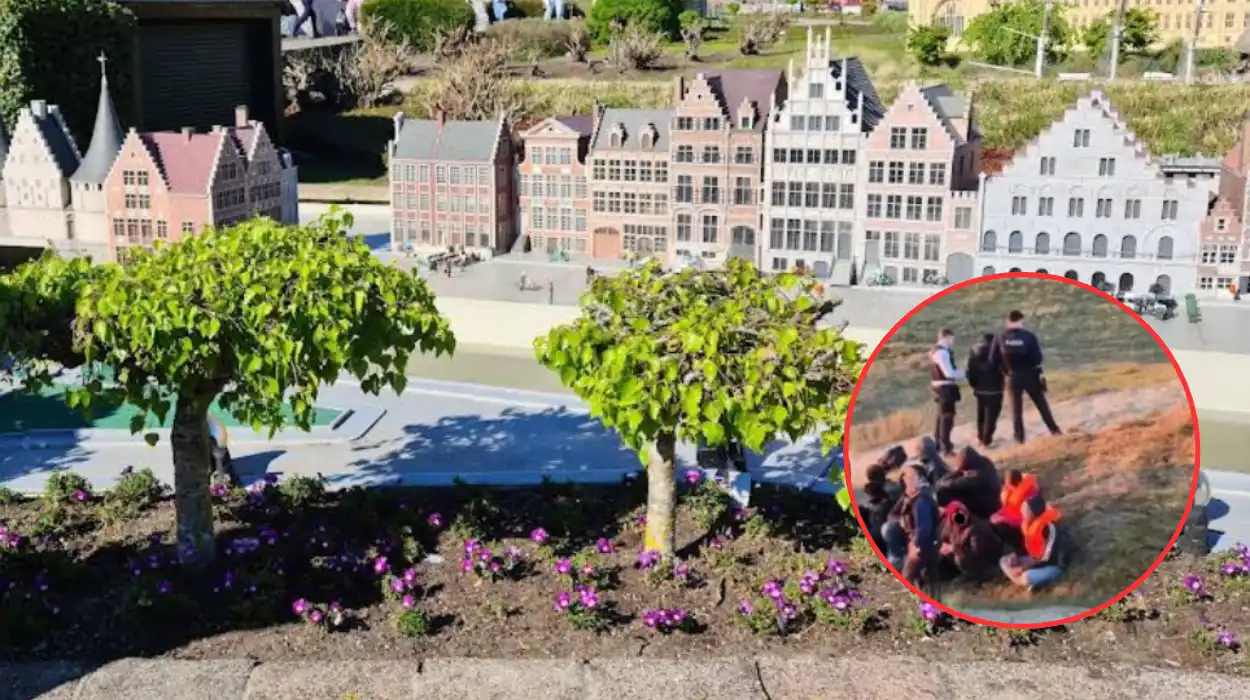
Belgian(Brussels Morning Newspaper) November 19,2026-law enforcement authorities intercepted 570 migrants along the Flemish coastline between January and October 2026, representing an almost sixfold increase compared to the 102 interceptions recorded during the same period in 2025. West Flanders Governor Jurgen Vanlerberghe confirmed the figures during a provincial council meeting on Tuesday, 17 November 2026, while noting that the totals remain comparable to 2024 levels. Alongside the interceptions, authorities have opened 55 human smuggling investigations and arrested 69 suspects this year as part of an ongoing strategy to disrupt criminal trafficking networks operating between De Panne and Knokke.
The figures were released in Bruges by West Flanders Governor Jurgen Vanlerberghe, who officially assumed office on 16 November 2026 following the retirement of his predecessor, Carl Decaluwé. Addressing inquiries raised by provincial councillors Kurt Himpe of the Nieuw-Vlaamse Alliantie (N-VA) and Jonathan Haeyaert of Vlaams Belang, Vanlerberghe confirmed that coastal police and security services had logged 570 migrant interceptions during the first ten months of 2026. The council debate was prompted by two separate maritime incidents involving migrant boats spotted off the Flemish coast earlier in November 2026, following a summer period during which the province had experienced relatively few crossing attempts.
Statistical Context and Comparison With Previous Years
While the 2026 figure marks a substantial rise from the 102 interceptions recorded between January and October 2025, Vanlerberghe emphasised that the statistics must be contextualised against multi-year trends. According to data presented to the provincial council, Belgian authorities recorded 623 interceptions in 2024. Vanlerberghe stated that 2025 had been an exceptionally quiet year along the Belgian coast and noted that current interception levels align closely with those observed two years earlier.
The Governor further clarified that the reported totals represent individual interception events rather than unique individuals. Because migrants apprehended during transit are frequently released after administrative processing, the same individuals may be intercepted multiple times by law enforcement officers during repeated attempts to reach the United Kingdom. Vanlerberghe indicated that he could not provide a definitive explanation for the unusually low number of interceptions in 2025, suggesting that criminal smuggling networks may have experienced internal disruptions or operational setbacks during that period before resuming activity.
Looking ahead to the remainder of the year, the Governor stated that total interceptions for 2026 are unlikely to surpass the 623 cases documented in 2024. Citing unfavourable autumn and winter weather forecasts in the North Sea for the coming weeks, Vanlerberghe noted that while isolated crossing attempts could still occur, the seasonal peak for maritime departures from the Belgian coastline appeared to have passed.
Shift in Smuggling Routes From Ports to Small Boats
During his address to the provincial council, Vanlerberghe outlined how human smuggling tactics along the North Sea coast have evolved over recent years. During earlier phases of the European migration crisis, irregular transit activity in West Flanders primarily involved migrants attempting to climb aboard lorries at coastal seaports or motorway service stations. According to the Governor, those methods have increasingly shifted toward small boat crossings across the English Channel.
Historically, small boat departures were concentrated along the coast of northern France, leaving the Belgian shoreline largely unaffected, particularly during the summer months of 2026. However, Vanlerberghe reported that smuggling networks have progressively shifted their launch operations northward into Flanders. He emphasised that organised criminal syndicates coordinate every crossing attempt, identifying these trafficking groups as the central driver of the coastal incidents.
In response to the northward shift, provincial councillor Kurt Himpe highlighted that small boats have also launched from coastal towns across the border in the Netherlands, specifically citing departures from Breskens and Cadzand. Himpe urged greater cross-border coordination with Dutch authorities to monitor the wider coastline, a proposal with which Governor Vanlerberghe expressed agreement.
Law Enforcement Operations Against Human Trafficking Networks
To counter the resurgence in small boat departures, Belgian judicial and police authorities have focused enforcement efforts on dismantling the financial and logistical structures of smuggling organisations rather than targeting migrants themselves. Vanlerberghe reported that 55 criminal investigation files concerning human smuggling had been opened in 2026, resulting in the arrest of 69 suspects.
The Governor stated that the suspects detained are individuals seeking financial profit by exploiting vulnerable migrants, asserting that law enforcement aims to disrupt their business model and render coastal smuggling operations unviable. Achieving this objective, according to Vanlerberghe, requires a coordinated, multidisciplinary approach involving local coastal police zones, the federal police, and maritime authorities, extending inland all the way to the German border. The stated operational goal is to prevent any vessels from launching along the entire stretch of the Belgian coast between De Panne in the west and Knokke in the east.
Policy Continuity and Humanitarian Safeguards
Having succeeded Carl Decaluwé—who served as Governor of West Flanders from February 2012 until his retirement at the end of September 2026—Vanlerberghe stated that “continuity” would define his administration’s coastal security policy. He confirmed that preventing the establishment of informal tent encampments along the Belgian coast, a central priority under Decaluwé, remains a core objective for provincial and municipal authorities.
Alongside enforcement measures against criminal networks, Vanlerberghe stressed the humanitarian dimension of coastal operations. Addressing the provincial council, the Governor stated that his absolute baseline priority is preventing the loss of human life at sea, regardless of the origin or background of the individuals attempting the crossing.
Provincial Council Debate on Surveillance and Return Policies
The statistical update prompted detailed policy interventions from opposition councillors in Bruges regarding surveillance technology, police resources, and federal migration procedures. Councillor Kurt Himpe advocated for the permanent deployment of aerial drone surveillance along the coastline to detect smuggling activity and boat launches early. Vanlerberghe confirmed his support for establishing a coastal drone shield, revealing that he had already raised the matter with Federal Minister of the Interior Bernard Quintin on his first day in office.
Meanwhile, Vlaams Belang councillor Jonathan Haeyaert questioned the status of permanent drone monitoring and the sufficiency of local police staffing levels. While welcoming Vanlerberghe’s commitment to maintaining the policies of Carl Decaluwé, Haeyaert argued that existing measures did not go far enough and contended that the provincial administration was deferring responsibility regarding return policies to the federal government. Haeyaert called upon the Governor to press federal authorities for additional manpower, resources, and a stricter deportation policy, stating that police and rescue services were fulfilling their duties but required stronger federal backing to deter repeated illegal crossing attempts.