

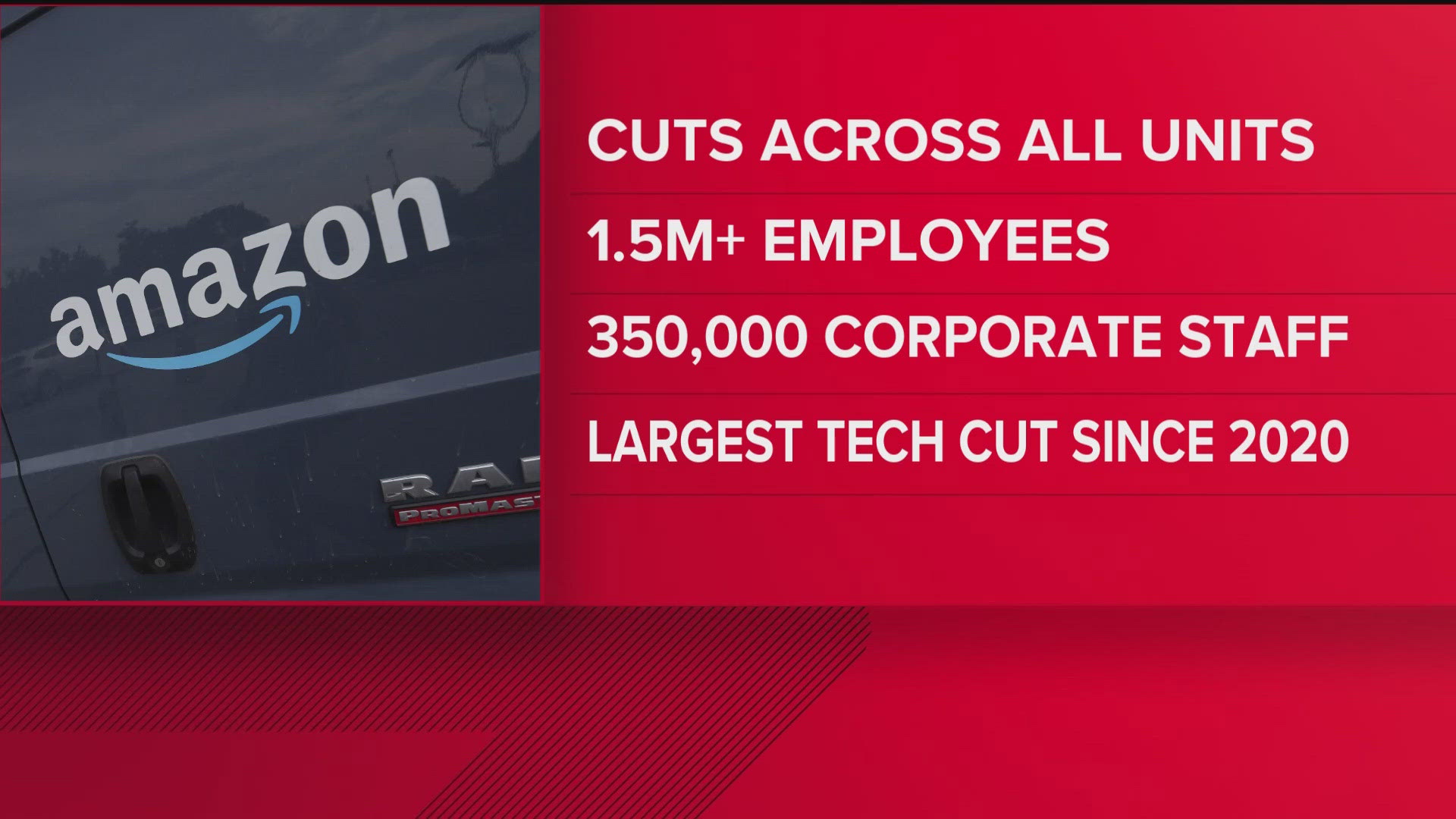
Seattle, Washington, January, 2026: Coverage highlighted by Brussels Morning Newspaper brought renewed international attention to Amazon as the company prepared for another significant phase of corporate job cuts, marking a critical chapter in the ongoing Amazon workforce reduction shaping the technology sector this year.
The anticipated changes are expected to affect thousands of corporate employees across multiple divisions, reinforcing how even the largest global companies are adapting to slower growth, evolving cost structures, and a post-pandemic economic landscape defined by efficiency rather than expansion.
A Turning Point in Corporate Employment Strategy
Amazon’s approach to staffing has undergone a profound transformation. During the rapid growth years of the early 2020s, the company expanded aggressively, building extensive corporate teams to support logistics, cloud computing, advertising, and internal innovation.
As market conditions stabilized, leadership began reassessing scale. The current Amazon workforce reduction reflects a strategic pivot away from growth-driven hiring toward a model that emphasizes productivity, accountability, and streamlined decision-making.
Economic Conditions Driving Organizational Change
The global economy in 2026 remains shaped by elevated interest rates, cautious consumer spending, and increased pressure on corporations to demonstrate sustainable profitability. These factors have prompted companies to revisit long-term staffing assumptions.
For Amazon, the Amazon workforce reduction is tied directly to this environment. Executives have signaled that maintaining flexibility and cost discipline is essential to navigating economic uncertainty while protecting shareholder value.
Corporate Roles Under Review
Corporate functions often face the greatest scrutiny during restructuring. Internal operations, middle management layers, recruiting, and project coordination roles have historically been more vulnerable when organizations seek efficiency.
The current Amazon workforce reduction is expected to follow a similar pattern, focusing on roles that leadership believes can be consolidated, automated, or redistributed across leaner teams.
Cost Structure and Financial Priorities
Labor costs represent a significant portion of Amazon’s operating expenses. Alongside workforce changes, the company has slowed capital spending, consolidated office locations, and reassessed long-term real estate commitments.
This broader financial alignment supports the Amazon workforce reduction, enabling Amazon to preserve resources for high-priority investments in cloud infrastructure, automation, and artificial intelligence.
Workforce Morale and Internal Communication
Repeated restructuring efforts can strain morale, particularly among corporate employees. Amazon has continued to offer severance packages, extended benefits, and career transition support to impacted workers.
One internal communication summarized leadership’s position:
“These decisions are about building a stronger, more focused Amazon for the years ahead.”
This single statement reflects how the Amazon workforce reduction is framed internally as a strategic necessity rather than a temporary measure.
Investor Perspective and Market Stability
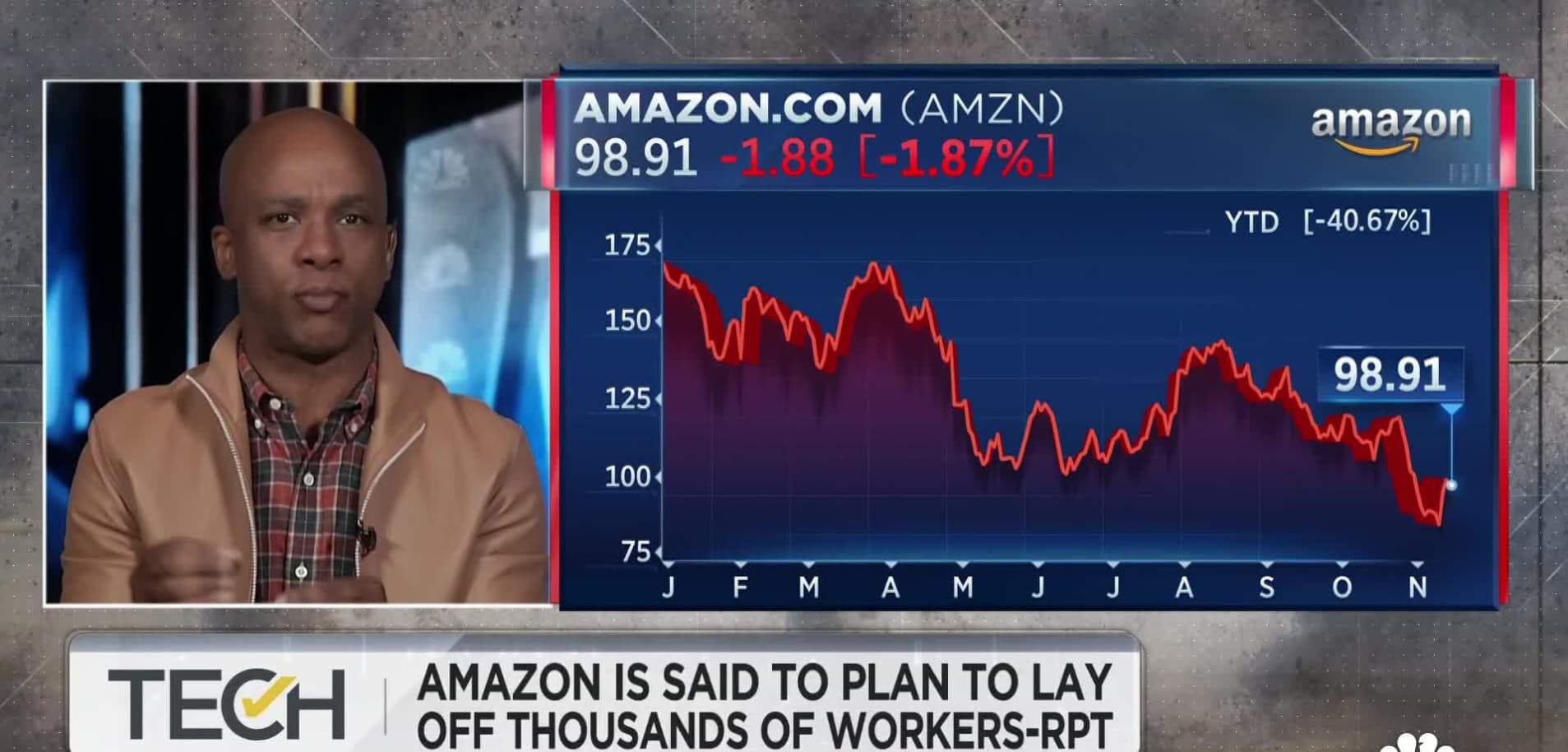
From an investor standpoint, workforce reductions are often interpreted as signals of discipline. Analysts have generally viewed the Amazon workforce reduction as a proactive step toward margin improvement rather than an indicator of financial distress.
Market reaction has remained measured, suggesting that investors have largely anticipated continued restructuring as part of Amazon’s long-term operational model.
Technology Sector-Wide Re-calibration
Amazon’s actions align with broader trends across the technology industry. Companies that expanded rapidly during years of low borrowing costs are now reassessing headcount to match revised growth expectations.
The Amazon workforce reduction mirrors similar initiatives across the sector, reflecting a shift toward leaner organizations that prioritize efficiency and measurable performance outcomes.
Automation and Efficiency Gains
Automation plays a central role in Amazon’s operational strategy. Investments in AI-driven logistics, predictive analytics, and automated customer service have reduced the need for certain administrative and support functions.
As automation capabilities mature, the Amazon workforce reduction illustrates how technology continues to reshape corporate labor requirements while enabling scalability and speed.
Seattle’s Regional Economic Exposure
Amazon’s footprint in Seattle makes its employment decisions especially consequential. Corporate job cuts can influence housing demand, commercial real estate markets, and service-sector employment across the region.
Local stakeholders are closely monitoring how the Amazon workforce reduction may affect Seattle’s broader economic ecosystem in 2026.

Global Workforce Alignment Challenges
Managing a global workforce requires balancing regional needs with unified strategic goals. Corporate job cuts in one location often reflect company-wide structural changes rather than localized performance issues.
The Amazon workforce reduction highlights the complexity of aligning global operations while maintaining consistency across business units and geographies.
Career Adaptation in a Changing Labor Market
Corporate restructuring is reshaping career expectations. Employees increasingly focus on transferable skills, particularly in data analytics, systems engineering, AI oversight, and operational optimization.
The Amazon workforce reduction underscores a labor market where adaptability and continuous learning are essential for long-term career resilience.
Leadership and Operational Balance
Reducing headcount without compromising innovation presents a significant leadership challenge. Amazon must ensure that workforce changes do not disrupt product development, customer experience, or competitive positioning.
The Amazon workforce reduction reflects a calculated effort to simplify operations while preserving the company’s ability to lead in cloud services, advertising technology, and logistics.
Investment Priorities Moving Forward
Despite workforce reductions, Amazon continues to invest aggressively in strategic growth areas. Cloud computing expansion, artificial intelligence platforms, and global fulfillment infrastructure remain central to its long-term vision.
Within this context, the Amazon workforce reduction represents a reallocation of resources rather than a retreat from ambition.
A Broader Shift in Corporate Measurement
The scale and persistence of Amazon’s restructuring highlight a broader change in how corporate success is measured. Headcount growth is no longer the primary indicator of strength.
Instead, efficiency, adaptability, and strategic clarity now define competitive advantage, a principle embodied by the Amazon workforce reduction.
Implications for Corporate Governance
Amazon’s employment decisions also reflect evolving expectations around corporate governance. Boards and shareholders increasingly emphasize disciplined capital allocation and transparent operational strategies.
The Amazon workforce reduction aligns with these governance priorities, reinforcing accountability at the executive level.

Lessons for the Global Business Community
Amazon’s experience offers insights for organizations navigating post-expansion realities. Scaling responsibly requires constant reassessment of structure, talent deployment, and cost efficiency.
The Amazon workforce reduction may serve as a reference point for how large enterprises adapt to economic normalization.
Long-Term Outlook Beyond 2026
Looking ahead, Amazon’s trajectory will depend on its ability to balance innovation with discipline. Workforce optimization is likely to remain an ongoing process rather than a one-time event.
The Amazon workforce reduction represents a pivotal moment in the company’s evolution, shaping how it competes in a more mature and demanding global market.
Redefining Resilience at Scale
Amazon’s latest employment decisions illustrate the realities facing global corporations in 2026. The Amazon workforce reduction reflects a strategic re-calibration designed to support resilience, efficiency, and sustainable growth.
For employees, investors, and regional economies, these changes underscore a fundamental shift in corporate strategy — one where long-term success depends on alignment between people, technology, and purpose.