Afghanistan is currently passing through one of the most fragile, volatile, and strategically consequential phases in its contemporary history, where internal political fragmentation, regional power rivalries, international intelligence confrontations, and severe economic collapse are simultaneously shaping the fate of the Afghan nation. The Law and Justice Movement, based on comprehensive geopolitical analysis, national security assessments, and intelligence evaluations, warns that the current Afghan crisis is no longer merely an internal political conflict; rather, it has evolved into a critical theater within the broader strategic competition among global and regional powers. More than half of Afghanistan’s population continues to live under the shadow of extreme poverty, unemployment, food insecurity, and severe social restrictions, while international actors and regional intelligence establishments increasingly instrumentalize Afghanistan for geopolitical leverage and strategic influence. The relocation of former President Mohammad Ashraf Ghani from the United Arab Emirates to Lebanon, along with efforts to reestablish political activity, indicates that remnants of the former republican system continue to seek relevance within Afghanistan’s evolving power equation. Although his political presence may appear limited on the surface, support from certain regional and international networks could potentially reignite political polarization and even contribute to future internal instability or armed confrontation.
The Law and Justice Movement firmly believes that any renewed internal armed conflict or struggle for power would further devastate Afghanistan’s already collapsing socio-economic structure and once again transform the country into a battlefield for proxy warfare and geopolitical confrontation. Simultaneously, the Taliban administration continues to face a profound international legitimacy crisis. However, the expansion of its relations with regional powers particularly Iran, Russia, and China demonstrates that a new strategic calculus regarding Afghanistan’s future is emerging across the region. These geopolitical transformations are unfolding while ordinary Afghan citizens continue to struggle for survival, education, healthcare, and human dignity. Potential formal recognition of the Taliban government by Iran would represent a major strategic shift in the regional balance of power. According to the Law and Justice Movement, if Tehran officially recognizes the Taliban regime, it would not only grant the Taliban regional legitimacy but would gradually integrate Afghanistan into the geopolitical axis of Iranian, Russian, and Chinese influence. Over recent years, Iran has sought to exploit Afghanistan’s geostrategic position as a pressure instrument against the United States and Western alliances. Tehran’s engagement with the Taliban is not merely driven by religious or border considerations; behind these relations lie broader intelligence, economic, and security objectives. Iran recognizes that an internationally isolated Afghanistan lacking global legitimacy can provide strategic depth for Tehran within the regional power architecture.
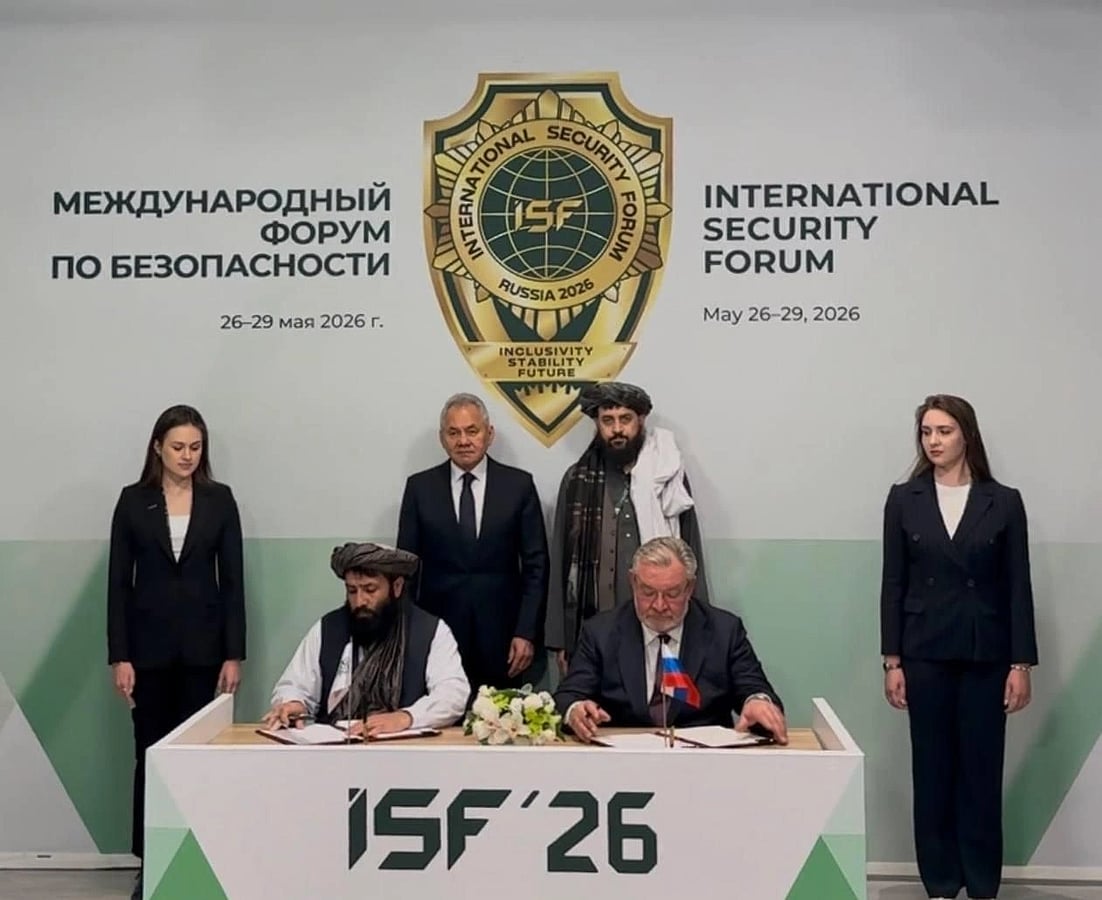
The Law and Justice Movement expresses deep concern that international or regional legitimization of the Taliban regime would constitute a severe blow to democratic governance, fundamental human rights, women’s education, and political participation. The closure of schools and universities to Afghan girls is not merely an educational restriction—it represents a systematic assault on the intellectual and civilizational future of an entire nation. If regional powers choose to normalize relations with the Taliban solely to secure their security and economic interests, the Afghan people may remain trapped under prolonged authoritarianism, political monopolization, and systemic repression. The Movement maintains that sustainable stability in Afghanistan can only be achieved through education, justice, political inclusivity, constitutional governance, and democratic legitimacy not through coercion, militarization, or intelligence-driven political arrangements. For this reason, the Law and Justice Movement once again calls upon the international community to continue supporting Afghan women’s rights, girls’ education, freedom of expression, and universal human rights principles. In recent months, Russia’s security and intelligence posture toward Afghanistan has also undergone significant transformation. Statements by Alexander Bortnikov regarding ISIS recruitment operations targeting Central Asian nationals and migrant laborers inside Russia from Afghan territory demonstrate that Moscow increasingly perceives Afghanistan as a direct national security threat. Simultaneously, Russia is attempting to establish closer intelligence, military, and security coordination with the Taliban in order to mitigate potential threats to Central Asia and Russian internal security. The recent visit of the Taliban Defense Minister to Russia and discussions surrounding intelligence-sharing, military coordination, and security agreements indicate the Taliban’s efforts to break international isolation by securing Moscow’s strategic backing. However, the Law and Justice Movement warns that such agreements carry dangerous implications for Afghanistan’s sovereignty, neutrality, and national independence.
Reports suggesting that Afghan youth are being recruited for foreign conflicts, including possible deployment to the war in Ukraine, are particularly alarming. Such developments risk transforming Afghanistan into an active component of global proxy wars. If Afghan citizens become expendable instruments within the geopolitical conflicts of external powers, the consequences would not only constitute a humanitarian catastrophe but could also expose Afghanistan to international sanctions, intensified security pressure, and deeper geopolitical confrontation. At the same time, the continued operations of anti-Taliban armed groups associated with Amrullah Saleh, including activities in Panjshir, demonstrate that Afghanistan’s armed resistance dynamics remain unresolved. This reality significantly increases the risks of internal instability, foreign intelligence penetration, and prolonged national security crises. Russian intelligence concerns regarding northern Afghanistan, alongside allegations of British intelligence support for anti-Taliban networks, reflect a new phase in great-power competition. Moscow increasingly believes that Western states may attempt to use anti-Taliban groups as strategic leverage, potentially turning Afghanistan once again into an arena for geopolitical rivalry. According to the Law and Justice Movement’s strategic assessment, Afghanistan now stands at the center of a renewed “Great Game,” where Russia, China, Iran, the United States, Britain, and regional intelligence networks are all maneuvering to secure their respective strategic interests. For the Afghan people, these rivalries represent a multidimensional national tragedy. Every external power seeks to preserve Afghanistan as a sphere of influence rather than support the emergence of a sovereign, stable, and prosperous state. Growing insecurity in northern Afghanistan, the intensification of ethnic and sectarian tensions, and the expansion of militant activities could trigger broader security crises extending into Central Asia. Meanwhile, the persistent presence of ISIS and the expansion of extremist networks raise the danger that Afghanistan may once again become a global hub for transnational terrorism. The Law and Justice Movement believes that the only viable path toward Afghan stability lies in national reconciliation, inclusive governance, rule of law, balanced international relations, and strategic neutrality. If Afghanistan continues to serve as a battleground for intelligence warfare, proxy conflicts, and regional competition, not only will the Afghan nation remain a perpetual victim, but the wider region and international community will also face enduring security instability. Furthermore, the escalating tensions between Iran and Israel, the expanded military presence of the United States in the region, and China’s accelerating military modernization collectively indicate a rapidly shifting global security order. Statements by Iranian military spokesperson Abolfazl Shekarchi emphasizing Iran’s full readiness for large-scale confrontation and the use of “surprising tactical measures” demonstrate that the Middle East is approaching a potentially dangerous escalation phase. According to the Law and Justice Movement, any expansion of regional warfare would inevitably affect Afghanistan economically, politically, and strategically. Global energy markets, trade corridors, refugee flows, and regional security balances would all experience severe disruption. Europe, already burdened by the Ukraine war, energy insecurity, and economic pressure, would face further destabilization from any large-scale Middle Eastern conflict.
Afghanistan, whose economic foundations have already deteriorated dramatically, would likely become one of the earliest victims of global economic shocks. Rising food prices, currency devaluation, declining humanitarian assistance, and new refugee waves would further intensify the suffering of the Afghan population. Simultaneously, China’s activation of advanced HQ-16F air defense systems near the Taiwan Strait demonstrates that major powers are preparing for potential large-scale strategic confrontation. The United States’ transfer of HIMARS and ATACMS missile systems to Taiwan, alongside China’s counter-military measures, is steadily pushing the Asia-Pacific region toward heightened strategic volatility. If major powers enter either direct or indirect confrontation, the future of global economic stability, international security architecture, and political order will face unprecedented challenges. In conclusion, the Law and Justice Movement emphasizes that Afghanistan does not need more wars, intelligence rivalries, or geopolitical transactions. Afghanistan urgently requires education, justice, national unity, political participation, and sustainable peace. The closure of schools and universities to girls, restrictions on freedom of expression, and the destruction of the nation’s intellectual capacity not only obstruct Afghanistan’s progress but also condemn the country to perpetual backwardness, isolation, and strategic dependency. The Afghan people are exhausted by decades of war, sacrifice, displacement, and suffering. They now seek peace, dignity, development, and a secure future. The international community must not view Afghanistan solely through a counterterrorism or intelligence lens; it must recognize Afghanistan as a profound humanitarian crisis, a struggle for civilizational survival, and a defining issue affecting the future of millions of human beings. If Afghanistan remains deprived of education, justice, national consensus, and democratic participation, future generations will be forced to live under the shadow of repression, extremism, and economic subjugation. The Law and Justice Movement therefore calls upon the international community, Islamic nations, human rights organizations, and global political powers to undertake concrete and practical measures in defense of the Afghan people’s fundamental rights, women’s education, political participation, and democratic values. If the world remains silent today, tomorrow Afghanistan may emerge not only as a regional tragedy but as a major threat to global security, geopolitical stability, and international humanitarian order.