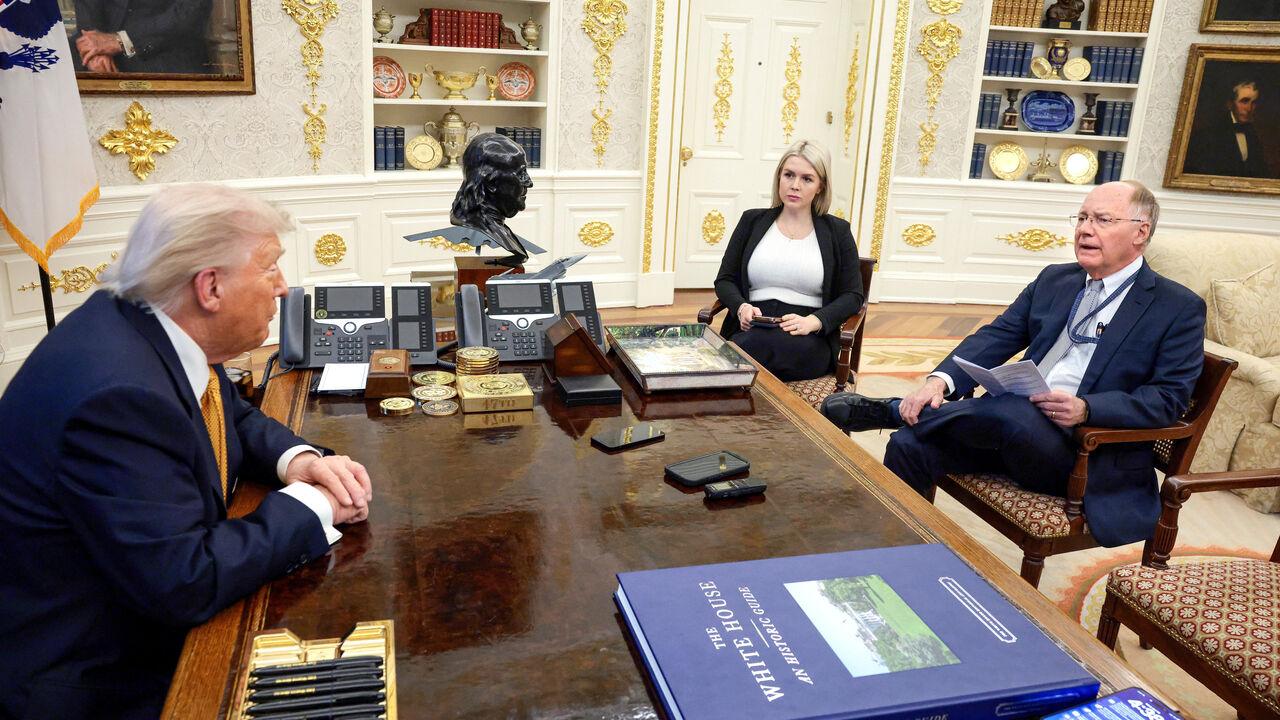
ROME, Italy, June 19 – Brussels Morning Newspaper — Trump Italy interview has become one of the most discussed international political stories after former U.S. President Donald Trump claimed during an Italian television appearance that Prime Minister Giorgia Meloni had “begged” for a photograph with him at the recent G7 summit. The Trump Italy interview quickly attracted global attention, with Italian officials rejecting the claim and defending standard diplomatic protocol.
The Trump Italy interview gained momentum after excerpts aired across Italian media, where Trump described his interactions with Meloni during the summit. The comments spread rapidly on social media and international news platforms, prompting questions about what actually took place during the gathering of world leaders.
Italian government officials responded by saying that photographs at G7 meetings are organized through official diplomatic schedules rather than personal requests. They stressed that interactions between leaders follow established international procedures and should not be interpreted as personal exchanges. The response aimed to shift attention back to the summit’s broader agenda, which included discussions on global security, trade, energy, and international cooperation.
“Diplomatic meetings follow official protocol and represent cooperation between governments, not personal requests.”
The Trump Italy interview has also reignited debate over how political leaders use public interviews to shape narratives for domestic audiences. Supporters of Trump argue that his comments reflect his direct communication style and confidence on the world stage. Critics, however, believe such remarks can overshadow important diplomatic discussions and create unnecessary controversy between allied nations.
Political analysts note that personal stories from international summits often receive greater public attention than policy agreements. While headlines focused on Trump’s comments, the G7 meeting itself centered on issues including economic stability, defense cooperation, migration, and ongoing geopolitical challenges. Experts say these substantive discussions are likely to have a much greater long-term impact than disagreements over individual interactions.
The Trump Italy interview has generated extensive coverage across Europe and the United States, with commentators offering differing interpretations of the exchange. Some view it as campaign-style political messaging, while others see it as another example of how modern diplomacy is increasingly influenced by media narratives and social platforms.
Despite the public disagreement, analysts do not expect the episode to affect the longstanding relationship between Italy and the United States. Both countries continue to work closely through NATO, economic partnerships, and international security initiatives. Diplomats from both sides remain focused on shared strategic interests rather than political rhetoric surrounding the summit.
As international attention continues, the Trump Italy interview highlights how remarks made during televised appearances can quickly become global political stories. While debate over the comments may continue, officials from both countries are expected to keep their attention on the broader diplomatic priorities discussed during the G7 summit.